The best personal finance book for beginners overall is Personal Finance For Dummies, because it covers every foundational topic — budgeting, credit, taxes, insurance, and investing — in plain language without assuming any prior knowledge. If you want a structured plan rather than a reference manual, I Will Teach You to Be Rich walks you through a six-week program with specific actions, while The Infographic Guide to Personal Finance is the fastest read for anyone who learns visually. The main tradeoff in this category is between breadth and depth: broad primers like the For Dummies series explain everything but rarely push you to act, while action-oriented books like The Simple Path to Wealth and Get a Financial Life go deeper on fewer topics. Age fit matters too — several of these books are written specifically for teens and young adults, and their tone will feel off if you’re past that stage. Keep reading for the full breakdown of all 15 titles and who each one suits best.

Get smart everyday buys delivered free with Prime
- Fast, free delivery on millions of items
- Prime Video, Amazon Music and more included
- Member-only deals all year
Key Takeaways
- Broad reference books (both Personal Finance For Dummies titles, Financial Literacy Essentials For Dummies) dominated on coverage, but none of them matched the action-oriented structure of I Will Teach You to Be Rich, which is the only pick built around a week-by-week plan.
- Four of the 15 books target teens or young adults specifically — if you’re over 30, roughly a quarter of this lineup becomes a poor fit, so filtering by audience age first saves money and frustration.
- The Infographic Guide to Personal Finance and Finance for Beginners: 101 Concepts proved the fastest paths to basic literacy, making them better ‘first books’ than deeper titles like The Simple Path to Wealth, which rewards readers who already know the basics.
- Duplication is a real risk: the two Personal Finance For Dummies entries overlap heavily in content, so buying both is wasted money — one serves nearly every purpose the other does.
- Get a Financial Life stood out as the strongest bridge book: basic enough for beginners but with more substantive depth on twenties- and thirties-specific decisions (student debt, first jobs, renting vs. buying) than any general primer here.
| Personal Finance 101: From Saving and Investing to Taxes and Loans |  | Best Broad-Subject Primer | Series: Adams 101 Series | Format: Print / eBook | Topic Coverage: Saving, investing, taxes, loans | VIEW LATEST PRICE | See Our Full Breakdown |
| Financial Literacy Essentials For Dummies |  | Best Quick-Start Refresher | Series: For Dummies | Format: Print / eBook | Topic Coverage: Core financial literacy essentials | VIEW LATEST PRICE | See Our Full Breakdown |
| Finance for Beginners: 101 Concepts |  | Best Concept-by-Concept Format | Format: Print / eBook (KDP title) | Structure: 101 individual concepts | Topic Coverage: Personal finance, investing, money management | VIEW LATEST PRICE | See Our Full Breakdown |
| Personal Finance For Dummies |  | Best Deep-Bench Reference | Series: For Dummies | Format: Print / eBook | Edition Type: Full-length core title | VIEW LATEST PRICE | See Our Full Breakdown |
| Personal Finance For Dummies (Classic Edition) |  | Best Budget Archive Find | Series: For Dummies | Format: Print | Edition Status: Earlier/classic edition | VIEW LATEST PRICE | See Our Full Breakdown |
| I Will Teach You to Be Rich: No Guilt, No Excuses, Just a 6-Week Program That Works (Second Edition) |  | Best Structured Program | Format: Paperback | Edition: Second Edition | Program length: 6 weeks | VIEW LATEST PRICE | See Our Full Breakdown |
| The Infographic Guide to Personal Finance: A Visual Reference for Everything You Need to Know | 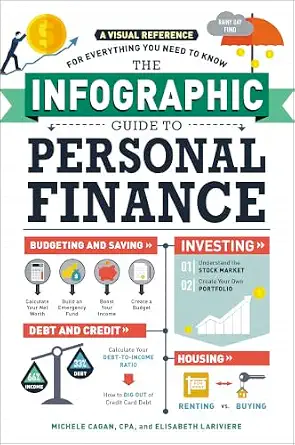 | Best Visual Learner Pick | Format: Paperback | Series: Infographic Guide series | Format style: Illustrated, visual reference | VIEW LATEST PRICE | See Our Full Breakdown |
| Money Skills for Young Adults: A Beginner’s Guide to Smart Financial Habits |  | Best for First Jobs and First Paychecks | Format: Paperback | Audience: Young adults and beginners | Key topics: Budgeting, saving for goals, investing | VIEW LATEST PRICE | See Our Full Breakdown |
| How to Adult: Personal Finance for the Real World |  | Best for Recent Grads | Format: Paperback | Audience: Recent graduates and new independents | Focus: Real-world money tasks | VIEW LATEST PRICE | See Our Full Breakdown |
| QuickStart Guide: The Simplified Beginner’s Guide to Eliminating Financial Stress, Building Wealth, and Achieving Financial Freedom |  | Best Quick-Start Value | Format: Paperback | Series: QuickStart Guides | Approach: Simplified step-by-step | VIEW LATEST PRICE | See Our Full Breakdown |
| Money Skills for Teens: A Beginner’s Guide to Budgeting, Saving, and Investing |  | Best for Younger Teens | Format: Paperback book | Target Audience: Tweens and teens | Topics Covered: Budgeting, saving, and investing | VIEW LATEST PRICE | See Our Full Breakdown |
| The Simple Path to Wealth: Your Road Map to Financial Independence and a Rich, Free Life |  | Best Long-Term Wealth Mindset Pick | Format: Book (print and digital editions) | Target Audience: Beginners interested in financial independence | Topics Covered: Financial independence, wealth building, investing mindset | VIEW LATEST PRICE | See Our Full Breakdown |
| Personal Finance for Teens and Young Adults – Learn Money Skills Not Taught in School |  | Best Real-World Examples for Teens | Format: Book (digital edition available) | Target Audience: Teens and young adults | Topics Covered: Budgeting, saving, investing, financial independence | VIEW LATEST PRICE | See Our Full Breakdown |
| Financial Literacy for Young Adults Simplified |  | Best Simplified Overview | Format: Book (digital edition available) | Target Audience: Young adults | Topics Covered: Managing, saving, and investing money | VIEW LATEST PRICE | See Our Full Breakdown |
| Get a Financial Life: Personal Finance in Your Twenties and Thirties |  | Best for Twenty-Somethings Facing Real Milestones | Format: Paperback book | Target Audience: Readers in their twenties and thirties | Topics Covered: Personal finance for early-career adults | VIEW LATEST PRICE | See Our Full Breakdown |
| personal finance books for beginner | Format | Experience Level |
|---|---|---|
| Personal Finance 101: From Sav | Print / eBook | Beginner |
| Financial Literacy Essentials | Print / eBook | Absolute beginner |
| Finance for Beginners: 101 Con | Print / eBook (KDP title) | Beginner |
| Personal Finance For Dummies | Print / eBook | Beginner to intermediate |
| Personal Finance For Dummies | Beginner | |
| I Will Teach You to Be Rich: N | Paperback | — |
| The Infographic Guide to Perso | Paperback | — |
| Money Skills for Young Adults: | Paperback | — |
| How to Adult: Personal Finance | Paperback | — |
| QuickStart Guide: The Simplifi | Paperback | — |
| Money Skills for Teens: A Begi | Paperback book | Absolute beginner |
| The Simple Path to Wealth: You | Book (print and digital editions) | Beginner |
| Personal Finance for Teens and | Book (digital edition available) | Beginner |
| Financial Literacy for Young A | Book (digital edition available) | Beginner |
| Get a Financial Life: Personal | Paperback book | Beginner to early intermediate |
More Details on Our Top Picks
Personal Finance 101: From Saving and Investing to Taxes and Loans
Personal Finance 101 earns its spot by doing something most beginner books avoid: covering taxes and loans alongside the usual saving-and-investing material. Where Financial Literacy Essentials For Dummies sticks to core money concepts, this one maps nearly the whole financial landscape in a single volume. The Adams 101 Series format breaks topics into short, digestible sections, which makes it a strong reference to keep on the shelf rather than a one-time read. The tradeoff is depth — readers who want step-by-step coaching, like the program-driven approach in I Will Teach You to Be Rich, may find this too survey-style. Compared with Finance for Beginners: 101 Concepts, it offers a similar breadth but with more attention to the mechanics of borrowing and taxes.
Pros:- Wide topic coverage including taxes and loans, which many beginner books skip
- Short, structured chapters that work well as a reference you return to
- Approachable tone suited to readers with zero financial background
- Part of a consistent series, so the format stays predictable chapter to chapter
Cons:- Broad coverage limits depth on any single topic like investing
- Less prescriptive — fewer concrete action plans than coaching-style books
Best for: True beginners who want one book that explains every major financial topic before they commit to a specialized guide
Not ideal for: Readers who want an actionable plan with weekly steps — this is an educational survey, not a coaching program
- Series:Adams 101 Series
- Format:Print / eBook
- Topic Coverage:Saving, investing, taxes, loans
- Experience Level:Beginner
- Structure:Short topical chapters
- Reading Style:Reference-friendly primer
- Publisher Series Position:Standalone introductory volume
Our verdict“This pick makes the most sense for someone who wants a complete financial map first and specialized books later.”
Financial Literacy Essentials For Dummies
As a condensed entry in the For Dummies line, this book is built around speed: it delivers only the essentials, trimmed down for readers who want the basics fast. Compared with the full-length Personal Finance For Dummies, it trades depth and detail for a shorter time commitment — a fair exchange if you’re intimidated by 400-page guides. Against The Infographic Guide to Personal Finance, it offers the same quick-hit appeal but in a traditional text format rather than visuals. This option stands out for busy adults who never learned financial fundamentals and want a low-pressure starting point. The flip side: once the essentials click, most readers will outgrow it quickly and need a more detailed resource for investing strategy or debt payoff plans.
Pros:- Condensed format that can be finished in a few sittings
- Trusted, familiar For Dummies teaching style with plain-English explanations
- Low intimidation factor for readers with no financial background
- Good bridge to more advanced books once fundamentals are solid
Cons:- Deliberately shallow — won’t carry you past the beginner stage
- No visuals, so visual learners may prefer an infographic-style guide
Best for: Busy adults who want the fastest possible introduction to financial basics without a long reading commitment
Not ideal for: Readers who already know budgeting basics and want deeper guidance on investing or wealth building
- Series:For Dummies
- Format:Print / eBook
- Topic Coverage:Core financial literacy essentials
- Experience Level:Absolute beginner
- Length:Condensed short-format guide
- Reading Style:Fast, plain-English primer
- Best Use:First book before deeper study
Our verdict“Skip it if you need depth; grab it if you want the shortest credible path from clueless to competent.”
Finance for Beginners: 101 Concepts
This title takes a different structural bet than the others here: instead of narrative chapters, it organizes learning into 101 discrete concepts spanning personal finance, investing, and money management. That format shines for readers who like to learn in small pieces — dip in, learn one idea, come back later. Compared with Personal Finance 101, which moves through topics in longer arcs, this is easier to skim but harder to read as a unified story. It also lacks the brand familiarity of the For Dummies titles, so it works best as a vocabulary-builder that sits beside a more structured guide. The tradeoff: fragmentation means less guidance on sequencing — you learn what things are, but not necessarily what to do first.
Pros:- 101 standalone concepts allow flexible, non-linear reading
- Spans three pillars: personal finance, investing, and money management
- Excellent quick-reference format for looking up unfamiliar terms
- Short entries suit short attention spans and commutes
Cons:- Fragmented structure offers little guidance on order of operations
- Concepts are brief, so complex topics get shallow treatment
Best for: Readers who learn best in small chunks and want to build financial vocabulary one concept at a time
Not ideal for: Anyone who wants a step-by-step financial plan — this teaches definitions more than actions
- Format:Print / eBook (KDP title)
- Structure:101 individual concepts
- Topic Coverage:Personal finance, investing, money management
- Experience Level:Beginner
- Reading Style:Modular, dip-in/dip-out
- Best Use:Reference and vocabulary building
- Publisher:Independently published
Our verdict“Best used as a companion reference alongside a structured book, not as your only finance guide.”
Personal Finance For Dummies
The full-length Personal Finance For Dummies is the heavyweight of the Dummies titles in this roundup — the book you buy when you want thorough coverage rather than a quick skim. Compared with Financial Literacy Essentials For Dummies, it goes well past the basics into planning, insurance, and long-term money decisions, making it the stronger long-term shelf companion. Against narrative-driven picks like Get a Financial Life, it’s less motivational and more encyclopedic: expect clear explanations and checklists rather than a conversational journey. The brand’s signature style keeps dense subjects readable, and it’s the one Dummies entry here that can plausibly serve you for years. The cost of that depth is length and pacing — it demands more commitment than any short-format primer.
Pros:- Substantially deeper coverage than condensed beginner guides
- Covers long-term planning topics most primers omit
- Encyclopedic structure makes it easy to find answers to specific questions
- Durable long-term reference value
Cons:- Long commitment compared with quick-start guides
- Encyclopedic tone is less motivating than narrative-style finance books
Best for: Readers who want a single, detailed reference that stays useful well beyond the beginner stage
Not ideal for: Impatient readers or those wanting quick wins — the length can stall momentum
- Series:For Dummies
- Format:Print / eBook
- Edition Type:Full-length core title
- Topic Coverage:Budgeting, saving, investing, insurance, planning
- Experience Level:Beginner to intermediate
- Reading Style:Detailed reference guide
- Depth:Comprehensive coverage
Our verdict“This is the buy-once, keep-for-years option if you’d rather own the full reference than repeat-buy shallow primers.”
Personal Finance For Dummies (Classic Edition)
This earlier edition of Personal Finance For Dummies occupies a specific niche in the lineup: it’s the used-copy bargain for readers whose budget is part of the problem they’re trying to solve. The core lessons — budgeting, debt, saving discipline, insurance fundamentals — remain sound, because timeless money principles haven’t changed. Where it falls short against the newer edition (1394207549) is currency: figures, tax references, and product examples reflect an older financial landscape, so anything tied to rules or rates should be verified elsewhere. Compared with How to Adult: Personal Finance for the Real World, a modern budget-focused title, this classic reads more like a textbook and less like a peer-to-peer talk. It’s a solid entry point, provided the reader treats specific numbers skeptically.
Pros:- Core money principles remain accurate and well-taught
- Often available cheaply as a used or older print run
- Same trusted For Dummies instructional clarity
- Solid grounding before investing in newer editions
Cons:- Outdated figures, tax references, and financial product examples
- Superseded by a newer edition that fixes the currency problem
Best for: Budget-conscious beginners who can get classic money fundamentals inexpensively and verify outdated details themselves
Not ideal for: Readers who need current tax rules, rates, and modern tools — the aging content will mislead on specifics
- Series:For Dummies
- Format:Print
- Edition Status:Earlier/classic edition
- Topic Coverage:Budgeting, saving, debt, insurance fundamentals
- Experience Level:Beginner
- Reading Style:Textbook-style instructional guide
- Currency of Content:Dated figures and examples
Our verdict“A sensible low-cost start if you treat it as a principles book, not a numbers book.”
I Will Teach You to Be Rich: No Guilt, No Excuses, Just a 6-Week Program That Works (Second Edition)
I Will Teach You to Be Rich stands out for its six-week, week-by-week structure, which turns vague money anxiety into a concrete checklist. Where Personal Finance 101 functions as a reference you dip into, this book behaves more like a course: each week covers one action area — credit cards, banking, investing, and so on — so a beginner finishes with systems actually in place rather than just knowledge. The updated second edition also reflects modern realities like robo-advisors and subscription creep.
The tradeoff is tone and pace. Readers who want a neutral, encyclopedic walkthrough may find the voice opinionated, and those unwilling to commit to six weeks of homework will not get the full payoff. Compared with Money Skills for Young Adults, it assumes more existing income and financial infrastructure.
Pros:- Six-week format turns learning into an actionable schedule
- Second edition covers updated tools like robo-advisors and modern banking
- Covers automation, which most beginner books skip
- Opinionated guidance reduces decision fatigue
Cons:- Requires active participation — skimmers won’t get results
- Presumes a baseline of income and existing accounts
Best for: Beginners with steady income who want a deadline-driven system they can finish in six weeks
Not ideal for: Readers with no income yet, such as students, or those who want a passive reference book without homework
- Format:Paperback
- Edition:Second Edition
- Program length:6 weeks
- Core approach:Step-by-step habit building
- Key topics:Automation, investing, credit, banking
- Audience:Beginners with income
- Style:Conversational, action-oriented
Our verdict“This pick makes the most sense for motivated beginners who want a finishable program, not another shelf book.”
The Infographic Guide to Personal Finance: A Visual Reference for Everything You Need to Know
Most beginner finance books assume you can absorb dense pages of text; The Infographic Guide to Personal Finance takes the opposite bet with charts, icons, and illustrated layouts on nearly every page. For visual learners, this format makes concepts like compound interest or credit utilization land faster than paragraphs ever could. Compared with QuickStart Guide, which is also brief, this one trades narrative coaching for at-a-glance clarity — it works better as a desk reference you revisit than a program you complete.
The drawback is depth. Complex topics such as tax strategy or investment selection get compressed into graphics, and readers who eventually want detail will outgrow it. Still, as an entry point or refresher, it beats heavier titles like Personal Finance For Dummies for sheer accessibility.
Pros:- Infographic format makes abstract concepts instantly graspable
- Fast to browse and revisit as a reference
- Low intimidation factor for finance-phobic readers
- Covers a wide range of everyday money topics
Cons:- Limited depth on complex topics like investing and taxes
- Not structured as a plan, so less actionable than program-style books
Best for: Visual learners and reluctant readers who want finance explained through pictures rather than prose
Not ideal for: Readers who want deep explanations, worked examples, or step-by-step financial planning
- Format:Paperback
- Series:Infographic Guide series
- Format style:Illustrated, visual reference
- Structure:Topic-based, browsable
- Audience:Beginners and visual learners
- Length:Compact
- Use case:Quick reference and first exposure
Our verdict“Choose this if pictures teach you faster than paragraphs and you want a friendly reference rather than a course.”
Money Skills for Young Adults: A Beginner’s Guide to Smart Financial Habits
Money Skills for Young Adults is aimed squarely at readers launching their financial lives — a first paycheck, a first bank account, a first budget. Compared with I Will Teach You to Be Rich, it starts further upstream, covering the basics of budgeting and goal-based saving before investing ever enters the picture. Its throughline of financial independence gives the material a direction that keeps habits from feeling arbitrary.
The tradeoff is breadth over depth. Because it spans budgeting, saving, investing, and independence in one accessible package, none of those topics gets exhaustive treatment — readers a few years into their careers will likely prefer something with more advanced territory. Compared with Financial Literacy for Young Adults Simplified, its habit-building framing is more practical and less purely definitional.
Pros:- Starts from absolute basics, assuming no prior knowledge
- Connects budgeting, saving, and investing into one habit system
- Focused specifically on young-adult situations like first paychecks
- Emphasizes long-term financial independence, not just tips
Cons:- Coverage is broad rather than deep on any single topic
- May feel repetitive for readers who already budget
Best for: Young adults starting their first job who need to build money habits from zero
Not ideal for: Mid-career readers or those with established accounts, who will find the early material redundant
- Format:Paperback
- Audience:Young adults and beginners
- Key topics:Budgeting, saving for goals, investing
- Core theme:Financial independence
- Difficulty level:Absolute beginner
- Approach:Habit-building framework
Our verdict“This option fits readers getting their first income who want one friendly book to build habits from scratch.”
How to Adult: Personal Finance for the Real World
How to Adult leans into a specific moment: the awkward stretch after school ends, when nobody taught you how taxes, leases, or insurance actually work. Its value is tone — it meets readers at the level of everyday adulting tasks rather than abstract wealth building. Compared with Money Skills for Young Adults, which emphasizes long-term habit systems, this book is more about surviving immediate real-world responsibilities, from paperwork to paychecks. Against Get a Financial Life, it reads lighter and faster, trading some depth for approachability.
The flip side of that approachability is limited ambition. Readers past the survival stage — say, those ready to optimize investments or plan for major goals — will find it too entry-level to be useful long-term. It is a bridge book, and a good one, but a bridge nonetheless.
Pros:- Addresses practical adulting tasks most books skip
- Friendly, judgment-free tone for overwhelmed beginners
- Quick to read and easy to act on
- Well matched to post-graduation life situations
Cons:- Stops at basics — little on advanced investing or planning
- Less useful once the first year or two of independence is behind you
Best for: Recent graduates who feel unprepared for real-world money tasks like renting, taxes, and insurance
Not ideal for: Readers with a few years of financial experience who want growth and investing strategy
- Format:Paperback
- Audience:Recent graduates and new independents
- Focus:Real-world money tasks
- Difficulty level:Entry-level
- Tone:Casual, practical
- Positioning:Survival-stage finance guide
Our verdict“Pick this if you are freshly on your own and need real-world money answers delivered without condescension.”
QuickStart Guide: The Simplified Beginner’s Guide to Eliminating Financial Stress, Building Wealth, and Achieving Financial Freedom
The QuickStart Guide earns its place through efficiency: it compresses debt reduction, wealth building, and stress management into a compact, plain-language handbook a beginner can finish in a weekend. Where I Will Teach You to Be Rich asks for six weeks of commitment, this book front-loads immediate wins — readers carrying money stress can find a first step on day one rather than week three. Compared with The Infographic Guide to Personal Finance, it offers more narrative coaching and step-by-step strategy, though with fewer visual aids.
The tradeoff is ceiling. Its deliberate simplicity means readers with existing finance knowledge will find little new, and its coverage of investing stays introductory throughout. This is a launching pad, not a lifelong reference — but for the anxious beginner who has been putting off starting, that is exactly the point.
Pros:- Plain language with no jargon barriers
- Step-by-step strategies you can act on immediately
- Balances debt reduction with wealth building
- Short enough to genuinely finish
Cons:- Too basic for anyone past the beginner stage
- Investing coverage stays surface-level
Best for: Stressed beginners who want a fast, low-commitment starting point they can finish quickly
Not ideal for: Readers with existing finance knowledge or those wanting deep investing detail
- Format:Paperback
- Series:QuickStart Guides
- Approach:Simplified step-by-step
- Key topics:Debt reduction, wealth building, financial freedom
- Difficulty level:Beginner
- Length:Concise handbook
- Primary benefit:Reduces financial stress fast
Our verdict“This pick makes the most sense for overwhelmed first-timers who need momentum now rather than mastery later.”
Money Skills for Teens: A Beginner’s Guide to Budgeting, Saving, and Investing
This pick stands out for aiming younger than the rest of the lineup — while Money Skills for Young Adults assumes readers have paychecks and rent to manage, this one starts from zero, covering budgeting, saving, and investing for an audience that may only have allowance or first-job money. As part of the Life Skills for Tweens & Teens series, it pairs naturally with other life-skills titles, which makes it a solid choice for parents building a broader bookshelf rather than chasing one finance topic. Compared with Personal Finance for Teens and Young Adults, it reads as the more introductory of the two. The tradeoff: readers who already have a bank account and a budget will outgrow it quickly.
Pros:- Written specifically for tween and teen beginners with no assumed knowledge
- Covers all three core pillars: budgeting, saving, and investing
- Part of a broader life-skills series, so it fits into a larger learning path
- Approachable for reluctant readers who would bounce off adult-oriented titles
Cons:- Depth is limited — advanced or even intermediate topics are out of scope
- Younger framing may feel condescending to readers over 16
Best for: Parents buying a first money book for a 12–16 year old with little to no financial experience
Not ideal for: Older teens or young adults with income and bills — the starting level will feel too elementary
- Format:Paperback book
- Target Audience:Tweens and teens
- Topics Covered:Budgeting, saving, and investing
- Experience Level:Absolute beginner
- Series:Life Skills for Tweens & Teens
- Reading Approach:Introductory, youth-oriented
Our verdict“A sensible first money book for middle and early high schoolers, but anyone with real income should step up to a young-adult title instead.”
The Simple Path to Wealth: Your Road Map to Financial Independence and a Rich, Free Life
Where most entries in this roundup — like Financial Literacy for Young Adults Simplified — teach mechanics, this one teaches a philosophy of financial independence. Its core value is giving beginners a clear roadmap from first paycheck to financial freedom, which reframes budgeting and saving as steps toward a bigger goal rather than chores. That framing is genuinely motivating for readers who need a why, not just a how. The tradeoff is real: it is lighter on day-to-day practicalities than step-by-step guides like the QuickStart Guide, and its investment guidance leans toward one philosophy rather than surveying options. Beginners drowning in debt or needing budget templates should start elsewhere.
Pros:- Gives beginners a compelling long-term vision of financial independence
- Simple, memorable framework that sticks with readers after finishing
- Strong on the psychology and mindset behind building wealth
- Accessible to readers with no prior finance background
Cons:- Less practical on day-to-day budgeting mechanics than tactical guides in this lineup
- Presents one investment philosophy rather than a balanced survey of approaches
Best for: Motivated beginners who want a big-picture wealth-building philosophy, not just budgeting basics
Not ideal for: Readers who need hands-on, tactical help with immediate money problems like debt or first budgets
- Format:Book (print and digital editions)
- Target Audience:Beginners interested in financial independence
- Topics Covered:Financial independence, wealth building, investing mindset
- Experience Level:Beginner
- Reading Approach:Philosophy-driven roadmap
- Primary Focus:Long-term financial freedom
Our verdict“The pick for beginners who want to understand why they’re saving before worrying about the spreadsheet details.”
Personal Finance for Teens and Young Adults – Learn Money Skills Not Taught in School
Compared with Money Skills for Teens, this title skews older and more practical, bridging the gap between teen primers and full adult guides. Its standout strength is grounding every concept in real-world examples — a smart move for readers who glaze over at abstract theory, and a contrast to the more reference-style Personal Finance 101. The step-by-step structure makes it genuinely usable as a working guide rather than a one-time read. The honest limitation: readers who master these basics and want to go deeper into investing strategy will hit a ceiling fast, as complex topics are deliberately simplified. Pair it with The Simple Path to Wealth once the fundamentals click.
Pros:- Clear, step-by-step explanations of budgeting, saving, and investing
- Real-world examples that make abstract concepts click for younger readers
- Accessible tone written specifically for teens and young adults
- Practical orientation geared toward achieving financial independence
Cons:- Too basic for readers seeking advanced investment strategies
- Limited depth on complex topics like taxes, insurance, or retirement accounts
Best for: Teens and college-age readers who learn best from relatable, real-world scenarios rather than dry instruction
Not ideal for: Readers already comfortable with budgeting who want advanced investment strategies
- Format:Book (digital edition available)
- Target Audience:Teens and young adults
- Topics Covered:Budgeting, saving, investing, financial independence
- Experience Level:Beginner
- Reading Approach:Step-by-step with real-world examples
- Primary Focus:Practical money skills
Our verdict“The strongest bridge book for older teens who want practical money skills with examples they’ll actually recognize.”
Financial Literacy for Young Adults Simplified
The word to anchor on here is Simplified — this is the roundup’s most aggressively distilled entry, trimming managing, saving, and investing down to what a busy young adult can absorb quickly. That makes it a different animal from Get a Financial Life, which goes deeper on life-stage-specific topics like insurance and taxes at the cost of a longer read. This pick makes the most sense for readers short on time or patience who want the skeleton of personal finance without the flesh. The tradeoff cuts both ways: simplification means thinner coverage of edge cases and nuance, so readers with complicated situations — irregular income, debt troubles, family obligations — will need a more detailed guide afterward.
Pros:- Extremely digestible format for readers intimidated by longer finance books
- Covers the full basic triad: managing, saving, and investing
- Tailored tone for young adults starting from zero
- Keeps the end goal of financial independence in view throughout
Cons:- Brevity leaves little room for nuance or edge cases
- Readers will likely outgrow it and need a follow-up guide for depth
Best for: Time-pressed young adults who want a fast, digestible first pass at money basics
Not ideal for: Readers with complex finances or those wanting depth on any single topic
- Format:Book (digital edition available)
- Target Audience:Young adults
- Topics Covered:Managing, saving, and investing money
- Experience Level:Beginner
- Reading Approach:Simplified, condensed overview
- Primary Focus:Building a financially secure future
Our verdict“A quick on-ramp for impatient beginners — just plan to graduate to a fuller guide once the basics land.”
Get a Financial Life: Personal Finance in Your Twenties and Thirties
This is the roundup’s most life-stage-specific pick: rather than teaching finance in the abstract, it organizes everything around the decisions that actually hit in your twenties and thirties — first salaries, renting versus buying, retirement accounts opened late versus early. Compared with Financial Literacy for Young Adults Simplified, it trades brevity for context and depth on adult milestones, which matters once real paychecks and real consequences arrive. It also assumes more adult responsibility than teen-oriented titles like Personal Finance for Teens and Young Adults, which is exactly why it belongs later in a reader’s journey. The drawback: it is less relevant for teens and younger students, and readers already past their thirties may find the framing misses their situation.
Pros:- Organized around real life milestones rather than abstract concepts
- Depth on topics that matter most in early adulthood, like retirement timing and housing
- Long-established framing that speaks directly to the twentysomething experience
- Practical for readers facing their first major financial decisions
Cons:- Narrow age focus makes it a poor fit for teens or readers over forty
- Denser than simplified guides, so it demands more reading commitment
Best for: Readers in their twenties and thirties navigating first jobs, first apartments, and first retirement accounts
Not ideal for: Teens and students without income — the milestone-focused content won’t apply yet
- Format:Paperback book
- Target Audience:Readers in their twenties and thirties
- Topics Covered:Personal finance for early-career adults
- Experience Level:Beginner to early intermediate
- Reading Approach:Life-stage organized, milestone-driven
- Primary Focus:First major adult financial decisions
Our verdict“The right choice once real-world milestones arrive — less useful before a first paycheck exists.”

How We Picked
I evaluated each book against four buyer-relevant criteria. Accessibility came first: a true beginner book should explain jargon on first use, avoid dense theory, and let a reader with zero financial background follow every chapter. Actionability was next — books that tell you exactly what to do (open this account, automate this transfer) scored higher than books that only explain concepts. Audience fit separated the lineup sharply: a book pitched at 16-year-olds will patronize a 35-year-old, so I flagged the intended reader for every title. Finally, I weighed scope and shelf life, favoring books that cover enough ground to serve as a long-term reference rather than a single weekend read.
The ranking reflects a simple premise: most beginners quit finance books, so the titles that best sustain momentum — through structure, tone, or visual design — rank above denser but more thorough alternatives. Where two books cover similar ground, I ranked the one with clearer next steps higher and noted where the runner-up actually makes more sense for a specific reader type.
| personal finance books for beginner | Experience Level |
|---|---|
| Personal Finance 101: From Sav | Beginner |
| Financial Literacy Essentials | Absolute beginner |
| Finance for Beginners: 101 Con | Beginner |
| Personal Finance For Dummies | Beginner to intermediate |
| Personal Finance For Dummies | Beginner |
| I Will Teach You to Be Rich: N | — |
| The Infographic Guide to Perso | — |
| Money Skills for Young Adults: | — |
| How to Adult: Personal Finance | — |
| QuickStart Guide: The Simplifi | — |
| Money Skills for Teens: A Begi | Absolute beginner |
| The Simple Path to Wealth: You | Beginner |
| Personal Finance for Teens and | Beginner |
| Financial Literacy for Young A | Beginner |
| Get a Financial Life: Personal | Beginner to early intermediate |
Factors to Consider When Choosing Personal Finance Books For Beginners
Before picking a title, it helps to understand what actually separates a useful beginner finance book from one that sits half-finished on a shelf. These are the factors I weighed most heavily — and the mistakes that cost buyers the most.Match the Book to Your Life Stage First
The single most common mistake is buying a finance book written for someone else’s situation. A teen-focused guide will spend chapters on allowance-style budgeting and first bank accounts, which feels patronizing if you’re 32 with a mortgage question. Likewise, Get a Financial Life assumes career-stage concerns — student loans, first salaries, renting decisions — that a 15-year-old simply doesn’t have yet. Before comparing content, narrow the field by audience: teen, young adult, or general adult. Getting this wrong doesn’t just waste the purchase price; it can turn you off the entire subject, because the advice feels irrelevant rather than the material being hard.
Decide Whether You Want a Plan or a Reference
Beginner finance books come in two shapes, and confusing them causes most disappointment. Program books, like the six-week format in I Will Teach You to Be Rich, are meant to be read once, front to back, with actions completed along the way — after that, they lose most of their value. Reference books, like the For Dummies titles, are designed for dipping into specific chapters when a need arises (doing taxes, shopping for insurance, disputing a credit report) and stay useful for years. If you’re motivated and want momentum, a program book gets results faster. If your finances are a patchwork of specific problems, a reference book is the smarter buy.
Beware of Books That Explain but Never Instruct
Many beginner books do an admirable job defining terms — compound interest, APR, index funds — and then stop before telling you what to actually do. That gap between literacy and action is why some readers finish a book feeling educated but no better organized. When evaluating a title, look at whether chapters end with concrete steps, checklists, or worked examples with real numbers. Books that include sample budgets, account-opening walkthroughs, or decision trees deliver outcomes, not just vocabulary. A slightly harder book with homework beats an easy read that leaves you to figure out execution alone.
Check How the Book Handles Investing Content
Nearly every beginner book includes an investing section, but quality varies enormously. Some dedicate a page or two of vague reassurance, while others — particularly The Simple Path to Wealth — build their entire philosophy around a specific, opinionated investing strategy. Neither approach is wrong, but they serve different readers. If investing is your main motivation, a book that treats it as an afterthought will force a second purchase anyway. If you’re still working on budgeting and debt, an investing-heavy book can distract from urgent problems. Match the book’s center of gravity to the problem you’re actually trying to solve this year.
Format and Reading Style Genuinely Matter
Finance is a dry subject, and format often decides whether a beginner finishes the book at all. Visual formats — infographics, charts, icons — dramatically shorten the path to comprehension, which is why a visual guide can work where a 400-page text fails. Length matters too: a beginner does not need an exhaustive treatise, and shorter books with tighter scope tend to get read. Consider honestly when you’ll read it — short chapters suit commutes and lunch breaks; long chapters demand dedicated sitting time. The best book on paper is the one you’ll actually finish.
One Good Book Beats Three Overlapping Ones
Enthusiastic beginners often buy a stack of finance books at once, only to find the first three chapters of each cover identical ground — emergency funds, compound interest, why budgets matter. Content overlap in this category is extreme, and the marginal value of a second general primer is close to zero. A smarter approach: buy one solid foundation book, finish it, identify the specific gap that remains (investing? debt payoff? taxes?), and then buy a book dedicated to that gap. Staggering purchases this way also lets your actual financial situation — which will change once you start acting — guide the next choice rather than guesswork.
Frequently Asked Questions
Should I buy a general beginner book or one written for my specific age group?
If you’re a teen or young adult, an age-specific book usually wins, because it addresses decisions you’re facing right now — first accounts, part-time income, student loans — in a tone that respects where you are. If you’re past your mid-twenties, general beginner books are typically the better choice, since teen-focused material will feel slow and patronizing. The exception is Get a Financial Life, which targets twenties- and thirties-somethings while remaining substantive enough for older readers restarting their finances. The risk of a mismatch isn’t just wasted money — reading advice that doesn’t apply to your situation can make the whole subject feel irrelevant and kill your motivation to keep learning.
Is one book enough, or do I need several to cover everything?
One well-chosen book covers roughly 80 percent of what a beginner needs: budgeting, saving, credit basics, and enough investing to get started. Where single books fall short is depth on specialized topics — paying off large debt, tax strategy, or advanced investing — and that’s when a second, topic-specific book earns its place. The mistake to avoid is buying multiple general primers at once, since their content overlaps so heavily that you’re paying twice for the same chapters. My suggestion is to finish one book completely, act on it for a month or two, and let the gaps you actually encounter dictate the next purchase. That sequence beats any pre-planned reading list.
Are the classic bestsellers like The Simple Path to Wealth suitable for total beginners?
They can be, but with a caveat: classics built around a strong philosophy assume you already accept basic premises like ‘save a large share of income’ without much persuasion. A reader carrying credit card debt or without an emergency fund will find a wealth-building roadmap premature. These books work best as your second finance book, after a primer has covered fundamentals. If you’re disciplined and debt-free, however, jumping straight into an opinionated classic can be motivating, because it gives you a complete philosophy rather than a menu of options. Judge honestly whether your current situation matches the book’s starting assumption before committing.
Do I need the newest edition, or will an older used copy work?
The core of personal finance — spend less than you earn, avoid high-interest debt, diversify, start early — hasn’t changed, so older editions teach the fundamentals just as well. What does age poorly is material tied to regulations and numbers: contribution limits, tax brackets, specific account rules, and app or platform references. If a book’s value is timeless philosophy, an older copy is a fine economy. If it’s a reference you’ll consult for current rules, buy the latest edition so you’re not double-checking every figure elsewhere. As a rule, program books date faster than principle-based books because they name specific tools and dollar amounts.
Which type of book is best if I’ve already failed to stick with finance books before?
Your problem is likely structure or format, not content, so choose accordingly. A visual guide or short-concept book works well if dense text is what defeated you, because the material arrives in small, digestible pieces. If instead you finished books but never acted, a program-style book with weekly assignments forces the execution step that passive reading skips. Avoid long reference-style titles as a restart — they’re excellent tools but demand the exact sustained reading habit you’re trying to rebuild. Pair whatever you choose with a single small action in week one, like opening a savings account, since early momentum is the strongest predictor of whether a finance book actually changes anything.
Conclusion
For the best overall pick, Personal Finance For Dummies earns the top spot for its combination of full-topic coverage, forgiving tone, and long-term reference value — and since the two Dummies entries overlap heavily, one purchase covers both. The best value choice is Financial Literacy Essentials For Dummies, a condensed version that delivers the core lessons for readers who don’t need the full reference shelf. For the best first book for absolute beginners, The Infographic Guide to Personal Finance makes the material approachable for even the most reluctant reader. If you want a premium, philosophy-driven pick, The Simple Path to Wealth rewards readers who already have the basics down and want a complete wealth-building worldview. By specific need: teens should go with Money Skills for Teens or Personal Finance for Teens and Young Adults; young adults starting careers will get the most from Get a Financial Life; and readers who want a step-by-step action plan should choose I Will Teach You to Be Rich and commit to its six-week program. Pick the one that matches your life stage and reading style — the best finance book is unambiguously the one you finish and act on.
Fall Picks
fall essentials
As an affiliate, we earn on qualifying purchases.