The best personal finance books for beginners make money concepts clear and give readers a practical place to start. I’d put I Will Teach You to Be Rich first for its action-focused program, while The Simple Path to Wealth stands out for straightforward investing and The Psychology of Money for the habits and emotions behind financial choices. The main tradeoff is breadth versus focus: a broad primer covers many topics, while a specialized book can be easier to apply but leave gaps. Age, preferred format, and appetite for a firm point of view also shape the right choice. Read on for the full comparison and guidance on matching a book to your goals.

Get smart everyday buys delivered free with Prime
- Fast, free delivery on millions of items
- Prime Video, Amazon Music and more included
- Member-only deals all year
Key Takeaways
- I Will Teach You to Be Rich leads for readers who want a structured sequence of money tasks, while The Simple Path to Wealth concentrates more tightly on investing and financial independence.
- The Psychology of Money adds a behavioral lens that practical guides may give less attention, but it is not a step-by-step budget manual.
- The lineup separates into broad primers, focused action plans, investing books, and behavior-led reads; choosing by your immediate money question is more useful than choosing by title alone.
- Young readers have several age-specific options, including books for teens and young adults, but those may cover fewer advanced topics than general personal finance guides.
- Visual references and concise concept guides can lower the barrier to starting, while broader books tend to offer more topic coverage at the cost of a heavier reading commitment.
| Financial Literacy for Young Adults: Manage, Save, and Invest Money for a Secure Future |  | Best for Young Adults | Subject: Personal finance | Intended audience: Young adults | Topics: Managing, saving, and investing money | VIEW LATEST PRICE | See Our Full Breakdown |
| I Will Teach You to Be Rich: No Guilt. No Excuses. Just a 6-Week Program That Works (Second Edition) |  | Best for a Step-by-Step Plan | Subject: Personal finance and financial habits | Program length: Six weeks | Approach: Guilt-free, practical strategies | VIEW LATEST PRICE | See Our Full Breakdown |
| Budgeting 101: From Getting Out of Debt and Tracking Expenses to Setting Financial Goals and Building Your Savings |  | Best for Budgeting Basics | Subject: Budgeting | Intended audience: Beginners | Debt topic: Getting out of debt | VIEW LATEST PRICE | See Our Full Breakdown |
| Personal Finance For Dummies |  | Best Broad Introduction | Subject: Personal finance | Intended audience: Beginners | Budgeting coverage: Yes | VIEW LATEST PRICE | See Our Full Breakdown |
| Finance for Beginners: 101 Concepts |  | Best for a Conceptual Overview | Subject: Finance and personal money management | Concept count in title: 101 | Intended audience: Beginners | VIEW LATEST PRICE | See Our Full Breakdown |
| The Simple Path to Wealth: Your Road Map to Financial Independence and a Rich, Free Life |  | Best for Financial Independence | Format: Book | Primary focus: Financial independence | Topics: Personal finance and investing | VIEW LATEST PRICE | See Our Full Breakdown |
| The Psychology of Money: Timeless Lessons on Wealth, Greed, and Happiness |  | Best for Money Mindset | Format: Book | Primary focus: Psychology of money | Themes: Wealth, greed, and happiness | VIEW LATEST PRICE | See Our Full Breakdown |
| Personal Finance 101: From Saving and Investing to Taxes and Loans, an Essential Primer on Personal Finance |  | Best Broad Primer | Format: Book | Positioning: Essential personal finance primer | Intended audience: Beginners | VIEW LATEST PRICE | See Our Full Breakdown |
| Personal Finance for Teens and Young Adults: Learn Money Skills Not Taught in School |  | Best for Teen and Young Adult Beginners | Format: Book | Intended audience: Teenagers and young adults | Primary focus: Practical money skills | VIEW LATEST PRICE | See Our Full Breakdown |
| Personal Finance QuickStart Guide: The Simplified Beginner’s Guide to Eliminating Financial Stress, Building Wealth, and Achieving Financial Freedom |  | Best Quick Start for Practical Habits | Format: Book | Positioning: Simplified beginner guide | Intended audience: Personal finance beginners | VIEW LATEST PRICE | See Our Full Breakdown |
| The Infographic Guide to Personal Finance: A Visual Reference for Everything You Need to Know | 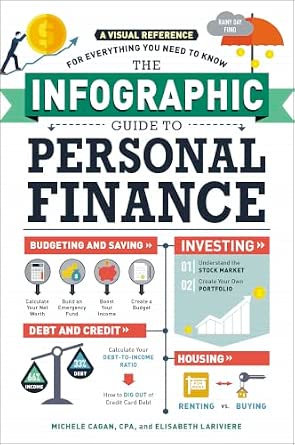 | Best Visual Reference | Format: Infographic-based visual reference | Subject: Personal finance | Topics covered: Money management, budgeting, investing, and financial planning | VIEW LATEST PRICE | See Our Full Breakdown |
| Money Skills for Young Adults: A Beginner’s Guide to Smart Financial Habits |  | Best for Young Adults Building Money Habits | Audience: Young adults | Level: Beginner | Topics covered: Budgeting, saving, investing, and financial independence | VIEW LATEST PRICE | See Our Full Breakdown |
| Dave Ramsey’s Complete Guide to Money |  | Best for Structured Money Guidance | Author: Dave Ramsey | Subject: Personal finance | Topics covered: Money management, budgeting, and wealth-building | VIEW LATEST PRICE | See Our Full Breakdown |
| personal finance books for beginner | Format | Intended audience | Subject |
|---|---|---|---|
| Financial Literacy for Young A | Book | Young adults | Personal finance |
| I Will Teach You to Be Rich: N | Book | Readers seeking to improve financial habits | Personal finance and financial habits |
| Budgeting 101: From Getting Ou | Book | Beginners | Budgeting |
| Personal Finance For Dummies | Book | Beginners | Personal finance |
| Finance for Beginners: 101 Con | Book | Beginners | Finance and personal money management |
| The Simple Path to Wealth: You | Book | Readers seeking financial freedom | — |
| The Psychology of Money: Timel | Book | Readers seeking a healthier relationship with money | — |
| Personal Finance 101: From Sav | Book | Beginners | — |
| Personal Finance for Teens and | Book | Teenagers and young adults | — |
| Personal Finance QuickStart Gu | Book | Personal finance beginners | — |
| The Infographic Guide to Perso | Infographic-based visual reference | — | Personal finance |
| Money Skills for Young Adults: | — | — | — |
| Dave Ramsey’s Complete Guide t | — | — | Personal finance |
More Details on Our Top Picks
Financial Literacy for Young Adults: Manage, Save, and Invest Money for a Secure Future
Financial Literacy for Young Adults focuses on the money skills its intended readers are likely to need first: managing, saving, and investing. That makes it a more age-targeted starting point than Personal Finance For Dummies, which covers a broader range of personal finance topics without a specific young-adult focus in the supplied description. The promise is practical financial independence, rather than a defined course or specialized budgeting method. That breadth can suit a reader building basic habits across several areas, but the available information does not specify particular exercises, examples, or tools. Compared with I Will Teach You to Be Rich, which presents a six-week program, this book appears less structured. Choose it for its audience fit; skip it if you need a clearly outlined step-by-step plan.
Pros:- Targets young adults rather than a general audience
- Covers money management, saving, and investing
- Frames financial skills around greater independence
Cons:- The available description does not detail chapters, examples, or exercises
- No specific planning tools or step-by-step program are identified
Best for: Young adults looking for an introductory guide to managing, saving, and investing as they work toward financial independence.
Not ideal for: Readers who want a clearly specified schedule, worksheets, or detailed investing strategies; the available description does not identify those features.
- Subject:Personal finance
- Intended audience:Young adults
- Topics:Managing, saving, and investing money
- Stated aim:Building a secure and independent financial future
- Format:Book
- ASIN:B0C9SHJZS9
Our verdict“Choose this if you want a young-adult-focused introduction to core money habits, but pick I Will Teach You to Be Rich for a more clearly defined program.”
I Will Teach You to Be Rich: No Guilt. No Excuses. Just a 6-Week Program That Works (Second Edition)
I Will Teach You to Be Rich is the most program-oriented choice in this group: its six-week structure gives beginners a sequence to follow instead of a broad list of finance topics. Its guilt-free approach may also suit readers who want to improve money habits without treating every spending choice as a moral failing. Compared with Budgeting 101, which centers on expenses, debt, goals, and savings, this title presents a wider personal-finance routine rather than a budgeting-only focus. The tradeoff is that a scheduled program may feel restrictive to readers who prefer to learn one topic at a time, and its practical entry-level framing may not satisfy advanced readers. The supplied details describe a second edition but do not specify exactly which content was updated.
Pros:- Organizes guidance into a six-week program
- Promotes a guilt-free approach to financial habits
- Covers practical steps toward improving money management
- Identified as the second edition
Cons:- The supplied information does not explain the specific steps or edition updates
- The program format may be less flexible than a topic-by-topic reference
- May not provide enough depth for advanced readers
Best for: Beginners who want a time-bounded sequence of actions for improving everyday financial habits and prefer a nonjudgmental tone.
Not ideal for: Advanced readers seeking specialist investing guidance, or learners who prefer an open-ended reference over a six-week program.
- Subject:Personal finance and financial habits
- Program length:Six weeks
- Approach:Guilt-free, practical strategies
- Edition:Second edition
- Intended audience:Readers seeking to improve financial habits
- Format:Book
- ASIN:1523505745
Our verdict“Pick this for a structured, approachable action plan; choose Personal Finance For Dummies if you would rather browse a broad introductory reference.”
Budgeting 101: From Getting Out of Debt and Tracking Expenses to Setting Financial Goals and Building Your Savings
Budgeting 101 earns a distinct place for beginners whose immediate need is controlling cash flow, not surveying every corner of personal finance. Its focus connects expense tracking and debt reduction with goals and savings, helping readers see budgeting as a route to broader progress rather than just recording purchases. Compared with Personal Finance For Dummies, it is narrower and more directly centered on a working budget; compared with the six-week plan in I Will Teach You to Be Rich, the supplied description does not promise a fixed schedule. That focus is useful if spending and saving feel disconnected, but it leaves less indication of coverage in areas such as investing. The description also does not identify worksheets or other tools, so readers wanting hands-on templates may need another resource.
Pros:- Directly addresses expense tracking and budgeting
- Links debt reduction with savings and financial goals
- Keeps its guidance focused on practical beginner needs
Cons:- Its budgeting emphasis is narrower than a broad personal finance reference
- The supplied description does not identify worksheets or specific tools
- May offer limited depth for readers beyond the beginner stage
Best for: New budgeters who want to connect expense tracking with debt payoff, savings, and concrete financial goals.
Not ideal for: Readers looking for a broad guide to investing and other personal finance topics, or those who need confirmed worksheets and templates.
- Subject:Budgeting
- Intended audience:Beginners
- Debt topic:Getting out of debt
- Expense topic:Tracking expenses
- Goal-setting topic:Setting financial goals
- Savings topic:Building savings
- Format:Book
- ASIN:150720907X
Our verdict“Choose this if building a workable budget is your first priority; choose Personal Finance For Dummies for a wider introduction to money topics.”
Personal Finance For Dummies
Personal Finance For Dummies is the broadest all-purpose entry here based on the supplied description, spanning budgeting, saving, investing, and debt management. That range makes it a sensible first reference for someone who wants to understand the main parts of personal finance before choosing a narrower focus. In contrast, Budgeting 101 gives more direct attention to expenses, debt, and savings, while Financial Literacy for Young Adults is aimed at a specific age group. The tradeoff with breadth is that readers seeking a focused routine may find this less directed than I Will Teach You to Be Rich‘s six-week program. Its beginner-friendly explanations are a fit for starting out, but the listing does not specify exercises or advanced depth, so it is better for orientation than specialist study.
Pros:- Covers several core personal finance areas in one book
- Designed to explain concepts accessibly to beginners
- Offers a broader subject range than a budgeting-focused guide
Cons:- Broad coverage may provide less focus on any single topic
- May be too basic for readers with established finance knowledge
- The supplied description does not identify exercises or practical tools
Best for: Beginners who want one accessible starting point across budgeting, saving, investing, and debt management.
Not ideal for: Readers who already know the basics and want advanced investing detail, or beginners who need a tightly scheduled action plan.
- Subject:Personal finance
- Intended audience:Beginners
- Budgeting coverage:Yes
- Saving coverage:Yes
- Investing coverage:Yes
- Debt management coverage:Yes
- Format:Book
- ASIN:1394207549
Our verdict“Choose this as a broad first reference; pick Budgeting 101 instead if your immediate goal is to get spending, debt, and savings under control.”
Finance for Beginners: 101 Concepts
Finance for Beginners: 101 Concepts is framed as an accessible overview for readers who want to get familiar with personal finance, investing, and money management before tackling more detailed guidance. Its concept-led approach contrasts with Budgeting 101, which concentrates on specific tasks such as tracking expenses and reducing debt, and with I Will Teach You to Be Rich, which promises a six-week program. This makes the title a potential fit for building a basic vocabulary across several areas, though the supplied description does not list the 101 concepts or explain their order. The stated limits matter: it lacks detailed advanced strategies, examples, and case studies. Readers who learn best by applying worked scenarios may prefer a more practical guide; those wanting an introductory survey may value its broad scope.
Pros:- Aims to explain financial concepts in beginner-friendly language
- Spans personal finance, investing, and money management
- Offers a broad starting point for readers new to the subject
Cons:- The supplied description does not identify or organize the individual concepts
- Does not offer detailed advanced strategies
- Examples and case studies are not specified
Best for: New learners who want an accessible overview of finance and investing concepts before choosing a more specialized guide.
Not ideal for: Readers who need worked examples, case studies, advanced strategies, or a detailed budgeting plan.
- Subject:Finance and personal money management
- Concept count in title:101
- Intended audience:Beginners
- Personal finance coverage:Yes
- Investing coverage:Yes
- Advanced strategies:Limited, per supplied description
- Examples and case studies:Not specified in the supplied description
- Format:Book
- ASIN:B0H14HGBNC
Our verdict“Choose this for a beginner-level survey of finance concepts, but pick Budgeting 101 if you want more direct guidance on everyday money tasks.”
The Simple Path to Wealth: Your Road Map to Financial Independence and a Rich, Free Life
Financial independence is the organizing idea here: the book presents straightforward personal finance and investing principles for readers who want their money choices to support greater freedom. Compared with Personal Finance 101, which surveys topics such as taxes and loans, this pick is more focused on a long-term destination than on a broad primer. That focus can help beginners connect saving and investing to a larger goal instead of treating them as disconnected tasks. The tradeoff is that its guidance is described as clear but not detailed; readers seeking step-by-step investment strategies may need another resource. It is also less centered on money behavior than The Psychology of Money. I’d rank it highest for a beginner who already wants a financial-independence framework, but not for someone who needs a topic-by-topic reference.
Pros:- Straightforward financial guidance is accessible to beginners.
- Connects personal finance and investing to financial independence.
- Offers a clear long-term framework rather than a collection of unrelated money topics.
Cons:- Does not provide detailed investment strategies.
- Its simplified approach may leave advanced investors wanting more depth.
Best for: Beginners who want to organize saving and investing around the goal of financial independence.
Not ideal for: Readers looking for detailed investment instructions or a broad reference covering taxes, loans, and other money topics.
- Format:Book
- Primary focus:Financial independence
- Topics:Personal finance and investing
- Intended audience:Readers seeking financial freedom
- Guidance style:Straightforward and accessible
- Investment detail:Does not provide detailed investment strategies
Our verdict“Choose this if financial independence is your main goal and you prefer a clear framework over detailed investing instruction.”
The Psychology of Money: Timeless Lessons on Wealth, Greed, and Happiness
Money behavior, not a step-by-step plan, is the central appeal of this book. It explores how attitudes toward wealth, greed, and happiness shape financial choices, giving beginners a way to think about the emotions behind spending and saving. That makes it a useful counterpoint to The Simple Path to Wealth, which is more directly focused on financial independence and investing principles. The lessons are described as practical and thought-provoking, but the book is lighter on specific tactics: readers should not expect a detailed budgeting process or investment playbook. Compared with Personal Finance 101, it offers less breadth across practical topics such as taxes and loans. I’d place it here for readers who want to build healthier money habits before choosing a more tactical guide.
Pros:- Explores the psychological influences behind financial decisions.
- Offers practical lessons for developing a healthier relationship with money.
- Engaging, thought-provoking approach can complement a tactical finance guide.
Cons:- Focuses more on mindset than on specific financial tactics.
- Does not offer detailed financial strategies.
Best for: Beginners who want to understand how their attitudes and emotions affect spending, saving, and wealth decisions.
Not ideal for: Readers who need a concrete budget, detailed investment steps, or a broad guide to practical finance topics.
- Format:Book
- Primary focus:Psychology of money
- Themes:Wealth, greed, and happiness
- Intended audience:Readers seeking a healthier relationship with money
- Approach:Timeless lessons and practical insights
- Strategy detail:Limited specific financial strategies
Our verdict“Pick this for perspective on money behavior, then pair it with a more tactical beginner guide if you need concrete steps.”
Personal Finance 101: From Saving and Investing to Taxes and Loans, an Essential Primer on Personal Finance
Wide topic coverage is the reason to choose this primer: it spans saving, investing, taxes, and loans, giving beginners a broad starting point rather than a single financial theme. That makes it a better fit for someone who wants an overview of everyday money subjects than The Psychology of Money, which emphasizes attitudes and behavior. It also covers more distinct areas than The Simple Path to Wealth, whose focus is financial independence. The tradeoff is that a broad primer may not provide the depth or tailored steps a reader needs to act on each topic. The supplied description emphasizes accessible explanations but does not identify tools or specific features, so I would treat it as an introduction rather than a hands-on workbook. It earns this role for breadth, not for detailed coaching.
Pros:- Covers several core personal finance topics in one primer.
- Includes saving, investing, taxes, and loans.
- Clear, accessible explanations suit beginners.
Cons:- Broad coverage may not offer much depth on individual topics.
- The available product information does not identify specific tools or features.
Best for: New learners who want one accessible introduction spanning saving, investing, taxes, and loans.
Not ideal for: Readers seeking an in-depth plan for one specific goal or practical tools and worksheets for managing money.
- Format:Book
- Positioning:Essential personal finance primer
- Intended audience:Beginners
- Topics:Saving, investing, taxes, and loans
- Explanation style:Clear and accessible
- Tools or features:No specific tools or features listed
Our verdict“Choose this as a broad starting point if you want exposure to several money topics before pursuing one in greater depth.”
Personal Finance for Teens and Young Adults: Learn Money Skills Not Taught in School
Age-specific money skills give this book a narrower role than the general beginner guides in this roundup. It covers budgeting, saving, and investing for teenagers and young adults, with the aim of supporting financial independence. Compared with Personal Finance 101, it is less of a broad primer on subjects such as taxes and loans, but its intended audience is more clearly defined. It also differs from The Psychology of Money: the emphasis here is on practical money skills, not primarily on examining attitudes toward wealth. The limitation is that the supplied description does not identify detailed features or the depth of its instruction, and the content may feel basic to advanced learners. I’d choose it for someone building foundational habits early, not an experienced reader looking for sophisticated financial guidance.
Pros:- Targets the money skills teens and young adults need to practice.
- Covers budgeting, saving, and investing.
- Connects foundational money management with financial independence.
Cons:- The described content may be too basic for advanced learners.
- The available product information does not specify detailed features or instructional depth.
Best for: Teenagers and young adults who are learning budgeting, saving, and investing for the first time.
Not ideal for: Advanced learners or adults seeking detailed guidance on a wide range of financial topics.
- Format:Book
- Intended audience:Teenagers and young adults
- Primary focus:Practical money skills
- Topics:Budgeting, saving, and investing
- Stated goal:Supporting financial independence
- Instruction level:Foundational; may be basic for advanced learners
Our verdict“Choose this for a teen or young adult starting with core money habits, rather than for a reader who already knows the basics.”
Personal Finance QuickStart Guide: The Simplified Beginner’s Guide to Eliminating Financial Stress, Building Wealth, and Achieving Financial Freedom
Practical beginner guidance is the draw here: the guide addresses budgeting, saving, and investing while framing those habits around reducing financial stress and building wealth. Compared with Personal Finance 101, it sounds more focused on getting a beginner started than on surveying a wider set of topics such as taxes and loans. It also shares an interest in financial freedom with The Simple Path to Wealth, but the supplied description emphasizes practical personal finance tips rather than a dedicated independence framework. The tradeoff is limited investment depth, and no tools or worksheets are identified, so readers who want a structured workbook or detailed investing instruction may need a supplement. I’d rank it as a straightforward entry point for someone seeking approachable actions, not as a reference for complex decisions.
Pros:- Uses accessible guidance aimed at beginners.
- Focuses on practical budgeting, saving, and investing strategies.
- Connects money management with reducing financial stress and building wealth.
Cons:- Does not provide detailed investment advice.
- No specific tools or worksheets are listed.
Best for: Beginners who want approachable guidance on budgeting, saving, and investing to reduce money stress.
Not ideal for: Readers who need detailed investment advice, worksheets, or a broad reference covering taxes and loans.
- Format:Book
- Positioning:Simplified beginner guide
- Intended audience:Personal finance beginners
- Topics:Budgeting, saving, and investing
- Stated aims:Reducing financial stress, building wealth, and financial freedom
- Investment detail:Limited detailed investment advice
- Tools or worksheets:None specified
Our verdict“Choose this for a simple start on everyday money habits, but look elsewhere if you need detailed investment guidance or workbook-style support.”
The Infographic Guide to Personal Finance: A Visual Reference for Everything You Need to Know
I’d choose this book when financial terms feel easier to grasp through diagrams than through long explanations. Its infographic format gives beginners a visual overview of budgeting, investing, money management, and financial planning, making it useful for quick orientation or as a reference to revisit. Compared with Personal Finance For Dummies, this pick’s defining strength is visual presentation rather than a broad text-led introduction. That format can make core ideas more approachable, but it also limits how much detail each topic can receive. Readers looking for a step-by-step budget or a developed investment strategy may need a more instructional book alongside it. Experienced investors are also likely to find the coverage too introductory. I see it as a clear first pass through personal finance, not a standalone guide to complex decisions.
Pros:- Infographics make foundational money concepts easier to scan and understand.
- Covers budgeting, investing, money management, and financial planning in one overview.
- Works as a handy reference when readers want to revisit a topic quickly.
Cons:- Visual summaries leave limited room for detailed strategies and examples.
- Beginners who need structured, sequential guidance may prefer a more text-led workbook.
- The introductory scope offers little for experienced investors.
Best for: Visual learners who want a broad, approachable introduction to money topics and a quick-reference book to revisit.
Not ideal for: Readers seeking detailed investment instructions, advanced financial analysis, or a step-by-step plan for a specific money goal.
- Format:Infographic-based visual reference
- Subject:Personal finance
- Topics covered:Money management, budgeting, investing, and financial planning
- Intended level:Introductory
- Presentation:Visual and easy to understand
- Use:Overview and quick reference
Our verdict“Choose this for an accessible visual survey of personal finance, but pair it with a more detailed guide for actionable strategies.”
Money Skills for Young Adults: A Beginner’s Guide to Smart Financial Habits
I’d put this on the shortlist for a young adult who wants practical foundations for managing money independently. The focus on budgeting, saving, and financial independence connects everyday habits to longer-term security, while its simple tools are intended to help readers put those ideas into practice. Compared with The Infographic Guide to Personal Finance, this book is more specifically aimed at young adults and habit-building; the infographic title offers a broader visual overview instead. The tradeoff is that this book does not promise detailed, step-by-step investment instruction, so readers ready to compare investment choices may outgrow its guidance. Its audience focus is a strength for someone starting out, but less useful for readers who want an all-ages reference or advanced financial detail.
Pros:- Tailors foundational financial guidance to young adults.
- Covers budgeting, saving, investing, and financial independence.
- Includes simple tools for managing budgets and savings.
- Emphasizes habits aimed at building long-term financial security.
Cons:- Does not provide detailed, step-by-step investment strategies.
- Its young-adult focus may be less relevant to readers at other life stages.
- The described guidance centers on basics rather than advanced financial decisions.
Best for: Young adults starting to manage their own budgets and savings who want accessible advice centered on practical habits.
Not ideal for: Readers seeking detailed investment strategies, advanced financial topics, or a broad reference intended for multiple life stages.
- Audience:Young adults
- Level:Beginner
- Topics covered:Budgeting, saving, investing, and financial independence
- Approach:Practical advice and simple tools
- Habit focus:Developing smart financial habits
- Stated goal:Building financial security
Our verdict“Pick this if you’re a young adult building everyday budget and savings habits, but look elsewhere for in-depth investment instruction.”
Dave Ramsey’s Complete Guide to Money
This is the pick I’d favor for a beginner who wants practical direction across budgeting and wealth-building rather than a visual overview or an age-specific introduction. Its step-by-step approach to managing personal finances gives readers a more structured path than The Infographic Guide to Personal Finance, whose strength is quick visual reference. The wider personal-finance scope also makes it less narrowly aimed than Money Skills for Young Adults. That breadth can help readers seeking an organized starting point, though the book is not described as offering detailed investment strategies. Its guidance may also feel too conservative for readers who prefer a more aggressive approach to investing or wealth-building. I’d choose it for accessible, practical financial direction, while treating it as a framework rather than a detailed investment manual.
Pros:- Provides practical guidance across personal finance, budgeting, and wealth-building.
- Step-by-step framing can give beginners a clearer starting path.
- Easy-to-understand guidance suits readers new to money management.
- Its broad audience makes it less age-specific than a young-adult-focused guide.
Cons:- Does not offer detailed investment strategies.
- Some readers may find its financial advice too conservative.
- Readers seeking a visual quick reference may prefer The Infographic Guide to Personal Finance.
Best for: Beginners who want structured, accessible guidance on budgeting, managing personal finances, and building wealth.
Not ideal for: Readers who want detailed investment strategies or prefer less conservative guidance on wealth-building.
- Author:Dave Ramsey
- Subject:Personal finance
- Topics covered:Money management, budgeting, and wealth-building
- Guidance style:Step-by-step
- Reading level:Accessible for beginners
- Investment detail:Does not provide detailed investment strategies
- ISBN-10:1937077209
Our verdict“Choose this for approachable, structured guidance on everyday finances, but not as your sole source for investment strategy.”

How We Picked
I compared the 13 books by how well they serve a beginner who needs understandable explanations and a useful next step. The criteria included topic coverage, clarity of presentation, practical exercises or action plans, suitability for different ages, and whether a book focuses on budgeting, debt, saving, investing, or money behavior. I also looked at likely tradeoffs: a compact introduction may be approachable but limited, while a broad guide can cover more ground without offering the strongest depth on any single topic.
The ranking favors books that combine accessible teaching with a clear path to action, which puts I Will Teach You to Be Rich in the overall lead. Focused titles rank well for readers whose needs match their subject, rather than being treated as universal answers. I placed visual and concept-first options lower for readers seeking a complete plan, though they may be better starting points for someone who finds conventional financial prose hard to stick with. The books are not interchangeable, and the best fit depends on the reader’s age, goals, and preferred learning style.
| personal finance books for beginner | Subject | Format |
|---|---|---|
| Financial Literacy for Young A | Personal finance | Book |
| I Will Teach You to Be Rich: N | Personal finance and financial habits | Book |
| Budgeting 101: From Getting Ou | Budgeting | Book |
| Personal Finance For Dummies | Personal finance | Book |
| Finance for Beginners: 101 Con | Finance and personal money management | Book |
| The Simple Path to Wealth: You | — | Book |
| The Psychology of Money: Timel | — | Book |
| Personal Finance 101: From Sav | — | Book |
| Personal Finance for Teens and | — | Book |
| Personal Finance QuickStart Gu | — | Book |
| The Infographic Guide to Perso | Personal finance | Infographic-based visual reference |
| Money Skills for Young Adults: | — | — |
| Dave Ramsey’s Complete Guide t | Personal finance | — |
Factors to Consider When Choosing Personal Finance Books For Beginners
Before choosing a book, identify the money decision you want help with now. A beginner can get more from a focused guide read carefully than from a broad reference that never gets used. These factors help narrow the field and avoid buying a book for the wrong job.
Start With the Money Problem You Need to Solve
Pick the book around a specific question: building a budget, paying down debt, starting to invest, or changing spending habits. Beginners often choose the broadest title and then feel overwhelmed by material they do not need yet. A focused book can create momentum, but it may leave questions about taxes, insurance, or borrowing unanswered. If several financial tasks are competing for attention, start with the one that affects your monthly cash flow most. You can add a second book later rather than expecting one guide to cover every decision. A clear reading goal also makes it easier to tell whether the book is helping.
Match the Teaching Style to How You Learn
Some readers prefer a step-by-step program, while others learn best from short definitions, stories, diagrams, or examples. Do not assume that a concise or illustrated book will be shallow, or that a long book will be more useful. Think about what keeps you reading: exercises, plain-language explanations, visual summaries, or a strong narrative voice. A format that feels approachable can matter more than a book’s broadest possible coverage. One common mistake is buying a dense reference when you need a guided first pass. If you want a resource to revisit, a structured reference may serve you better than a linear read.
Check Whether the Advice Fits Your Starting Point
A reader just learning to track spending needs different guidance from someone ready to compare investment approaches. Books aimed at teens and young adults may explain foundational habits in a familiar context, while general guides can address a wider range of adult decisions. Age labels are only a starting point; financial experience and current responsibilities matter too. Someone managing rent, debt, or family costs may need examples that reflect those pressures. Avoid choosing a book solely because its audience sounds like you if its subject does not match your immediate needs. Look for a level that challenges you without requiring knowledge you have not yet built.
Separate General Principles From Personal Advice
Personal finance books offer frameworks, not a full review of your circumstances. Advice about investing, debt repayment, or budgeting can depend on income stability, location, obligations, and risk tolerance. A confident authorial voice may make a method easier to follow, but it does not make every recommendation suitable for every household. Treat examples as starting points and check whether rules or tax details apply where you live. A frequent mistake is copying a plan without accounting for emergency savings, high-interest debt, or irregular income. Use the book to prepare better questions when a decision calls for professional guidance.
Decide How Much Depth You Need
A quick introduction may be the right first purchase if your goal is to understand core terms and build confidence. If you need a plan you can follow over several weeks, prioritize structure and practical assignments. A deeper book can be rewarding when you are ready to examine investing or financial independence, but it may not help with an urgent budgeting problem. Paying for more breadth in a book is only useful if you will read and apply it. Consider whether you want a single starting point or a small learning sequence. For many beginners, one practical guide followed by one focused book is more useful than several overlapping primers.
Look for an Approach You Can Keep Using
A book’s usefulness depends partly on whether its system fits your routines. A detailed tracking method may suit someone who likes regular reviews, while a simpler automated approach may work better for a busy reader. Before committing to a system, ask how often it expects you to check accounts, update plans, or make decisions. Elaborate methods can fail when upkeep becomes another source of stress. On the other hand, a very hands-off framework may feel insufficient if you need more control over spending. Favor a repeatable habit over a plan that sounds impressive but is hard to maintain.
Frequently Asked Questions
Should I start with a broad personal finance primer or a book about one topic?
Choose a broad primer if you need a map of subjects such as budgeting, credit, saving, and investing before deciding where to focus. Choose a specialized book if one problem is already clear, such as getting control of spending or learning investing basics. A broad book can reduce gaps in your knowledge, but its coverage may feel less actionable on a specific issue. A focused title can be easier to apply, though you may need another source for topics it does not cover. If you are unsure, begin with the question that has the most immediate effect on your finances.
Which kind of book is best if I want a plan I can act on right away?
Look for a book organized around sequential tasks, exercises, or decisions rather than one built mainly as a reference. A clear plan can turn reading into small actions, such as reviewing accounts or setting a savings target. Check whether the steps assume a particular income pattern, debt situation, or investing readiness. A program can create useful structure, but it may not fit every reader’s circumstances without adjustment. If you prefer to work at your own pace, a practical guide with short sections may be easier to use than a fixed schedule.
Are books for teens and young adults suitable for an adult beginner?
They can be a good fit if you want approachable explanations of core habits and are still learning basic money concepts. Their examples may be less relevant if you already manage major responsibilities such as a mortgage, dependents, or complex debt. General beginner books often cover a wider set of adult financial decisions, though they may not speak as directly to a younger reader. Compare the topics and examples rather than relying on the audience label alone. An adult beginner may benefit from a youth-focused book for foundations and a broader guide for the next stage.
Can one beginner book cover budgeting, debt, investing, and money behavior well?
A general guide can introduce all four, but a single book may not give each subject equal depth. Budgeting and debt management often require practical routines, while investing and money behavior call for different explanations and decisions. A book that tries to do everything may be a useful orientation rather than a complete reference. Start with one guide that addresses your most urgent need, then add a focused read when you reach the next question. This staged approach can prevent information overload and help you apply what you learn.
How can I tell whether a book’s financial advice applies to my situation?
Check the assumptions behind the advice: where the reader lives, what kind of income they have, how much debt they carry, and how much risk they can accept. General principles can travel well, but tax rules, account types, and lending practices vary by location. Treat author examples as illustrations rather than instructions that must be copied exactly. If a recommendation conflicts with your obligations or financial stability, pause and seek a second perspective. A useful book should help you frame decisions, not remove the need to judge whether its framework fits.
Conclusion
For the strongest all-around starting point, I recommend I Will Teach You to Be Rich because its program gives beginners a practical route through money tasks. Readers seeking the clearest investing focus should choose The Simple Path to Wealth, while those who want to understand how emotions shape financial decisions may prefer The Psychology of Money. For a value-minded reader, a concise concept guide such as Finance for Beginners: 101 Concepts can make sense as a low-commitment introduction, though it is less suited to readers who want a full plan. Young readers can start with an age-specific title such as Personal Finance for Teens and Young Adults; readers who want broad reference coverage should look toward Personal Finance For Dummies or Personal Finance 101. Choose the book that matches your next money decision, not the one that promises to cover every possible topic.