To use the IRS Tax Withholding Estimator, gather your recent pay stub, last tax return, and any income documentation. Enter accurate details about your filing status, income sources, deductions, and credits into the online tool. Make sure your information is current and precise to get reliable results. The estimator will show if your withholding matches your projected tax liability, and you’ll learn how to adjust your W-4 accordingly for better tax planning.
Key Takeaways
- Gather recent pay stubs, tax returns, and income details before starting the estimator.
- Enter accurate, current income, filing status, deductions, and credits into the tool.
- Review the estimator’s projected tax liability and compare it with your current withholding.
- Follow recommendations to adjust your Form W-4 to correct under- or over-withholding.
- Use the results regularly to plan ahead, prevent surprises, and optimize your tax payments.
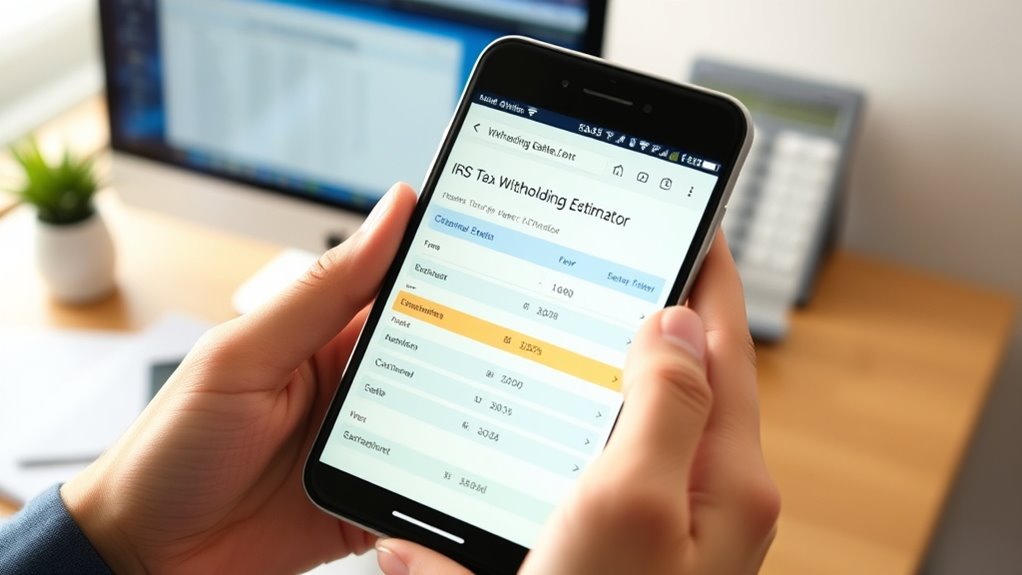
If you want to guarantee your tax withholding is accurate and avoid surprises at tax time, using the IRS Tax Withholding Estimator is a smart move. This tool helps you make informed decisions about your withholding, ensuring you neither owe a large amount nor give the government an interest-free loan. It’s especially valuable for tax planning and refund optimization, allowing you to adjust your withholding based on your current financial situation. By taking a few minutes to use the estimator, you can fine-tune your withholding to better match your expected tax liability.
Start by gathering your most recent pay stub, your last tax return, and any other income documents. The IRS Tax Withholding Estimator requires details like your filing status, income sources, deductions, credits, and additional income or withholding. Inputting accurate figures is vital because the estimator uses this information to project your tax liability and determine whether your current withholding is sufficient. If you’ve experienced changes in income, such as a new job, a side gig, or a significant increase in earnings, updating these details can help you prevent underpayment penalties or unnecessary overpayment.
Once you’ve entered your information, the estimator provides a clear picture of your expected tax obligation and compares it to your current withholding. If it shows that your withholding is too low, the tool offers recommendations for adjusting your Form W-4 to increase withholding. Conversely, if you’re overpaying, it suggests ways to reduce withholding, giving you more take-home pay throughout the year. Using this guidance enables you to plan better for upcoming tax seasons, making your tax planning more strategic and less stressful. Additionally, understanding your credit score can influence your overall financial planning and help you make better investment or borrowing decisions.
The IRS Tax Withholding Estimator isn’t just about avoiding surprises; it’s also a powerful tool for refund optimization. By aligning your withholding with your actual tax liability, you can maximize your refund or minimize what you owe at tax time. Overwithholding means giving the government an interest-free loan, while underwithholding could lead to penalties and interest charges. The estimator helps you strike the right balance, helping you keep more of your money throughout the year and receive a refund that better reflects your financial situation.
Regularly using the estimator, especially after major life changes or income fluctuations, keeps your tax planning on track. It’s a proactive approach that can save you money, reduce stress, and give you more control over your finances. With just a few minutes and some accurate information, you can optimize your withholding strategy, making tax season less intimidating and more predictable.
Frequently Asked Questions
Can I Use the Estimator for State Tax Withholding?
Yes, you can use the IRS Tax Withholding Estimator to help ascertain your state tax withholding needs. While it mainly focuses on federal taxes, it can guide you in making withholding adjustments for your state taxes too. You’ll need to input your state-specific information, so be sure to select your state and update relevant details. This helps ensure that your withholding accurately covers both federal and state tax obligations, avoiding surprises at tax time.
How Often Should I Update My Withholding Estimates?
Did you know that over 40% of taxpayers miss ideal withholding? You should update your withholding estimates whenever you experience significant life changes, like a new job or a major income boost. Regularly checking and making payroll adjustments helps avoid surprises at tax time. If your situation changes, consider making estimated payments to stay on track. Doing this annually or whenever your financial picture shifts keeps your withholding accurate and stress-free.
What Documents Do I Need to Use the Estimator?
To use the IRS Tax Withholding Estimator, you’ll need your recent tax documents like W-2s, 1099s, or other income statements. Make certain you know your filing status, whether single, married filing jointly, or head of household, as it influences calculations. Gather details on deductions, credits, and other income sources. Having these documents ready helps guarantee accurate estimates, so you can adjust your withholding accordingly.
Is the Estimator Accurate for Self-Employed Income?
The estimator can be fairly accurate for self-employed income, but keep in mind its limitations. It uses your self-employment estimates, including income and expenses, to give you an idea of your tax withholding needs. However, fluctuations in your income or deductions can affect accuracy. To get the best results, update the estimator regularly and consider consulting a tax professional for complex situations, ensuring you’re not under- or over-withholding.
Can I Adjust Withholding Directly Through the IRS Website?
Think of your taxes as a garden; adjusting your withholding is like watering the right plants at the right time. You can directly modify your withholding by submitting a new W-4 form through the IRS website, helping you fine-tune your tax refund strategies. Doing so prevents withholding penalties and keeps your financial landscape balanced, ensuring you don’t over- or under-water your tax obligations.
Conclusion
Using the IRS Tax Withholding Estimator helps guarantee you’re not overpaying or underpaying taxes. It’s easy to stay on top of your finances and avoid surprises at tax time. Don’t let fear or confusion hold you back—taking control now can give you peace of mind and financial security. Remember, a little effort today can save you stress and money tomorrow. Start using the estimator and feel confident about your tax situation!