

For index funds for beginners, my best overall starting point is Index Fund Investing for Beginners: A Six-Level Guide to VOO, VTI, and the 3-Fund Portfolio, which connects core fund choices to a simple portfolio framework. Index Investing for Dummies is a strong pick for readers who want a broad, plain-language introduction, while The Little Book of Common Sense Investing offers a focused case for low-cost, long-term investing. The books differ in scope: some explain funds and account basics, while others concentrate on ETFs, portfolio construction, or investing principles. A broader guide may leave index-fund details brief; a focused book may assume you already know basic investing terms. Read on for my full comparison and help matching a book to your starting point.

Get smart everyday buys delivered free with Prime
- Fast, free delivery on millions of items
- Prime Video, Amazon Music and more included
- Member-only deals all year
Key Takeaways
- The strongest starting point is specific: The Six-Level Guide names VOO, VTI, and the 3-fund portfolio, giving beginners concrete concepts to learn rather than only general investing advice.
- Broad primers and focused guides solve different problems: Investing 101 covers a wider investing landscape, while books centered on index funds or ETFs leave more room for the topic you searched for.
- ETF knowledge is not the same as index-fund knowledge: Several titles emphasize ETFs, so readers should check whether they also explain mutual funds, diversification, and how fund structure affects day-to-day investing.
- Classic principles can complement practical instructions: The Little Book of Common Sense Investing stands out for its long-term, low-cost philosophy, but beginners seeking step-by-step account or portfolio guidance may want a more instructional companion.
- Near-duplicate titles call for close reading: The list includes similarly named books, including two titles called All About Index Funds; compare their editions and contents before choosing by title alone.
| ETFs, Index Funds & Mutual Funds: The Absolute Beginner’s Guide |  | Best for Comparing Fund Types | Format: Guide | Intended audience: Absolute beginners | Fund topics: Exchange-traded funds, index funds, mutual funds | VIEW LATEST PRICE | See Our Full Breakdown |
| The Trail of Successful Investing in Index ETF Funds |  | Best for Exploring Index ETF Investing | Format: Not provided | Intended audience: Not provided | Stated topic: Investing in index ETF funds | VIEW LATEST PRICE | See Our Full Breakdown |
| Index Fund Investing for Beginners: A Six-Level Guide to VOO, VTI, and the 3-Fund Portfolio |  | Best for Learning Named Portfolio Approaches | Format: Six-level guide | Intended audience: Beginners | Named funds: VOO and VTI | VIEW LATEST PRICE | See Our Full Breakdown |
| All About Index Funds: The Easy Way to Get Started |  | Best Overall for Practical Beginner Guidance | Format: Beginner-friendly guide | Intended audience: New investors | Primary topic: Index fund investing | VIEW LATEST PRICE | See Our Full Breakdown |
| Index Investing for Dummies |  | Best for a Familiar Beginner-Guide Format | Format: Book | Intended audience: Beginners | Primary topic: Index investing | VIEW LATEST PRICE | See Our Full Breakdown |
| Investing 101: From Stocks and Bonds to ETFs and IPOs – An Essential Primer on Building a Profitable Portfolio (Adams 101 Series) |  | Best Broad Investment Primer | Format: Book | Series: Adams 101 Series | Audience: Beginning investors | VIEW LATEST PRICE | See Our Full Breakdown |
| ETF Investing for Beginners: A Step-by-Step Guide to Building Passive Income and Long-Term Wealth |  | Best ETF-Focused Starting Point | Format: Book | Topic: ETF investing | Audience: Beginners | VIEW LATEST PRICE | See Our Full Breakdown |
| Index Funds & ETFs: What They Are and How to Make Them Work for You |  | Best for Comparing Index Funds and ETFs | Format: Book | Title-stated topics: Index funds and ETFs | Title-stated purpose: Explains what the fund types are and how to use them | VIEW LATEST PRICE | See Our Full Breakdown |
| The Little Book of Common Sense Investing: The Only Way to Guarantee Your Fair Share of Stock Market Returns | 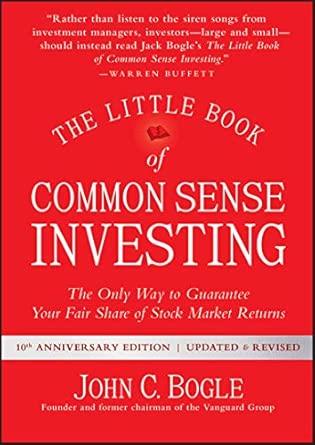 | Best for Passive-Investing Principles | Format: Book | Title-stated theme: Common-sense investing | Title-stated focus: A fair share of stock-market returns | VIEW LATEST PRICE | See Our Full Breakdown |
| All About Index Funds |  | Best for a Focused Index-Fund Topic | Format: Book | Title-stated topic: Index funds | Intended reader: Not specified in the supplied product data | VIEW LATEST PRICE | See Our Full Breakdown |
| Index Fund Investing for Beginners: Simple Strategies to Build Wealth with Passive Income |  | Best for VOO and VTI Context | ASIN: B0H4SH1267 | Format: Book | Audience: Beginners | VIEW LATEST PRICE | See Our Full Breakdown |
| Index Funds vs. ETFs vs. Mutual Funds: A Beginner’s Guide to Investing |  | Best for Comparing Fund Types | ASIN: B0GGMRF8PT | Format: Book | Audience: Beginners | VIEW LATEST PRICE | See Our Full Breakdown |
| Index Investing for Absolute Beginners: Grow Your Wealth Without Picking Stocks |  | Best for Avoiding Stock Picking | ASIN: B0FRRFKPVB | Format: Book | Audience: Absolute beginners | VIEW LATEST PRICE | See Our Full Breakdown |
| How To Invest In Index Funds: A Quick-Start Handbook for Normal People |  | Best for Action-Oriented Starters | ASIN: B0F4CP359L | Format: Book | Audience: Beginners and novice investors | VIEW LATEST PRICE | See Our Full Breakdown |
| Index Fund and ETF Investing for Beginners |  | Best for Low-Cost ETF Portfolio Basics | ASIN: B0HJBZWW2N | Format: Book | Audience: Beginners | VIEW LATEST PRICE | See Our Full Breakdown |
| index funds for beginner | Format | ASIN |
|---|---|---|
| ETFs | Guide | — |
| The Trail of Successful Invest | Not provided | — |
| Index Fund Investing for Begin | Six-level guide | — |
| All About Index Funds: The Eas | Beginner-friendly guide | — |
| Index Investing for Dummies | Book | — |
| Investing 101: From Stocks and | Book | 1440595135 |
| ETF Investing for Beginners: A | Book | 1915404088 |
| Index Funds & ETFs: What They | Book | 1545291853 |
| The Little Book of Common Sens | Book | 1119404509 |
| All About Index Funds | Book | 0071387056 |
| Index Fund Investing for Begin | Book | B0H4SH1267 |
| Index Funds vs. ETFs vs. Mutua | Book | B0GGMRF8PT |
| Index Investing for Absolute B | Book | B0FRRFKPVB |
| How To Invest In Index Funds: | Book | B0F4CP359L |
| Index Fund and ETF Investing f | Book | B0HJBZWW2N |
More Details on Our Top Picks
ETFs, Index Funds & Mutual Funds: The Absolute Beginner’s Guide
This guide’s broad scope makes it a sensible starting point for readers who are unsure how ETFs, index funds, and mutual funds differ. That comparison can help a beginner sort out fund structure before choosing an investment approach. Unlike Index Fund Investing for Beginners: A Six-Level Guide to VOO, VTI, and the 3-Fund Portfolio, which names specific approaches, this title appears to cover several fund categories rather than focusing on a particular index-fund plan. That breadth is also its tradeoff: the available information does not confirm how much space it gives to portfolio construction, fees, or practical account steps. I’d choose it for orientation, not as a substitute for checking fund details or building a specific allocation.
Pros:- Covers ETFs, index funds, and mutual funds in one beginner-focused guide
- Can help readers distinguish fund categories before making a choice
- Broad subject scope may suit people still learning basic investing terminology
Cons:- The provided information does not confirm specific portfolio-building instructions
- No details are available about coverage of fees, diversification, or account setup
- Its broad scope may offer less focus on index-fund strategy than the VOO- and VTI-focused guide
Best for: New investors who want a basic comparison of ETFs, index funds, and mutual funds before choosing what to study next
Not ideal for: Readers seeking a confirmed portfolio blueprint, detailed fund comparisons, or advanced investing guidance; the available description does not establish that level of detail
- Format:Guide
- Intended audience:Absolute beginners
- Fund topics:Exchange-traded funds, index funds, mutual funds
- Primary focus:Introduction to multiple fund types
- Index-fund coverage:Included among the covered topics
- Publisher:Not provided
Our verdict“Choose this as an introductory comparison of fund types, but not as a confirmed step-by-step index-fund portfolio guide.”
The Trail of Successful Investing in Index ETF Funds
The title points toward index ETF investing, making this a possible fit for beginners who want to learn about exchange-traded funds as a route to index exposure. Compared with ETFs, Index Funds & Mutual Funds: The Absolute Beginner’s Guide, its stated subject is narrower, which could help readers focus on ETF-based investing rather than comparing several fund structures. The available product data, however, gives no description of its lessons, examples, or intended level. I can’t confirm whether it explains diversification, fees, or how to choose an ETF, so this is a less certain pick than All About Index Funds: The Easy Way to Get Started, whose description specifies practical beginner guidance. Treat the title as a topic signal, not proof of a complete investing plan.
Pros:- Title identifies index ETF investing as its central topic
- Narrower apparent focus than a guide spanning ETFs, index funds, and mutual funds
- May suit readers who want to explore ETF-based index investing
Cons:- No description is provided to verify its teaching approach or coverage
- The available data does not confirm beginner-level explanations or practical examples
- No stated information on diversification, fees, or portfolio construction
Best for: Beginners specifically curious about index ETFs who are comfortable checking the book’s contents before relying on it as a learning plan
Not ideal for: Readers who need confirmed step-by-step instructions on portfolio design, fund selection, or investing costs
- Format:Not provided
- Intended audience:Not provided
- Stated topic:Investing in index ETF funds
- Primary focus:Index ETF investing
- Publisher:Not provided
- Product description:Not provided
Our verdict“Consider it only if index ETFs are your specific learning interest and you can verify its contents first.”
Index Fund Investing for Beginners: A Six-Level Guide to VOO, VTI, and the 3-Fund Portfolio
This guide earns a distinct place for naming VOO, VTI, and the three-fund portfolio, giving beginners concrete approaches to investigate rather than a general introduction alone. Its six-level framing and place in The Everyday Investor’s Library suggest an organized learning path, though the supplied information does not explain what each level covers. Compared with All About Index Funds: The Easy Way to Get Started, which is described as offering plain-language steps on diversification and fees, this title signals more specific fund and portfolio topics but provides less confirmed detail about its teaching method. That makes it appealing to readers who already want to compare these approaches, while leaving questions about fund selection criteria and implementation unanswered.
Pros:- Names VOO and VTI as core topics
- Includes the three-fund portfolio among its stated subjects
- Uses a six-level guide structure
- Identified as part of The Everyday Investor’s Library
Cons:- The available description does not explain the six levels or their sequence
- No supplied detail confirms how it compares funds or explains costs
- Practical investing steps beyond the named topics are not established
Best for: New investors who want a guide explicitly centered on VOO, VTI, and the three-fund portfolio
Not ideal for: Readers who prefer a fully documented step-by-step description before choosing a guide, or who want confirmed coverage of fees and account setup
- Format:Six-level guide
- Intended audience:Beginners
- Named funds:VOO and VTI
- Portfolio topic:Three-fund portfolio
- Series:The Everyday Investor’s Library
- Book number:2
Our verdict“Pick this if VOO, VTI, and a three-fund portfolio are your main questions, while recognizing that the supplied details do not verify its depth.”
All About Index Funds: The Easy Way to Get Started
This is the clearest match for a beginner who wants to move from basic concepts toward a workable long-term approach. Its description specifically promises plain-language explanations, portfolio diversification, fee reduction, and steps for selecting and managing funds. Those practical themes make it more decision-ready than ETFs, Index Funds & Mutual Funds: The Absolute Beginner’s Guide, whose supplied details confirm a broad introduction but not portfolio guidance. The tradeoff is depth: the material is aimed at newcomers, so experienced investors seeking advanced tactics may find it limited. I’d rank it first for a reader building foundational knowledge, while advising them to verify current fund information separately because the product data does not specify individual funds or the guide’s publication details.
Pros:- Described as clear and jargon-free for newcomers
- Includes practical guidance on selecting and managing index funds
- Addresses diversification and portfolio construction
- Emphasizes minimizing fees and maintaining long-term discipline
Cons:- Limited depth for experienced investors seeking advanced tactics
- The supplied details do not identify specific funds covered
- No publication date or update information is provided
Best for: First-time investors who want accessible explanations and practical direction on diversification, fund costs, and long-term discipline
Not ideal for: Experienced investors looking for advanced portfolio tactics, or readers seeking a confirmed list of specific funds and current fund data
- Format:Beginner-friendly guide
- Intended audience:New investors
- Primary topic:Index fund investing
- Portfolio coverage:Building a diversified portfolio
- Fund-selection coverage:Selecting and managing index funds
- Approach:Plain-language, step-by-step guidance
Our verdict“Choose this for a practical, accessible introduction to building and managing a diversified index-fund portfolio.”
Index Investing for Dummies
The title presents this as a beginner-oriented guide to index investing, making it a straightforward candidate for readers who want an entry point rather than an advanced strategy book. Its broad framing differs from Index Fund Investing for Beginners: A Six-Level Guide to VOO, VTI, and the 3-Fund Portfolio, which identifies specific funds and a portfolio approach in its title. The tradeoff is that the supplied information offers no description beyond the beginner focus: I can’t confirm whether this book explains fees, diversification, fund selection, or practical account steps. By comparison, All About Index Funds: The Easy Way to Get Started has those topics explicitly described, so it is the safer choice for readers who want verified practical coverage. This title makes more sense for someone drawn to its introductory format who can check the contents first.
Pros:- Clearly signals index investing as its subject
- Identifies beginners as its intended audience
- Broad topic framing may suit readers not yet committed to one fund or portfolio approach
Cons:- No description is supplied to confirm specific lessons or examples
- Coverage of fees, diversification, and fund selection is not established
- Offers less verifiable practical detail than All About Index Funds: The Easy Way to Get Started
Best for: First-time investors who want an introductory book focused broadly on index investing and can review its contents before purchase
Not ideal for: Readers who need confirmed instructions on choosing funds, reducing fees, or assembling a portfolio
- Format:Book
- Intended audience:Beginners
- Primary topic:Index investing
- Stated scope:Introductory guide
- Publisher:Not provided
- Product description:No further details provided
Our verdict“Consider it as a general introduction only if its contents confirm the practical beginner guidance you need.”
Investing 101: From Stocks and Bonds to ETFs and IPOs – An Essential Primer on Building a Profitable Portfolio (Adams 101 Series)
Investing 101 is the broadest starting point in this group: it covers stocks, bonds, ETFs, and IPOs rather than focusing only on index funds. For a beginner who needs the basic vocabulary before choosing a fund, that wider scope can make the tradeoffs between investment types easier to follow. Its accessible style and step-by-step portfolio guidance also give it more practical direction than the sparse descriptions available for Index Funds & ETFs and All About Index Funds. The tradeoff is focus: readers who already know they want a low-cost, diversified index-fund approach may find some coverage less relevant, and the material may be too basic for experienced investors. I’d pick this as a foundation, not as a specialist manual for comparing index funds.
Pros:- Covers stocks, bonds, ETFs, and IPOs, giving beginners a wider investing vocabulary.
- Accessible presentation is suited to readers with little prior investing knowledge.
- Includes practical, step-by-step portfolio-building guidance.
- Explains more than index funds alone, which can help readers compare investment approaches.
Cons:- Its broad coverage leaves less room for an index-fund-only focus.
- The beginner level may not satisfy experienced investors seeking advanced strategies.
Best for: New investors who want an accessible overview of several investment types before deciding whether to build a portfolio around index funds.
Not ideal for: Readers who already understand stocks and bonds and want detailed, index-fund-specific guidance or advanced portfolio strategies.
- Format:Book
- Series:Adams 101 Series
- Audience:Beginning investors
- Topics:Stocks, bonds, ETFs, IPOs, portfolio construction, and portfolio management
- Approach:Beginner-friendly overview with practical guidance and foundational theory
- Index-fund focus:Part of a broader investing overview
- ASIN:1440595135
Our verdict“Choose this for a broad, beginner-level foundation; choose a dedicated index-fund title if your main goal is learning how to select and use index funds.”
ETF Investing for Beginners: A Step-by-Step Guide to Building Passive Income and Long-Term Wealth
ETF Investing for Beginners has a narrower promise than Investing 101: it centers on exchange-traded funds and beginner strategies for long-term wealth and passive income. That focus may suit someone who wants to learn about ETFs without first reading a wider survey of stocks, bonds, and IPOs. The title also references seven ETFs to consider, which could give readers examples to investigate. But the available product information does not describe the book’s selection criteria, fund analysis, or the quality of its advice, so I can’t treat that list as a substitute for learning how to evaluate funds. Compared with the more general The Little Book of Common Sense Investing, this book’s stated emphasis is ETF-specific, but its advice is harder to judge from the supplied details.
Pros:- Explicitly aimed at beginner investors.
- Focuses on ETFs rather than covering investing vehicles broadly.
- Addresses passive income and long-term wealth strategies.
- References seven ETF examples that readers can research further.
Cons:- Available details do not establish how the book evaluates or selects ETF examples.
- The description does not provide enough information to judge the depth or reliability of its advice.
Best for: New investors who specifically want an ETF-oriented introduction and are comfortable verifying fund examples and advice independently.
Not ideal for: Readers seeking a well-documented account of the book’s methods or a clearly evidenced index-fund curriculum before choosing a guide.
- Format:Book
- Topic:ETF investing
- Audience:Beginners
- Stated approach:Step-by-step guide
- Stated goals:Passive income and long-term wealth
- ETF examples referenced:Seven ETFs
- ASIN:1915404088
Our verdict“Consider it if you want an ETF-centered beginner guide, but choose a better-documented title if you need to judge its methods before buying.”
Index Funds & ETFs: What They Are and How to Make Them Work for You
The title gives Index Funds & ETFs a useful beginner-facing angle: it pairs two fund types that new investors often treat as interchangeable. That makes it a potentially relevant pick for readers who want to understand both categories before settling on an approach. Compared with ETF Investing for Beginners, which explicitly centers on ETFs and references seven examples, this title signals a broader comparison between ETFs and index funds. The limitation is that no description or other content details were supplied, so I can’t verify how clearly it explains the distinction, whether it covers practical selection criteria, or how much index-fund guidance it offers. I’d treat its title as a promising fit, not proof of depth; readers who need a reliably described, wider primer may prefer Investing 101.
Pros:- Names both index funds and ETFs as central topics.
- Frames the subject around understanding fund types and putting them to use.
- May suit readers comparing two commonly discussed ways to invest in funds.
Cons:- No description was provided to confirm its depth or practical guidance.
- The available information does not establish how it explains differences between index funds and ETFs.
Best for: Beginners who want a guide explicitly framed around understanding both index funds and ETFs before choosing between them.
Not ideal for: Buyers who need confirmed details about the book’s investing method, coverage, or practical examples before selecting a resource.
- Format:Book
- Title-stated topics:Index funds and ETFs
- Title-stated purpose:Explains what the fund types are and how to use them
- Intended reader:Not specified in the supplied product data
- Publication details:Not provided
- Description:Not provided
- ASIN:1545291853
Our verdict“Its stated scope fits readers comparing index funds with ETFs, but choose a more fully described guide if you need evidence of the book’s approach.”
The Little Book of Common Sense Investing: The Only Way to Guarantee Your Fair Share of Stock Market Returns
The Little Book of Common Sense Investing stands apart from the more instructional-sounding Investing 101 by foregrounding an investing philosophy: common sense and a fair share of stock-market returns. That framing can appeal to beginners who want to understand the case for a straightforward, long-term approach rather than start with a catalogue of investment products. Still, the supplied details give no chapter outline, strategy steps, or specific coverage of index-fund selection, so I can’t confirm how directly it guides a novice from principle to action. The title’s promise is also narrower than a practical survey of stocks, bonds, ETFs, and IPOs. I’d choose it for a principles-led perspective, while readers seeking an explicit ETF comparison may find Index Funds & ETFs a closer match by title.
Pros:- Presents a clear common-sense investing theme.
- Focuses on participating in stock-market returns rather than a broad survey of investment vehicles.
- May appeal to beginners seeking a long-term investing perspective.
Cons:- The supplied information does not detail practical steps or fund-selection methods.
- Available details do not confirm how specifically it addresses index funds.
Best for: Beginners looking for a principles-led introduction to common-sense, long-term investing and the idea of sharing in market returns.
Not ideal for: Readers who need a clearly outlined step-by-step guide to comparing index funds, ETFs, and specific fund features.
- Format:Book
- Title-stated theme:Common-sense investing
- Title-stated focus:A fair share of stock-market returns
- Intended reader:Not specified in the supplied product data
- Index-fund coverage:Not detailed in the supplied product data
- Description:No additional product details provided
- ASIN:1119404509
Our verdict“Pick this for a principles-first view of long-term investing, not as a verified step-by-step guide to choosing index funds.”
All About Index Funds
All About Index Funds makes the most direct subject promise in this batch: its title is devoted to index funds, unlike Investing 101, which ranges across stocks, bonds, ETFs, and IPOs. That focus may suit a buyer who wants to keep a beginner reading list centered on index funds rather than investing as a whole. Yet the supplied data includes no description, audience level, or coverage details, so I can’t tell whether it explains fund costs, diversification, account choices, or how to build a portfolio. Compared with Index Funds & ETFs, it appears more narrowly focused by title, while that other book at least signals a side-by-side fund-type scope. This is a topic match, but the lack of detail makes it difficult to recommend as a dependable first guide.
Pros:- Its title focuses directly on index funds.
- A narrower subject promise may appeal to readers avoiding broad investing surveys.
- Can sit alongside a broader primer such as Investing 101 for a more targeted topic choice.
Cons:- No product description was provided to establish its guidance or scope.
- The supplied data does not confirm that it is written for beginners.
- Practical topics such as fund selection and portfolio construction are not documented.
Best for: Readers who specifically want a book titled around index funds and are willing to check its contents before relying on it as a beginner guide.
Not ideal for: First-time investors who need confirmed step-by-step instruction, clear beginner positioning, or details about the book’s coverage.
- Format:Book
- Title-stated topic:Index funds
- Intended reader:Not specified in the supplied product data
- Coverage details:Not provided
- Author:Not provided
- Publication details:Not provided
- ASIN:0071387056
Our verdict“Consider it for its focused subject, but verify the contents first if you need a confirmed beginner-friendly, practical guide.”
Index Fund Investing for Beginners: Simple Strategies to Build Wealth with Passive Income
This guide is a fit for beginners who want index investing connected to familiar fund examples and long-range goals. Its coverage of VOO, VTI, ETFs, retirement planning, and passive income gives it a broader practical frame than Index Investing for Absolute Beginners: Grow Your Wealth Without Picking Stocks, whose supplied details focus mainly on the core idea of avoiding individual-stock selection. That breadth may help readers link fund choices to a savings plan, but the available description does not spell out specific portfolio instructions or how the book treats risks and fund costs. I’d choose it for topic coverage rather than a promised step-by-step curriculum. Readers who want a direct comparison of investment structures may get more from Index Funds vs. ETFs vs. Mutual Funds: A Beginner’s Guide to Investing.
Pros:- Explicitly aimed at beginner investors
- Names VOO and VTI as examples within its index-fund coverage
- Connects ETF investing with retirement planning and passive-income topics
Cons:- The supplied information does not confirm specific portfolio-building instructions
- No details are provided about coverage of fund costs, diversification risks, or tax considerations
Best for: New investors who want an introduction to index funds that also touches on VOO, VTI, ETFs, retirement planning, and passive-income goals.
Not ideal for: Readers who need detailed, confirmed portfolio allocations, fund-selection criteria, or a clearly outlined step-by-step plan; those details are not provided in the supplied description.
- ASIN:B0H4SH1267
- Format:Book
- Audience:Beginners
- Primary topic:Index fund investing
- Named funds:VOO, VTI
- Investment structures:ETFs
- Planning topics:Retirement planning, passive income
Our verdict“Choose this guide if VOO, VTI, retirement planning, and passive-income themes are the starting points you want tied to beginner index investing.”
Index Funds vs. ETFs vs. Mutual Funds: A Beginner’s Guide to Investing
For a beginner unsure whether an index fund, ETF, or mutual fund is the right starting point, this book’s clearest advantage is its three-way comparison. That makes it a more natural first read for sorting out investment structures than How To Invest In Index Funds: A Quick-Start Handbook for Normal People, which is described as a concise guide to getting started with index funds and building a diversified portfolio. The tradeoff is focus: a comparison-led book may spend less space on a specific index-fund setup or a practical sequence for opening and managing an account, and the supplied details do not confirm those elements. I’d pick it to clarify the vocabulary and distinctions before choosing a route, not as a substitute for a detailed portfolio manual.
Pros:- Directly compares index funds, ETFs, and mutual funds
- Written for beginner investors
- Frames investing around simple strategies and long-term wealth building
Cons:- The supplied description does not confirm detailed portfolio examples or implementation steps
- Its broad comparison focus may offer less index-fund-specific depth than a dedicated guide
Best for: First-time investors deciding whether they want to learn about index funds, ETFs, and mutual funds side by side before choosing an account strategy.
Not ideal for: Readers who already understand the differences among fund types and want a detailed index-only portfolio plan or advanced investing guidance.
- ASIN:B0GGMRF8PT
- Format:Book
- Audience:Beginners
- Primary topic:Investment fund comparison
- Fund types covered:Index funds, ETFs, mutual funds
- Strategy focus:Simple investing strategies
- Goal:Long-term wealth building
Our verdict“Pick this book when your main beginner question is how index funds, ETFs, and mutual funds differ before you settle on an approach.”
Index Investing for Absolute Beginners: Grow Your Wealth Without Picking Stocks
This is the most tightly focused option here for someone who wants to understand index investing without choosing individual stocks. The title and description keep the promise simple, unlike Index Fund Investing for Beginners: Simple Strategies to Build Wealth with Passive Income, which also reaches into named funds, retirement planning, and passive-income themes. That narrow focus can make the central idea easier to approach, but the supplied information gives no detail about fund examples, portfolio construction, or account setup. I’d treat it as a potential conceptual introduction rather than assume it provides a complete investing playbook. Beginners who want practical starting steps may prefer How To Invest In Index Funds: A Quick-Start Handbook for Normal People, which is specifically described as covering actionable steps and diversification.
Pros:- Explicitly targets absolute beginners
- Keeps the focus on index investing
- Presents an approach that avoids picking individual stocks
Cons:- The supplied description provides no detail on particular funds or ETFs
- Portfolio-building and account-opening guidance are not confirmed
- Its narrow stated focus may leave broader planning questions unanswered
Best for: Absolute beginners who feel overwhelmed by stock selection and want an introduction centered on broad index investing instead.
Not ideal for: Readers seeking confirmed fund comparisons, sample allocations, retirement-account guidance, or a detailed start-to-finish process.
- ASIN:B0FRRFKPVB
- Format:Book
- Audience:Absolute beginners
- Primary topic:Index investing
- Stated approach:Investing without picking individual stocks
- Stated goal:Grow wealth
Our verdict“Choose this as a focused introduction if your main goal is to learn the basic appeal of index investing without selecting individual stocks.”
How To Invest In Index Funds: A Quick-Start Handbook for Normal People
Among these five, this handbook has the clearest stated emphasis on getting started with practical steps. It also covers how to build a diversified portfolio, making it a stronger match for readers ready to move from basic concepts to an initial plan than Index Investing for Absolute Beginners: Grow Your Wealth Without Picking Stocks, whose supplied description does not confirm implementation guidance. Its concise, accessible approach is a good fit for novice investors who want a manageable entry point; the tradeoff is limited depth for experienced readers seeking advanced strategies. The supplied details do not specify which funds, accounts, or portfolio allocations it recommends, so I would not treat it as a source for verified product-specific direction.
Pros:- Uses accessible language aimed at novice investors
- Offers practical steps for getting started
- Covers building a diversified portfolio
Cons:- Described as limited in depth for experienced investors
- The supplied details do not identify specific funds or sample allocations
- No account-specific or advanced strategy coverage is confirmed
Best for: New investors who want plain-language explanations, an introduction to diversification, and practical steps toward starting an index-fund portfolio.
Not ideal for: Experienced investors seeking advanced strategies, detailed fund comparisons, or a fully specified portfolio allocation.
- ASIN:B0F4CP359L
- Format:Book
- Audience:Beginners and novice investors
- Primary topic:Investing in index funds
- Style:Concise quick-start handbook
- Portfolio topic:Diversification
- Guidance:Practical steps for getting started
Our verdict“Choose this handbook if you want a concise, approachable route from index-fund basics toward practical first steps.”
Index Fund and ETF Investing for Beginners
This guide is aimed at beginners who want to connect index funds and ETFs with simple, long-term portfolio building. Its stated emphasis on low-cost portfolios gives it a cost-conscious angle that is less explicit in Index Funds vs. ETFs vs. Mutual Funds: A Beginner’s Guide to Investing, which centers on comparing three types of investment funds. The description also says it is intended for people starting with as little as $100, which speaks to an accessible starting point rather than a requirement for a large initial stake. The tradeoff is that the supplied information does not explain how it builds a portfolio, which funds it discusses, or how it handles account and tax choices. I’d choose it for the stated low-cost, long-term focus, not assume unlisted details are covered.
Pros:- Covers both index funds and ETFs
- Emphasizes simple, low-cost portfolios
- Targets long-term wealth building
- Intended for beginners starting with as little as $100
Cons:- The supplied description does not specify portfolio allocations or fund examples
- No details are provided about tax treatment or account selection
- The breadth of its index-fund and ETF coverage is not described
Best for: New investors who want a simple, low-cost index-fund or ETF approach and are starting with a modest amount of money.
Not ideal for: Readers who need confirmed sample allocations, detailed fund comparisons, or advanced advice on taxes and account selection.
- ASIN:B0HJBZWW2N
- Format:Book
- Audience:Beginners
- Primary topics:Index funds and ETFs
- Portfolio approach:Simple, low-cost portfolios
- Investment horizon:Long-term wealth building
- Stated starting amount:As little as $100
Our verdict“Pick this guide if you are a beginner seeking a low-cost, long-term index-fund or ETF framework that can start with a modest contribution.”

How We Picked
I ranked these books by how directly they serve a new investor who wants to understand index funds and make informed next steps. My main criteria were plain-language explanations, relevance to index funds rather than investing in general, coverage of ETFs and mutual funds, practical help with diversification and portfolio choices, and a sensible account of long-term investing. I also favored titles whose stated focus gives beginners a clear route through the material, while accounting for whether a narrow scope might leave important basics unanswered.
The order reflects each book’s fit for this specific reader, not a claim that one investing approach suits everyone. The Six-Level Guide leads because its title signals a structured path through recognizable fund examples and a portfolio framework. Broader primers rank lower for this query when they spend attention on subjects beyond index investing; specialized ETF books may fit readers focused on exchange-traded funds but can be less useful to someone comparing fund structures. Since titles alone cannot verify a book’s full contents or current details, readers should check the edition, table of contents, and publication information before buying.
| index funds for beginner | Format |
|---|---|
| ETFs | Guide |
| The Trail of Successful Invest | Not provided |
| Index Fund Investing for Begin | Six-level guide |
| All About Index Funds: The Eas | Beginner-friendly guide |
| Index Investing for Dummies | Book |
| Investing 101: From Stocks and | Book |
| ETF Investing for Beginners: A | Book |
| Index Funds & ETFs: What They | Book |
| The Little Book of Common Sens | Book |
| All About Index Funds | Book |
| Index Fund Investing for Begin | Book |
| Index Funds vs. ETFs vs. Mutua | Book |
| Index Investing for Absolute B | Book |
| How To Invest In Index Funds: | Book |
| Index Fund and ETF Investing f | Book |
Factors to Consider When Choosing Index Funds For Beginners
Choosing an index-fund book is a learning decision, not a fund recommendation. I would start by identifying what you still need to understand—basic investing language, fund types, portfolio design, or the habits that support long-term investing—then choose a book that fills that gap without promising certainty.
Choose the scope that matches your knowledge gap
A broad investing primer can explain stocks, bonds, and ETFs alongside index funds, which helps if you are starting with no financial background. The tradeoff is that index funds may receive only a small share of the book. A focused guide can spend more time on index investing, but may presume you already understand terms such as diversification and expense ratio. Before choosing, scan the contents for the topics you need rather than relying on a title that repeats your search phrase. If you need both foundations and a focused plan, a general primer followed by a narrower book can work better than expecting one title to cover everything.
Learn how ETFs and mutual funds differ before picking a format
Indexing describes an investment approach, while ETF and mutual fund describe ways a fund can be structured and traded. Beginners sometimes treat these as competing investment strategies, even though either structure can track an index. A useful book should explain practical differences such as when trades occur, how purchases are handled, and what account or platform rules may apply. Do not assume that an ETF-focused title covers mutual funds in comparable depth. If you are choosing between fund structures, prioritize a guide that explains both and encourages checking the rules of your own brokerage or retirement plan.
Separate a portfolio framework from a list of fund names
Examples such as VOO or VTI can make abstract ideas easier to grasp, but a list of tickers does not tell you how to build a portfolio suited to your goals. Look for explanations of diversification across companies and asset classes, and how a chosen mix relates to time horizon and comfort with market swings. A three-fund framework can be a useful teaching model, not a universal prescription. Beginners may mistakenly copy an example without checking what it holds or whether their workplace plan offers comparable choices. Use named funds as illustrations, then confirm current fund details and decide whether the underlying allocation fits your situation.
Check whether the book teaches costs without making promises
Fund expenses and trading costs can affect long-run results, so cost awareness belongs in beginner education. Still, a low-cost index approach cannot guarantee profits or prevent losses when markets fall. Be wary of material that presents passive investing as effortless wealth or treats a particular outcome as certain. A balanced guide should explain the role of costs alongside risk, patience, and the possibility of loss. If a book makes strong claims, look for clear reasoning and sources rather than relying on confident wording alone.
Match the teaching style to how you learn
A step-by-step handbook may help readers who want an ordered sequence of decisions, while a short, principle-led book may suit someone who prefers the reasoning behind passive investing. A plain-language reference can be easier to revisit, but it may not provide a complete action plan. Consider whether you learn best from examples, definitions, or a broader narrative before choosing. Also check the edition and publication date, since platform procedures, fund details, and tax rules can change. Treat a book as education, then verify account-specific and tax questions with reliable current sources.
Frequently Asked Questions
Should I start with a broad investing primer or a book focused only on index funds?
Start with a broad primer if terms such as stocks, bonds, and ETFs are unfamiliar; those basics make focused index-fund material easier to follow. Choose a dedicated index-fund book if you already understand the basics and want more attention on portfolio structure or passive investing principles. The tradeoff is breadth versus depth: a broad book may skim the subject you care about, while a narrow one may leave foundational questions open. Check the table of contents for the topics you need before deciding. You can also use a general guide as a first step and a specialist book as a follow-up.
Can a beginner rely on a book that focuses on ETFs if they may invest through a mutual fund?
Not on its own if you need to compare both structures. ETFs and mutual funds can each track an index, but they may differ in how trades are placed and in the options available through your account. An ETF-centered book may still teach useful ideas about diversification and passive investing, but it may not answer questions specific to mutual fund transactions or workplace plans. Look for a title that explains both formats or pair the ETF guide with current information from your brokerage or plan provider. The key is to separate the index-tracking strategy from the fund’s structure.
Is a book that names VOO, VTI, or a three-fund portfolio enough to choose investments?
Those examples can help you understand common portfolio concepts, but they are not a personalized recommendation. A beginner still needs to examine what each fund holds, how a proposed mix spreads risk, and whether it fits their time horizon and ability to tolerate losses. Fund details and account choices can change, so verify current information rather than treating a printed example as permanent. A three-fund approach is a framework to study, not a rule that every investor must follow. Use the book to learn the reasoning, then make decisions based on your own circumstances.
Do I need more than one beginner book before investing?
No; one clear book may be enough to learn the basic distinctions and questions you need to ask. A second book can help when the first is broad and you want added detail on index funds, ETFs, or portfolio construction. Avoid collecting titles as a substitute for checking account rules, fund documents, and current tax information. If two books disagree, look for the assumptions behind each rather than treating either as a universal answer. Pick another resource only when you can name the gap it would fill.
How can I tell whether an index-fund book is current enough to be useful?
Check its publication date and edition, then compare its practical details with current information from fund providers, brokerages, and official tax sources. Core ideas such as diversification and attention to costs can remain useful over time, while fund examples, account procedures, and tax rules may change. A book should help you understand concepts rather than ask you to follow dated instructions without verification. If it relies heavily on specific tickers or platform steps, confirm those details before acting. For personal tax or financial questions, a book is not a substitute for qualified advice.
Conclusion
For most newcomers, my best overall pick is Index Fund Investing for Beginners: A Six-Level Guide to VOO, VTI, and the 3-Fund Portfolio, because its stated structure ties concrete examples to a portfolio framework. My best value in learning scope is Investing 101 for readers who need broad foundations, though it is less focused on index funds. For a best premium-style choice—a deeper, principle-led read rather than a quick-start manual—I would choose The Little Book of Common Sense Investing. My best pick for absolute beginners is Index Investing for Dummies, while readers who specifically want ETF guidance should compare the ETF-focused titles and check whether mutual funds are covered too. Choose by the knowledge gap you want to close, and verify current fund and account details before making investment decisions.
Halloween Picks

Thuodo 8 FT Tall Halloween Inflatable Three-Headed Dragon with LEDs

Govee Outdoor Halloween Projector Light with 3D Effects

8.5 Foot Halloween Inflatable Haunted House Castle with Skeleton, Ghost & Skulls
As an affiliate, we earn on qualifying purchases.