
TL;DR

Get smart everyday buys delivered free with Prime
- Fast, free delivery on millions of items
- Prime Video, Amazon Music and more included
- Member-only deals all year
A Roth conversion moves pretax retirement savings into a Roth IRA and generally adds the untaxed amount to income for the year of conversion. The Kiplinger report says whether one is worthwhile depends on current and future tax circumstances, the amount converted, and personal factors; future tax rates and policy changes are uncertain.
A Roth conversion can shift retirement savings from a pretax account into a Roth IRA, but the amount converted is generally added to taxable income in that year, according to a Kiplinger report. Learn more about Roth conversion timing. The report argues that timing and conversion size matter because a large conversion may raise a household’s current tax bill, while leaving money in a traditional account can mean taxable withdrawals later.
For example, the report says that if a person has a $100,000 traditional IRA made up entirely of pretax money and converts $20,000, that $20,000 generally counts as taxable income for the year. If the converted amount falls within the 22% federal tax bracket, the added federal income tax could be about $4,400. That is an illustration, not a universal estimate: the actual result depends on total income, deductions, state taxes and any after-tax money in the account.
The trade-off is between paying tax during the conversion year and the future tax treatment of the account. Traditional IRA withdrawals are generally taxed as ordinary income. With a Roth IRA, qualified distributions can be taken free from federal income tax, and the original owner is not subject to required minimum distributions during their lifetime, the report says. Converting does not erase tax; it changes when tax may be paid.
A conversion can also affect more than the federal tax bracket. The report says higher income in the conversion year could affect Medicare premiums through IRMAA or the taxation of Social Security benefits. Conversely, reducing pretax balances may potentially lower taxable income from retirement withdrawals later. Those outcomes depend on an individual’s finances and applicable rules.
How Conversion Size Can Affect Retirement Taxes
The decision matters because the tax bill is immediate, while potential benefits often depend on a long retirement timeline. Converting too much in one year could push income into a higher tax bracket or affect other income-related costs. Converting smaller amounts over time may produce a different result, but whether that approach helps depends on the person’s income, account balances, cash available to pay taxes and expected retirement withdrawals.
The report also highlights that a traditional account’s statement balance is not necessarily the amount an owner will have available to spend: taxable distributions may leave a portion owed in taxes. A Roth conversion can make some of that future tax exposure more predictable by paying tax now, but it cannot guarantee lower lifetime taxes. Future tax rates, investment growth and individual circumstances remain uncertain.
Products Worth Considering

Logitech MX Mechanical Wireless Illuminated Performance Keyboard – Clicky
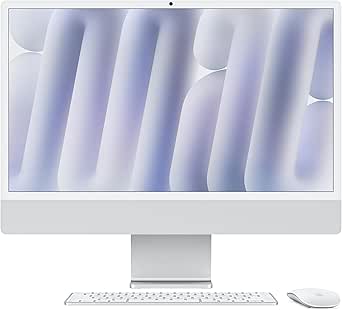
Apple iMac 2024 All-in-One Desktop with M4 Chip, 24‑inch Retina Display, 16GB Unified Memory, 256GB SSD, Silver

Brother QL-800 High-Speed Professional Thermal Label Printer
As an affiliate, we earn on qualifying purchases.
The Tax Trade-Off Behind Roth Accounts
A Roth conversion generally transfers eligible pretax retirement funds, such as money in a traditional IRA or in some cases a 401(k), into a Roth IRA. The converted amount that has not already been taxed is generally included in ordinary taxable income for that year. The report’s example assumes all IRA funds are pretax; people with after-tax contributions may have a different calculation.
The Kiplinger report places the decision against uncertainty about future tax rules. It notes that the top federal individual income tax rate for 2026 is 37%, and compares that with higher top rates in some past periods. Those historical figures do not predict future policy or establish what rate any individual will pay. The report also cites a Census Bureau projection that the U.S. population age 65 and older will reach about 77 million by 2034.
On Social Security, the report cites the 2026 trustees report as projecting that combined trust fund reserves will be sufficient to pay scheduled benefits until 2034. It says continuing program income would then cover about 83% of scheduled benefits if no changes were made. That projection is not a statement that benefits would disappear, and the report says future policy responses and tax rules cannot be known today.
“The answer to all of them, I know you’ll be surprised to hear, is it depends.”
— Kiplinger report
Future Rates and Personal Tax Effects
No one can know what federal tax rates or retirement rules will apply years from now. The report’s historical comparisons and Social Security projections provide context, not certainty about future legislation, benefits or an individual’s tax bill.
It is also not possible to determine from the report’s general examples whether a conversion would benefit a particular reader. The result depends on details such as current and expected income, deductions, state taxes, pretax and after-tax account balances, the ability to pay conversion taxes, retirement timing and how long the Roth funds remain invested. The report does not provide a personalized calculation or a single recommended conversion amount.
Compare the Tax Cost Before Converting
The report’s practical takeaway is to compare the tax cost of a conversion now with the possible tax treatment of future withdrawals, using the household’s full financial picture. That includes estimating how a proposed amount could affect the current tax bracket, Medicare premiums and Social Security taxation, rather than looking only at the account balance.
Any decision should be based on current rules and individualized projections, not an assumption that tax rates must rise or that a conversion will always save money. Future policy changes may alter the calculation, and the report does not identify a specific upcoming rule change or conversion deadline.
Key Questions
What is a Roth conversion?
It is a transfer of money from a pretax retirement account, such as a traditional IRA, to a Roth IRA. The untaxed portion converted is generally included in taxable income for that year.
How much tax could a conversion add?
It depends on the amount converted and the person’s full tax situation. In the report’s example, converting $20,000 of entirely pretax IRA money at a 22% federal marginal rate could add about $4,400 in federal income tax; that illustration excludes individual circumstances such as deductions and state taxes.
It can. Because a conversion generally raises income in that year, it may affect Medicare premiums through IRMAA or the taxable portion of Social Security benefits. The specific effect depends on the person’s income and applicable rules.
Does a Roth conversion guarantee lower taxes over a lifetime?
No. A conversion means paying tax on the converted pretax amount now, while future tax rates, investment growth and withdrawal patterns are uncertain. Whether it lowers total taxes depends on the individual circumstances.
Source: kiplinger.com