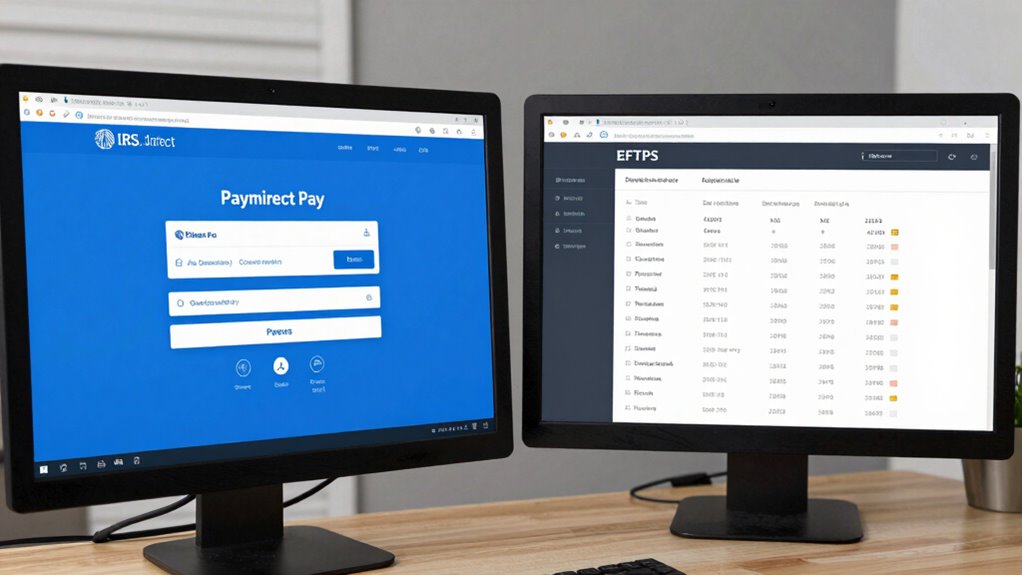

If you need to make a quick, one-time payment, IRS Direct Pay is your best choice because it’s simple, fast, and free. But if you frequently pay taxes or want more control over scheduling and tracking, EFTPS is better since it allows recurring payments and offers enhanced security features. Both tools help prevent penalties, so your choice depends on how often you pay and your security preferences. Keep exploring to find the option that fits your needs perfectly.

Get smart everyday buys delivered free with Prime
- Fast, free delivery on millions of items
- Prime Video, Amazon Music and more included
- Member-only deals all year
Key Takeaways
- Use Direct Pay for quick, one-time payments; EFTPS is better for recurring, scheduled payments.
- Direct Pay requires no enrollment and is user-friendly for individual, infrequent transactions.
- EFTPS offers enhanced security features, ideal for businesses or frequent taxpayers managing multiple payments.
- Both methods are secure, but EFTPS provides layered authentication and detailed payment tracking.
- Choose Direct Pay for simplicity and speed; opt for EFTPS if managing ongoing, secure tax payments.
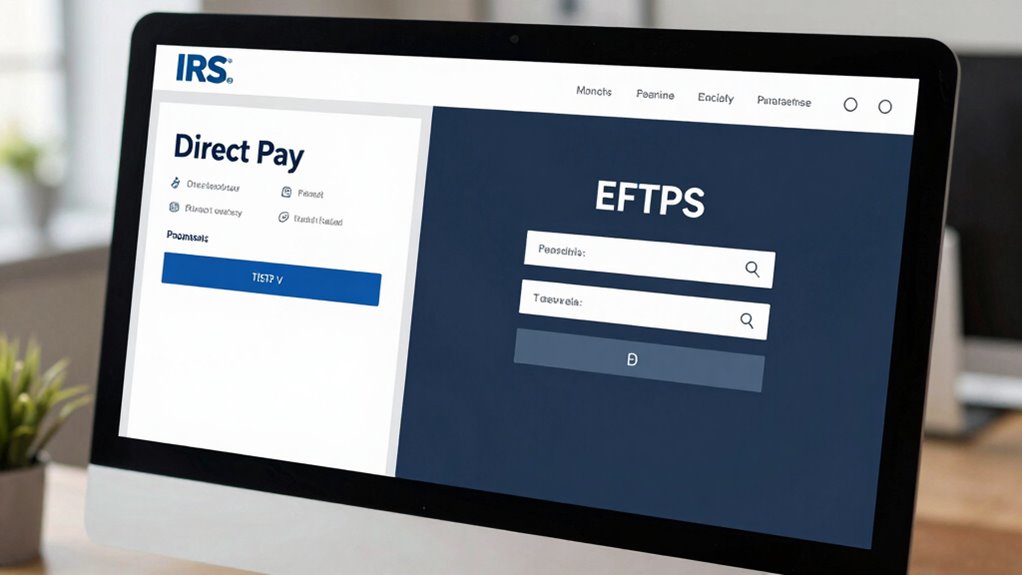
When choosing how to pay your taxes, understanding the differences between Direct Pay and EFTPS can help you make an informed decision. Both are official IRS payment options, but they serve different needs and offer distinct advantages. Knowing which one aligns better with your financial habits and security concerns can prevent unnecessary tax penalties and guarantee your payments are safe.
Direct Pay is a straightforward, user-friendly option that allows you to make a one-time payment directly from your bank account. It’s ideal if you prefer simplicity and quick access to your funds without creating additional accounts. You can use Direct Pay to pay your taxes without fees, and the process is quick—just a few clicks, and your payment is scheduled. This ease of use makes it a popular choice for individuals who want to avoid the hassle of managing multiple accounts or dealing with complex procedures. However, since it’s designed for single payments, it might not suit those who need to make recurring payments frequently. Payment convenience is a key factor that can influence your choice between these tools.
Direct Pay offers simple, fee-free, one-time payments from your bank account with quick setup and ease of use.
On the other hand, EFTPS (Electronic Federal Tax Payment System) is a more complete tool designed for businesses and individuals who make regular tax payments. It’s a secure, reliable system that requires enrollment, which can take a day or two to process. Once enrolled, you can schedule future payments, view your payment history, and manage multiple transactions easily. EFTPS is particularly beneficial if you’re concerned about payment security because it offers a layered authentication process, reducing the risk of fraudulent activity. Its robust security features help you avoid potential scams or errors that could lead to a tax penalty if payments are missed or delayed. Additionally, EFTPS’s payment security features are designed to protect your financial information during transactions. Familiarity with online banking systems can further ease your experience with EFTPS, especially if you’re accustomed to managing financial accounts digitally. Incorporating secure online platforms into your financial routine can enhance your confidence in using EFTPS for ongoing payments.
Both options protect your financial information during transactions, but EFTPS’s additional security layers give it an advantage if you’re especially cautious. When it comes to payment security, EFTPS’s encryption and authentication procedures provide peace of mind, especially for frequent payers. Furthermore, making timely payments through either method is vital to avoiding tax penalties, which can accrue if you miss deadlines.
Choosing between Direct Pay and EFTPS depends on your payment frequency and comfort with managing online accounts. If you prefer quick, one-time payments with minimal setup, Direct Pay is the way to go. If you require ongoing, scheduled payments with a focus on security, EFTPS is a better fit. Both tools streamline the process, help you avoid penalties, and guarantee your payments are secure—so pick the one that best matches your tax situation and comfort level with online banking.
IRS Direct Pay online payment system
As an affiliate, we earn on qualifying purchases.
As an affiliate, we earn on qualifying purchases.
Frequently Asked Questions
Can I Use Both Direct Pay and EFTPS for the Same Payment?
Yes, you can use both Direct Pay and EFTPS for the same payment, but not simultaneously. You might choose one method for different payments or deadlines, such as using Direct Pay for immediate payments and EFTPS for scheduled or larger amounts. Just make certain you meet the payment deadlines to avoid penalties. Using either method doesn’t affect your tax refund process, but double-check your payment dates to stay on track.
Are There Fees Associated With Either Direct Pay or EFTPS?
You won’t encounter any transaction fees with either IRS Direct Pay or EFTPS, making both options convenient for your payment needs. These tools prioritize payment convenience, allowing you to pay directly from your bank account without extra charges. However, it’s good to double-check for any updates, as fee structures can change. Overall, both methods are free, providing a cost-effective way to handle your IRS payments efficiently.
How Secure Are Transactions Through Direct Pay and EFTPS?
You can trust that transactions through Direct Pay and EFTPS are highly secure. The IRS uses advanced payment encryption to protect your information during transfers, ensuring your data stays private. Additionally, both platforms implement robust fraud prevention measures to detect and block suspicious activity. This means your payments are safeguarded from unauthorized access, giving you peace of mind when managing your tax payments online.
What Should I Do if My Payment Is Rejected?
Ever wondered what to do if your payment gets rejected? First, review the rejection reasons carefully; common issues include incorrect account info or insufficient funds. Then, contact the IRS promptly to clarify the problem and resubmit your payment. A payment delay or rejection isn’t the end—just double-check your details and try again. Staying proactive helps guarantee your tax obligations stay on track without unnecessary penalties.
Can I Schedule Future Payments With Both Tools?
Yes, you can schedule future payments with both tools. Direct Pay allows you to set up future payments easily through its online portal, making payment scheduling straightforward. EFTPS also offers the ability to schedule payments in advance, giving you flexibility. In a tool comparison, both are reliable options for future payment scheduling, but your choice depends on your preference for simplicity or additional features like multiple account management.
Conclusion
Choosing between Direct Pay and EFTPS is like picking the right tool for a specific task; each has its strengths. If you want quick, one-time payments, Direct Pay is your go-to. For recurring payments and scheduling, EFTPS offers reliability and control. Think of it as selecting the right brush for your masterpiece—both are essential, but the best fit depends on your unique financial needs. Make your choice wisely, and your IRS payments will be smooth sailing.
Halloween Picks
halloween
As an affiliate, we earn on qualifying purchases.