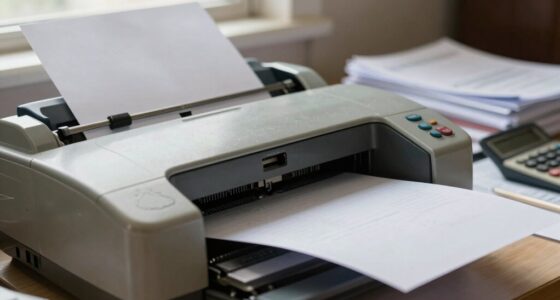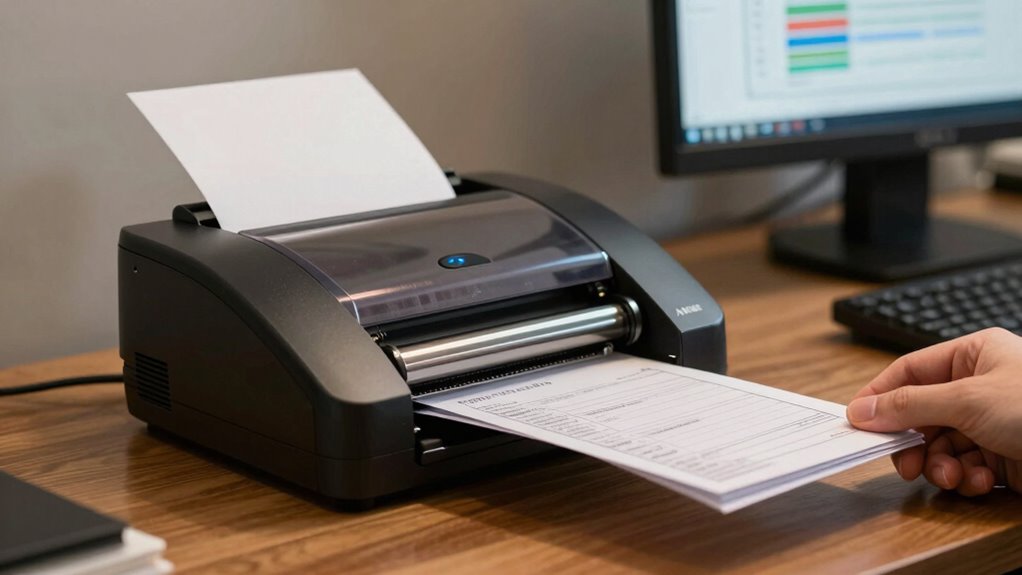

The fastest way to see if a check scanner fits your volume is to compare its throughput rate (checks per minute) with your daily transaction count and peak periods. If the scanner can handle your busiest times without delays, it’s likely a good fit. Avoid over- or under-utilizing by matching capacity to your demand. Keep in mind, understanding your actual volume is key—continue to find out how to make the best choice for your business.

Get smart everyday buys delivered free with Prime
- Fast, free delivery on millions of items
- Prime Video, Amazon Music and more included
- Member-only deals all year
Key Takeaways
- Compare the scanner’s throughput rate (checks per minute) with your average daily check volume.
- Assess peak transaction times to ensure the scanner can handle high-volume periods efficiently.
- Review the scanner’s durability and maintenance needs to ensure reliable daily performance.
- Consider future growth to select a model that can scale with increasing transaction volumes.
- Match the scanner’s capacity with your business size to prevent bottlenecks or underutilization.

Are you unsure whether a check scanner can keep up with your transaction volume? If so, you’re not alone. Many businesses face the challenge of choosing a scanner that balances speed, reliability, and ease of maintenance. The key to making the right choice lies in understanding your daily processing speed and how the machine’s maintenance requirements align with your operational needs.
Processing speed is the first factor to evaluate. If your business handles hundreds of checks daily, you’ll need a scanner that can process multiple items quickly without creating bottlenecks. Look for models that specify their throughput rate—usually measured in checks per minute. A scanner with a higher processing speed can markedly reduce the time spent on check deposits, freeing up staff for other tasks. Conversely, if your volume is lower, investing in a high-speed scanner might be unnecessary and could lead to unnecessary costs. The goal is to match the scanner’s capabilities with your actual volume to optimize efficiency without overspending.
Match your check scanner’s speed to your daily volume to maximize efficiency and avoid unnecessary costs.
Maintenance requirements are just as essential as processing speed. Some check scanners are designed for heavy-duty use, featuring durable components that can handle continuous operation with minimal upkeep. Others might be more suited for light or occasional use, requiring frequent cleaning or part replacements. Consider how much time your staff can dedicate to maintenance tasks and whether the scanner’s design simplifies this process. Machines with self-cleaning mechanisms or quick-change parts can save you time and reduce downtime. If you have a busy environment, a scanner with low maintenance needs will help keep your workflow smooth and consistent. Additionally, product reviews can provide valuable insights into the real-world durability and upkeep of different models. Being aware of the maintenance requirements beforehand can help prevent unexpected operational disruptions. Understanding the processing capacity of a scanner can help you better match it with your peak transaction times and avoid over- or under-utilization. Moreover, considering future growth can ensure that your equipment will remain efficient as your business expands.
To accurately determine if a check scanner fits your volume, start by analyzing your daily transaction counts and peak periods. Then, compare these figures with the scanner’s throughput specifications. Also, evaluating the cost of operation can reveal the long-term expenses associated with different models. Additionally, evaluate how easily spare parts are available, which can significantly impact maintenance costs and downtime. The best choice strikes a balance: it processes checks swiftly enough during peak times and requires manageable maintenance to stay reliable over the long term.
Ultimately, the fastest way to tell if a check scanner fits your volume is to align the device’s processing speed with your transaction flow while ensuring its maintenance demands won’t hinder daily operations. By carefully evaluating these factors, you’ll be able to select a scanner that enhances productivity without causing unnecessary delays or downtime.
check scanner with high throughput rate
As an affiliate, we earn on qualifying purchases.
As an affiliate, we earn on qualifying purchases.
Frequently Asked Questions
Can a Check Scanner Handle Multiple Check Types Simultaneously?
Yes, many check scanners offer versatility to handle multiple check types simultaneously. You should look for a scanner with high check type compatibility, ensuring it can process various check formats like personal, business, and cashier’s checks. By choosing a device with broad check scanner versatility, you streamline your operations and avoid the need for multiple scanners, saving time and increasing efficiency. Always verify the specifications for your specific check types before purchasing.
What Is the Typical Lifespan of a Check Scanner?
A check scanner’s durability often determines its lifespan, which typically ranges from 3 to 7 years. To maximize lifespan considerations, choose a model built with high-quality components and proper maintenance. Regular cleaning and updates help prevent wear and tear, ensuring your scanner stays efficient longer. While heavy use may shorten its longevity, investing in a reputable brand and proper care can keep your scanner functioning smoothly for years.
How Easy Is It to Upgrade a Check Scanner’s Capacity?
Upgrading your check scanner’s capacity is usually straightforward, especially if it has flexible check scanner features and upgrade options. Many models allow you to add more input trays or expand throughput with software updates. Check the scanner’s user manual or consult the manufacturer to confirm compatibility. With simple upgrades, you can increase your volume capacity without needing a whole new device, making it a cost-effective way to meet growing needs.
Are Check Scanners Compatible With Existing Accounting Software?
Yes, check scanners are generally compatible with existing accounting software. You just need to guarantee check scanner integration is seamless and that the device supports your software’s protocols. Focus on check scanner security features, like encryption and user access controls, to protect sensitive data. Many scanners come with drivers and software updates that facilitate easy integration, making your shift smooth and secure without disrupting your current accounting processes.
What Maintenance Is Required for High-Volume Check Scanners?
To keep your high-volume check scanner singing smoothly, you’ll need to perform regular check cleaning and jam clearing. Skip these chores, and you’ll soon find yourself battling paper jams or skewed scans, which are just as delightful as a root canal. Make it a habit to clean the rollers and clear jams promptly, ensuring your scanner runs efficiently, saving you time and headaches in the long run.
Conclusion
Now that you know how to quickly assess if a check scanner matches your volume, you’re better equipped to make an informed decision. Remember, it’s better to cut to the chase than to waste time and money on the wrong equipment. By understanding your needs and matching them with the right scanner, you’ll be able to hit the ground running. Don’t let the opportunity slip through your fingers—choose wisely and keep your operations running smoothly.
Halloween Picks
halloween
As an affiliate, we earn on qualifying purchases.