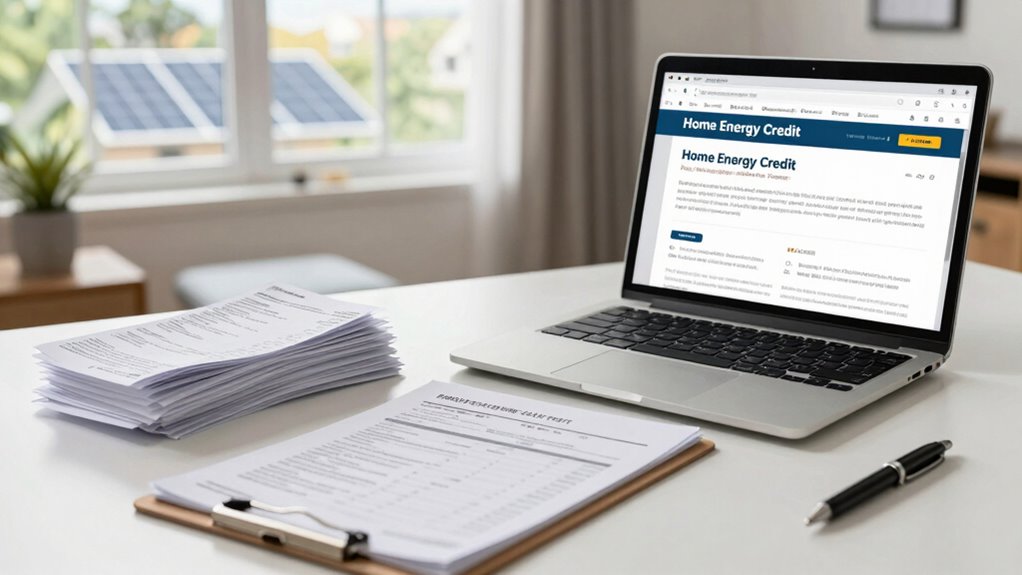

To claim home energy credits, you’ll need to gather records like receipts, invoices, and contracts showing the costs of energy-efficient upgrades, such as solar panels or insulation. Keep copies of permits, inspection reports, and photographs that prove proper installation. Also, make sure you have energy audit reports from before and after improvements. Organizing these documents in one place makes the process easier, and if you keep going, you’ll find out how to stay compliant and maximize your credits.

Get smart everyday buys delivered free with Prime
- Fast, free delivery on millions of items
- Prime Video, Amazon Music and more included
- Member-only deals all year
Key Takeaways
- Keep receipts, invoices, and contracts for energy-efficient home improvements like solar panels and insulation.
- Maintain permits and inspection reports confirming proper installation and compliance with local regulations.
- Store photographs documenting the installed systems and upgrades for verification.
- Retain energy audit reports and assessments before and after improvements.
- Organize tax forms, supporting schedules, and documentation of claimed expenses related to energy credits.
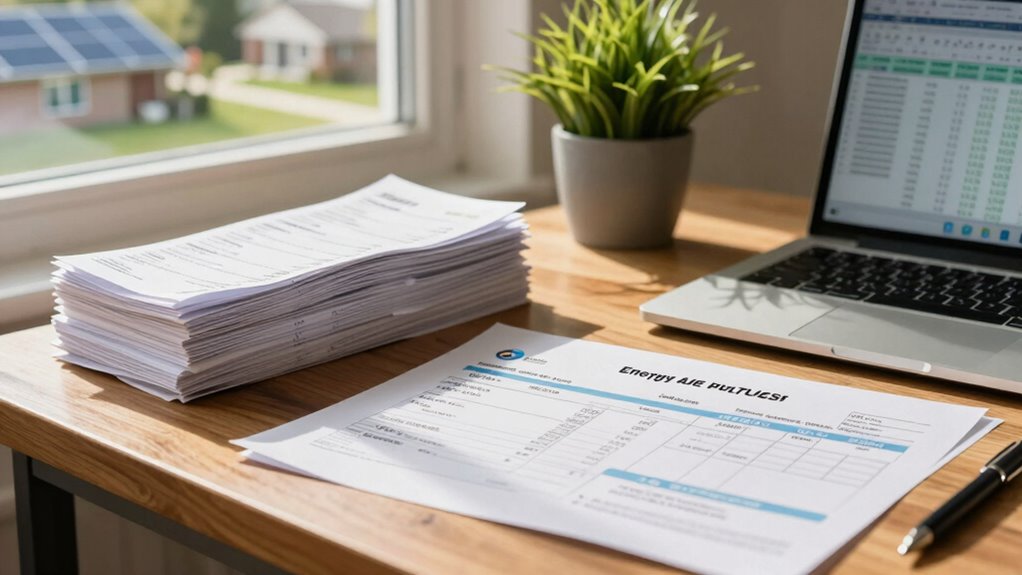
To claim home energy credits successfully, you need to gather the right records that substantiate your expenses and qualify your property. Keeping detailed documentation is vital to prove you’re eligible and to maximize your credits. Start by collecting receipts, invoices, and contracts related to your solar panel installation. These documents should clearly specify the date of installation, the contractor’s name, the total cost, and a description of the system installed. The IRS requires proof that you paid for the solar energy system, so these records serve as your primary evidence. If you paid in installments, make sure you keep records of all payments made throughout the process. Additionally, if your solar panel installation involved any permits or inspections, retain those documents as they reinforce your claim and demonstrate compliance with local regulations.
When it comes to an insulation upgrade, similar documentation is essential. Keep receipts or invoices showing the purchase and installation of insulation materials, including details about the type of insulation used and the area covered. If a contractor handled the upgrade, request a detailed invoice that outlines the scope of work, costs, and dates. Supporting documents like permits, inspection reports, or photographs of the upgrade can further strengthen your claim. These records establish that the insulation upgrade was completed properly and meet the requirements for the home energy credit. Additionally, maintaining records of energy efficiency improvements can help substantiate your claims if the IRS requests further evidence. Incorporating energy audit reports can also be beneficial, as they provide documented assessments of your home’s energy performance before and after upgrades. A well-organized recordkeeping system can simplify the process and ensure you don’t overlook any important documents.
It’s also helpful to maintain a record of any energy audits or assessments performed before and after upgrades. These reports can provide evidence of the improvements made to your home’s energy efficiency, which is often necessary if the IRS requests additional proof. Keep a copy of any correspondence with contractors or service providers, especially if there are warranties or guarantees involved. These documents show your intent to meet the necessary standards and verify the expenses claimed. Proper organization of these documentation types can help streamline your claim process and provide clarity if questions arise during an audit.
Lastly, don’t forget to maintain your tax records, including your Form 5695, the Residential Energy Credits form, and any related schedules. Your records should align with these forms, ensuring consistency when you file your taxes. Organized records make the process smoother and reduce the risk of audit issues. By diligently collecting and organizing these records—covering your solar panel installation, insulation upgrade, and related energy improvements—you position yourself well to claim your home energy credits confidently and accurately.
solar panel installation receipts
As an affiliate, we earn on qualifying purchases.
As an affiliate, we earn on qualifying purchases.
Frequently Asked Questions
Can I Use Digital Copies of Receipts for Records?
Yes, you can use digital copies of receipts for records, but make certain they are clear and legible. Digital documentation is generally acceptable for receipt verification, especially if it includes all necessary details like the date, amount, and vendor. Keep files organized and backed up in case of future questions or audits. Using high-quality scans or photos ensures your digital receipts serve as reliable proof for your home energy credits.
How Long Should I Keep My Records After Claiming Credits?
You should keep your records for at least three years after claiming your home energy credits. Proper record storage and documentation retention are essential in case of an audit or if the IRS requests proof of your claims. Store digital copies securely and organize your receipts and related documents. Staying diligent with your record storage guarantees you’re prepared, provides peace of mind, and helps support your tax position years down the line.
Are Records Required for All Types of Energy-Efficient Upgrades?
Yes, records are required for all types of energy-efficient upgrades. You need to keep tax documentation and meet certification requirements to substantiate your claims. This includes receipts, invoices, and certification certificates showing compliance with program standards. By maintaining thorough records, you confirm you can verify your upgrades if asked by the IRS. Staying organized helps streamline the process and guarantees you receive the full benefit of your home energy credits.
Do I Need to Record Contractor Information for Installed Systems?
Yes, you should keep contractor documentation and installation receipts for installed systems. These records serve as proof that qualified professionals performed the upgrades and that the work meets program requirements. When claiming energy credits, the IRS may ask for these documents. By retaining detailed contractor info and receipts, you guarantee a smoother process, providing clear evidence of compliance and making it easier to substantiate your claims if needed.
What Specific Details Should Be Included in My Records?
You should include detailed energy tax documentation, such as receipts, invoices, and proof of system installation dates. Record keeping best practices suggest organizing these documents chronologically and securely storing digital and physical copies. Be sure to note contractor details, system specifications, and energy savings estimates. Clear, thorough records help substantiate your claims, making it easier to claim credits and avoid issues during audits. Stay diligent to guarantee your documentation remains complete and accessible.
Conclusion
Keeping detailed records for your home energy credits might seem like a small task, but it’s your secret weapon for maximizing savings. Without these documents, you could miss out on hundreds or even thousands of dollars in credits—money that could transform your home and your life. Stay organized, save every receipt, and track your improvements diligently. This simple step can reveal incredible financial benefits, making your home more efficient and your future brighter than you ever imagined.
Halloween Picks
halloween
As an affiliate, we earn on qualifying purchases.