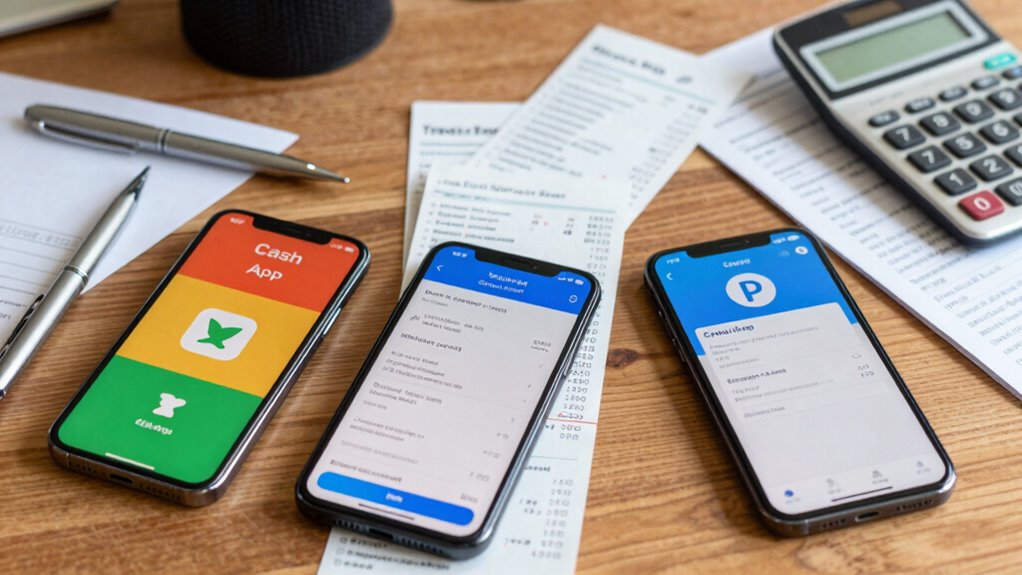

To prepare for tax time, you should keep detailed records of your transactions on Cash App, Venmo, and PayPal. Export your transaction histories regularly, separating personal and business activities, and verify all income and expenses. Proper documentation helps support deductions and guarantees compliance with IRS rules, especially since platforms now report transactions over $600. Staying organized makes tax filing smoother, and if you keep going, you’ll discover how to manage these records effectively.
Key Takeaways
- Export transaction history from Cash App, Venmo, and PayPal for accurate recordkeeping and tax reporting.
- Separate personal and business transactions to ensure proper classification and deductions.
- Review and verify all transactions regularly to identify unreported income or discrepancies.
- Cross-reference app records with bank statements to ensure comprehensive income capture.
- Maintain detailed documentation to substantiate deductions and support IRS compliance.

As tax season approaches, it’s important to understand how your transactions on Cash App, Venmo, and PayPal may impact your filings. These platforms are increasingly popular for personal and business use, but they also complicate your tax reporting if you’re unaware of the rules. One key aspect to consider is cryptocurrency integration, as many users buy, sell, or transfer digital currency through these apps. If you’ve used Cash App to purchase Bitcoin or other cryptocurrencies, you need to track these transactions carefully. The IRS considers cryptocurrency property, so any gains or losses from trading or selling digital assets must be reported. Keeping detailed records of your crypto activity within these apps ensures you can accurately calculate your tax obligations and avoid penalties.
Beyond cryptocurrency, these platforms are often used for business expense tracking. If you accept payments or make purchases related to your business through Cash App, Venmo, or PayPal, you’ll want to keep meticulous records. Many small entrepreneurs rely on these apps for their ease and convenience, but the IRS requires you to differentiate between personal and business transactions. By maintaining organized records, you can substantiate your deductions and minimize audit risk. For instance, if you paid for supplies or services via Venmo, having receipts or transaction histories helps prove these expenses are legitimate business costs. Additionally, regularly reviewing your transaction history can help you identify any discrepancies or untracked income, especially when managing multiple accounts. Proper recordkeeping** is essential to ensure compliance and accuracy. Utilizing digital recordkeeping tools** can streamline this process and help prevent missing important details.
Keep detailed records of business transactions on Cash App, Venmo, and PayPal to substantiate deductions and reduce audit risk.
It’s also important to note that the IRS has increased scrutiny on third-party payment apps. Starting in 2022, platforms like Cash App and Venmo are required to report transactions exceeding $600 annually. This means you’ll receive a Form 1099-K, which details your gross income from these platforms. Even if you didn’t meet the reporting threshold in previous years, the new rules mean you’ll need to review your transaction history closely. Cross-referencing your bank statements and app records ensures you capture all relevant income, especially if some transactions are mixed personal and business-related. Additionally, understanding GIGO (Garbage In, Garbage Out) principles can help ensure your records are accurate and reliable.
To stay compliant, think about exporting your transaction history from each platform regularly. Many apps allow you to download statements in easy-to-read formats, making it simpler to compile your records. Using these exports, you can categorize income and expenses, distinguish personal from business transactions, and prepare your tax return with confidence. Properly documenting transactions can also help you identify potential tax deductions and avoid costly errors. Ultimately, proactive recordkeeping helps you accurately report your income, claim eligible deductions, and stay ahead of potential IRS issues. Being diligent now saves you time and stress when it’s time to file, especially as digital transactions continue to grow in importance for both personal and business finances. Proper recordkeeping practices can also prevent errors that might trigger audits or penalties in the future. Regularly updating and verifying your records can also help you detect any fraudulent or unauthorized activity early on.

TREES Monthly Bill Payment Checklist, 4-Year Bill Organizer and Planner
- Financial Goal Setting: Set and track monthly financial goals
- Income and Expense Tracking: Monitor income, savings, debts, and expenses
- Bill Management System: Track paid, unpaid, and auto-paid bills
As an affiliate, we earn on qualifying purchases.
As an affiliate, we earn on qualifying purchases.
Frequently Asked Questions
Do I Need to Report All Transactions From These Apps?
Yes, you need to report all taxable transactions from these apps. If you use them for cryptocurrency integration or business purposes, keep detailed records, as the IRS requires reporting income from digital assets and business-related payments. Using a business account can help distinguish personal and business transactions, making tax filing easier. Always report income accurately to avoid penalties and ensure compliance with tax laws.
How Long Are Transaction Records Stored by These Platforms?
You should know that transaction records are usually stored for at least 7 years on these platforms, helping with tax and legal needs. Curiously, over 80% of users worry about their data privacy, making it essential to understand how long your user data is kept. These companies retain records to meet legal requirements, but always review privacy policies to stay informed about how long your transaction history is stored and protected.
Are Personal Gift Transactions Included in Tax Reports?
Personal gift transactions are generally not included in tax reports due to gift exclusions, which typically allow you to gift a certain amount annually without needing to report it. However, if your personal transfers exceed the annual gift exclusion limit, you might need to report them. Always keep records of personal transfers to verify if they qualify as gifts and avoid potential tax implications, especially for larger amounts.
Can I Access My Transaction History Easily for Tax Filing?
You can access your transaction history easily, and it’s quicker than catching lightning in a bottle! Digital wallets like Cash App, Venmo, and PayPal let you view detailed records right from your account—no more digging through piles of paper. Plus, your transaction privacy stays intact while you download or screenshot your history for tax filing. This way, you stay organized without sacrificing security or convenience.
What Are the Penalties for Not Reporting App-Based Income?
If you don’t report app-based income, you risk penalties for non-compliance with digital payment regulations. The IRS requires reporting of income from platforms that handle cryptocurrency integration, including digital payments. Failing to do so can lead to fines, interest charges, or even audits. To avoid penalties, make certain you accurately track and report all income from these apps, especially as digital payment compliance becomes stricter with evolving cryptocurrency integration rules.
Conclusion
By keeping detailed records of your transactions on Cash App, Venmo, and PayPal, you make tax season much easier. For example, imagine you sold handmade jewelry online and used Venmo to receive payments. Without organized records, you might miss reporting some income, risking penalties. Staying diligent guarantees you report accurately, avoid surprises, and keep your finances in check. So, review your transaction history regularly — it’s a simple step that can save you time and stress come tax time.