
To claim the self-employed FICA tax deduction, first calculate your self-employment tax using Schedule SE, then find half of that amount. Next, enter this deductible portion on Schedule 1 of your Form 1040 as an adjustment to income. This reduces your taxable income and overall tax bill. If you want a step-by-step guide and tips on avoiding common mistakes, there’s more to take into account below.
Key Takeaways
- Calculate your net earnings from self-employment and determine the self-employment tax using Schedule SE.
- Divide the total self-employment tax in half; this amount is your deductible deduction.
- Report the deductible amount on Schedule 1 (Form 1040) under “Adjustments to Income.”
- Ensure accurate documentation of your net earnings and self-employment tax calculation for compliance.
- Complete your tax return to reduce your taxable income and overall tax liability with the self-employment FICA deduction.

If you’re self-employed, you’re responsible for paying the full FICA tax amount, which can feel like a hefty burden. The good news is that you may be able to reduce this burden through the self-employed FICA tax deduction. Understanding how to claim this deduction starts with knowing the basics of tax calculations and deduction eligibility. When you file your tax return, you can deduct half of your self-employment tax as an adjustment to income. This effectively lowers your taxable income and, consequently, your overall tax bill.
Calculating your self-employment tax begins with determining your net earnings from self-employment. You do this by subtracting your business expenses from your gross income. Once you have your net earnings, you apply the current self-employment tax rate—typically 15.3%, which covers Social Security and Medicare taxes. The total tax you owe is based on this percentage of your net earnings. To find out how much you can deduct, you simply take half of this amount. For example, if your net earnings result in a $10,000 self-employment tax bill, you can deduct $5,000 on your tax return.
Deduction eligibility is straightforward but important to verify. You must be self-employed, meaning you either operate as a sole proprietor, independent contractor, or have a partnership. Your net earnings must be positive, and the deduction is only available if you’re reporting self-employment income. Keep in mind that your deduction is limited to your net earnings from self-employment; you can’t claim more than what you’ve earned. Additionally, this deduction is available whether or not you itemize your deductions, as it’s considered an adjustment to income on Schedule 1 of Form 1040.
It’s also helpful to understand how projector technology impacts visual clarity and overall viewing experience, especially when setting up a home cinema. When it comes to claiming the deduction, you’ll do so by filling out Schedule SE to calculate your self-employment tax. Then, on your Form 1040, you list the deductible amount on Schedule 1. This process reduces your adjusted gross income, which can lower your tax bracket and overall liability. Remember, the IRS allows this deduction to help offset the double burden of paying both the employee and employer portions of FICA taxes, making it a valuable benefit for the self-employed.
In essence, understanding your tax calculations and the rules surrounding deduction eligibility can considerably ease your self-employment tax burden. Properly claiming this deduction ensures you’re not overpaying, giving you a bit more financial breathing room as you grow your business.
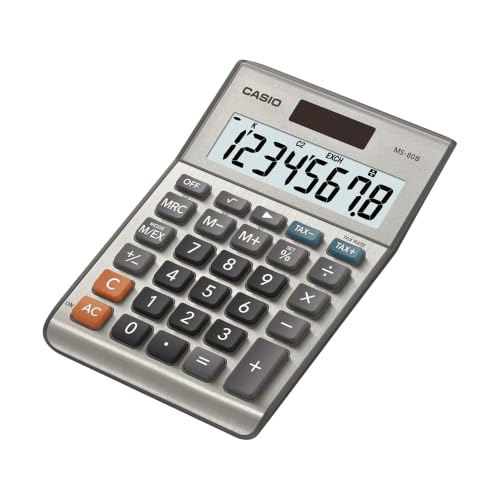
Casio MS-80B Calculator – Desktop Calculator with Tax & Currency Tools | General Purpose | Large Display | Ideal for Home, Office & Everyday Math
- Large Eight-Digit Display: Clear, easy-to-read 8-digit screen
- Tax & Currency Functions: Handle tax calculations and currency conversions
- Versatile General Purpose: Suitable for basic, business, and personal use
As an affiliate, we earn on qualifying purchases.
As an affiliate, we earn on qualifying purchases.
Frequently Asked Questions
Can I Claim This Deduction if I Work Part-Time?
Yes, you can claim this deduction if you work part-time. Deduction eligibility depends on your self-employment income, not full-time status. As long as you earn income from your part-time work and meet the IRS requirements, you qualify to deduct the self-employed FICA taxes. Keep records of your earnings and expenses to guarantee you can accurately calculate and claim your deduction during tax season.
Are There Income Limits for Claiming the Deduction?
Yes, there are income limits for claiming the self-employment FICA tax deduction. Your self-employment income determines how much you can deduct, as the deduction phases out if your income exceeds certain thresholds. The IRS sets specific tax deduction limits based on your net earnings, so you won’t be able to claim the full deduction if your self-employment income is very high. Always check current IRS guidelines to stay within the limits.
How Does This Deduction Affect My Overall Tax Liability?
Claiming this deduction reduces your self-employment taxes, lowering your overall tax liability. It’s a key part of tax planning because it directly decreases the amount you owe for Social Security and Medicare taxes. By deducting half of your self-employment taxes, you keep more money in your pocket. This adjustment makes your tax return more favorable, helping you manage your finances more effectively throughout the year.
Is This Deduction Applicable for LLC or Sole Proprietors?
Think of your business as a vessel sailing through tax seas—this deduction is your sturdy anchor. If you’re an LLC eligible under sole proprietorship rules, you can claim it. Both LLCs and sole proprietors bump into the same rules, making this deduction accessible. So, whether you’re steering an LLC or running solo, this tax break is within your reach, helping lighten your load on those FICA shores.
Can I Claim This Deduction if I Am Also Employed Elsewhere?
Yes, you can claim this deduction even if you’re employed elsewhere. Your employment status as self-employed or having multiple jobs doesn’t disqualify you. The key is that you pay self-employment FICA taxes on your self-employed income. When you file, you’ll calculate and deduct the self-employment tax on Schedule SE, reducing your overall tax liability regardless of your other employment.
Conclusion
Now that you know how to claim the self-employed FICA tax deduction, you’re better equipped to keep more of your hard-earned money. Just remember, every little bit counts, so don’t let this opportunity slip through your fingers. Stay organized, file correctly, and you’ll be surprised how much you can save. It’s a learning curve, but once you get the hang of it, you’ll be ahead of the game. Keep at it, and watch your savings grow!