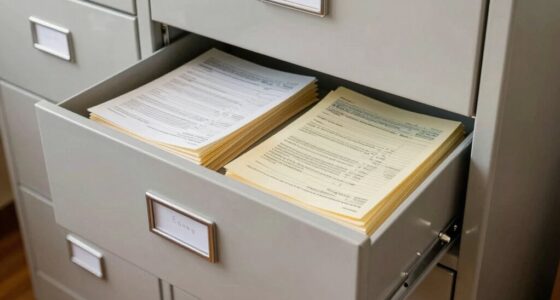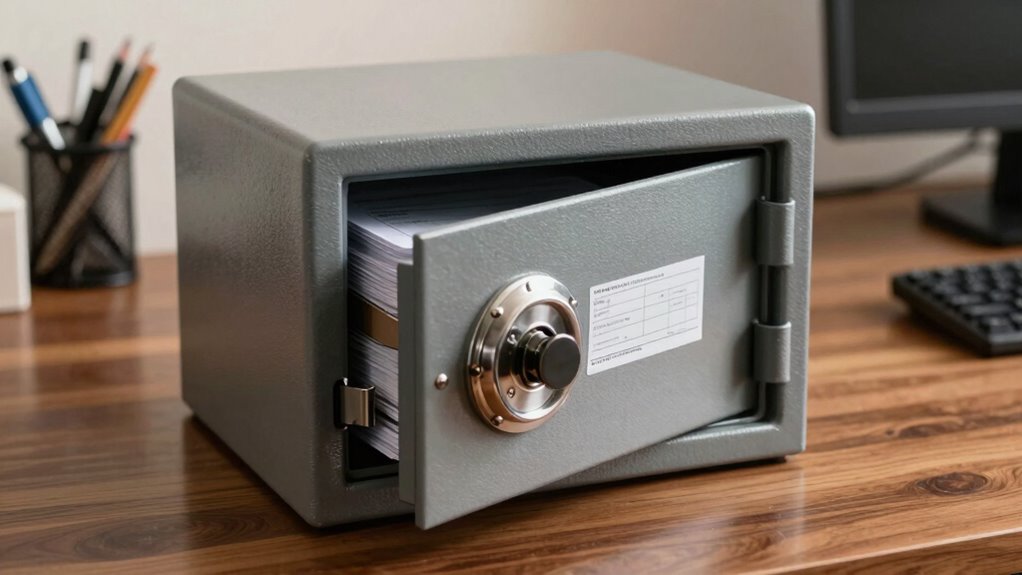
To store paper checks securely, keep them out of sight in a locked, fireproof container or a secure drawer, and never leave them accessible in desks or cars. Label storage areas clearly and restrict access to trusted individuals only. Use a check register to track issued checks and shred outdated ones. Make certain checks aren’t visible through windows and store them separately from other financial documents. For more effective security tips, continue exploring the best practices for protecting your checks.

Get smart everyday buys delivered free with Prime
- Fast, free delivery on millions of items
- Prime Video, Amazon Music and more included
- Member-only deals all year
Key Takeaways
- Keep checks in a locked, fireproof container or safe, stored separately from other financial documents.
- Store checks out of sight, avoiding visible locations like windows or open areas accessible to passersby.
- Limit access to trusted personnel only, and label storage areas clearly to prevent accidental exposure.
- Destroy unused or outdated checks securely through shredding to prevent misuse.
- Use digital payment methods and encrypt digital records for added security and reduced physical check handling.
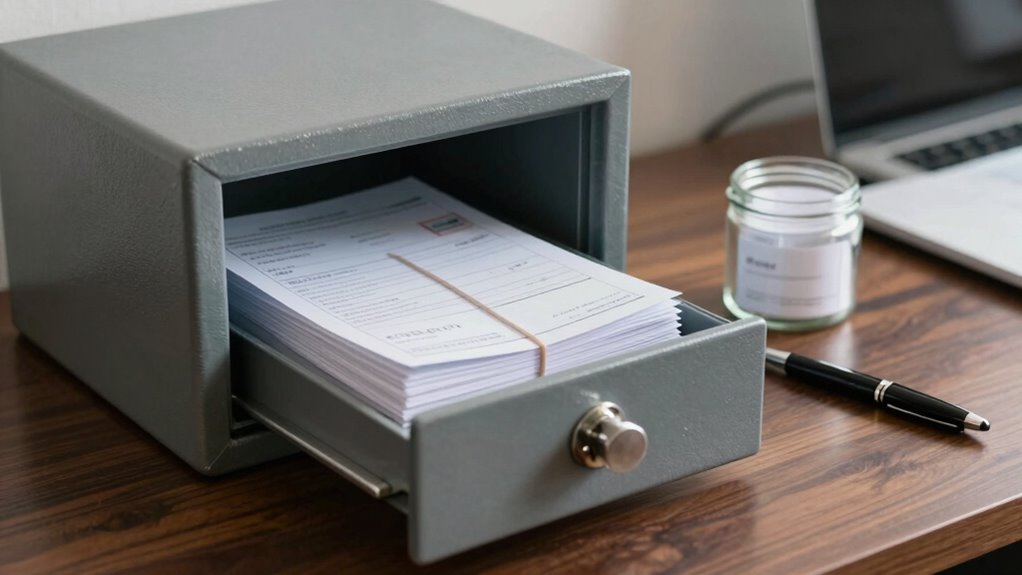
Storing paper checks securely is essential to prevent theft, fraud, and unauthorized access. While many people are turning to digital alternatives for their banking needs, paper checks still play a role in certain transactions. If you choose to keep physical checks, taking proper precautions helps you avoid potential risks. Implementing effective check fraud prevention strategies is crucial because paper checks can be vulnerable to misuse if not stored properly. The key is to keep checks out of sight and in a secure location, such as a locked drawer or safe. Never leave checks unattended in easily accessible areas like your desk or car. Remember, even a single misplaced check can lead to unauthorized transactions, so always stay vigilant.
For added security, consider maintaining a check register or digital record of all checks issued. This way, you can quickly identify any suspicious activity and act promptly. While digital alternatives like online banking and electronic payments reduce the need for paper checks, they also offer built-in security features that help protect your finances. Still, if you must store paper checks, avoid stacking them with other documents or leaving them in unprotected files. Instead, invest in a lockable, fireproof container to safeguard your checks from theft or damage. Label the container clearly, and restrict access to trusted individuals only.
Another tip is to keep checks in a separate location from your financial documents, so that if someone gains access to one area, they won’t automatically access everything. Be cautious about sharing check details or routing numbers, especially over unsecured communications. When storing checks, make sure they’re not visible through windows or in open sightlines where someone passing by could see them. It’s also wise to destroy any unused or outdated checks securely—shredding them prevents misuse of your account information. Additionally, understanding check fraud prevention strategies can further enhance your security measures. Implementing secure storage practices can significantly reduce the risk of theft or unauthorized use of your checks. Regularly updating your knowledge about financial security measures can help you stay ahead of emerging threats. Using encryption for digital records related to your checks can also add an extra layer of protection.
Products Worth Considering

Canon SELPHY CP1500 Wireless Compact Photo Printer with RP-108 Ink and Paper Set

HP Sprocket Photo Booth Machine Instant Color Photo Printer with 10.1 Touchscreen, LED Ring Light, 250+ Frames, 3×4 ZINK Paper, QR Code Shar

FLEXISPOT EN1 Electric Standing Desk, 48 x 24 in, Black
As an affiliate, we earn on qualifying purchases.
Frequently Asked Questions
Can Digital Storage Replace Physical Check Security?
Digital storage can’t fully replace physical check security, but it enhances protection. You should use digital encryption to safeguard sensitive information and guarantee only authorized access. Cloud backup adds an extra layer of security, preventing data loss if devices are compromised. While digital storage offers convenience and modern security features, maintaining physical checks in a secure, locked location remains essential for thorough protection.
What Are the Legal Implications of Storing Checks at Home?
Storing checks at home can have legal implications, especially since 60% of identity theft involves paper documents. You need to follow check storage regulations, like keeping checks in a locked, secure location. Privacy protection considerations are crucial—avoid leaving checks in visible or unsecured areas. Failure to comply could lead to legal issues if checks are lost or stolen, so always handle your checks with care to protect your financial and personal information.
How Often Should Check Storage Security Be Reviewed?
You should review your check storage policies and conduct security audits at least quarterly. Regularly checking your security measures helps identify vulnerabilities and prevents unauthorized access. By maintaining a consistent security audit frequency, you guarantee your checks remain protected. Keep track of any changes in your storage methods or threats, and update your policies accordingly. This proactive approach minimizes risks and keeps your sensitive financial information secure.
Are There Insurance Options for Lost or Stolen Checks?
Yes, there are insurance options for lost or stolen checks. You can explore check insurance or theft protection services offered by some banks or third-party providers, which help cover losses if your checks are stolen or lost. These options provide peace of mind, ensuring you’re protected financially. Always review the terms and conditions to understand coverage limits and claim procedures, so you’re prepared if the unfortunate happens.
What Are Common Mistakes in Storing Paper Checks?
One common mistake in storing paper checks is using insecure check storage methods, like leaving them in easily accessible places or unsecured drawers. This exposes you to security risks such as theft or fraud. You might also forget to regularly monitor stored checks, increasing vulnerability. To avoid these mistakes, always use secure, locked storage, and restrict access. Keeping checks in a safe location minimizes security risks and helps prevent unauthorized use.
Conclusion
By storing your paper checks securely, you prevent potential mishaps and safeguard your finances. Think of it like locking away a precious keepsake—hidden from prying eyes, yet close at hand when needed. Just as a secret garden holds its treasures safe behind a sturdy gate, your checks deserve the same protection. With a little care, you’ll keep your financial garden flourishing, free from the weeds of theft or loss.