
If you need fast, accurate data extraction for high-volume check processing, MICR readers are your best choice. They quickly read magnetic ink codes but don’t capture images, limiting remote deposit options. Full check scanners, on the other hand, provide detailed images essential for fraud detection and remote banking. Choosing the right device depends on whether speed or complete verification is your priority. Keep going to discover which solution fits your specific needs best.

Get smart everyday buys delivered free with Prime
- Fast, free delivery on millions of items
- Prime Video, Amazon Music and more included
- Member-only deals all year
Key Takeaways
- MICR readers excel at fast, accurate data extraction for high-volume check processing, but lack imaging capabilities.
- Full check scanners provide detailed check images, supporting remote deposit and fraud detection through visual verification.
- MICR readers are suitable for traditional banking environments; full check scanners are essential for remote and mobile deposit needs.
- Visual imaging in check scanners enhances fraud detection by allowing detailed review of check details and signatures.
- Choosing between them depends on whether the priority is high-speed data capture or comprehensive check image analysis.
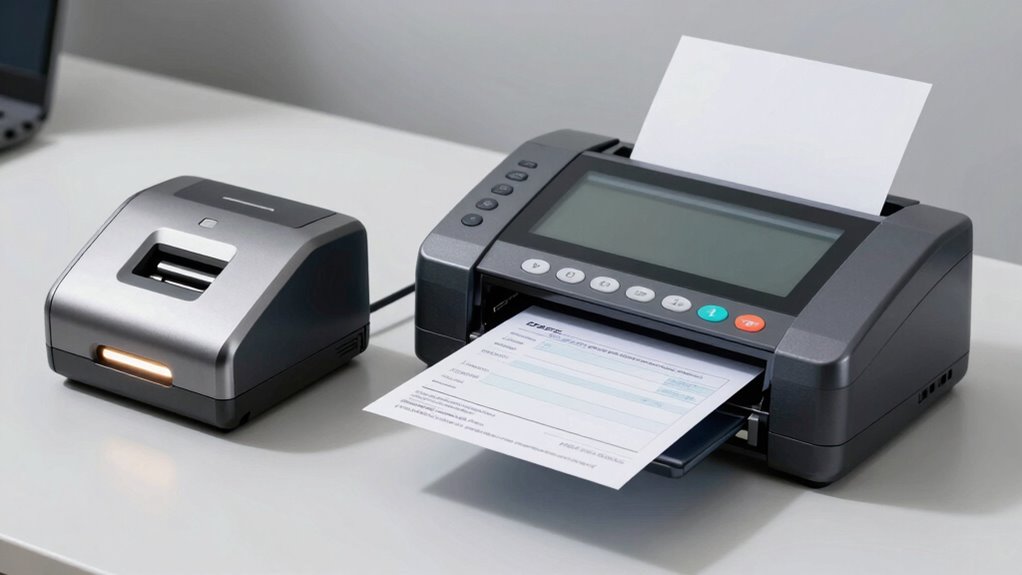
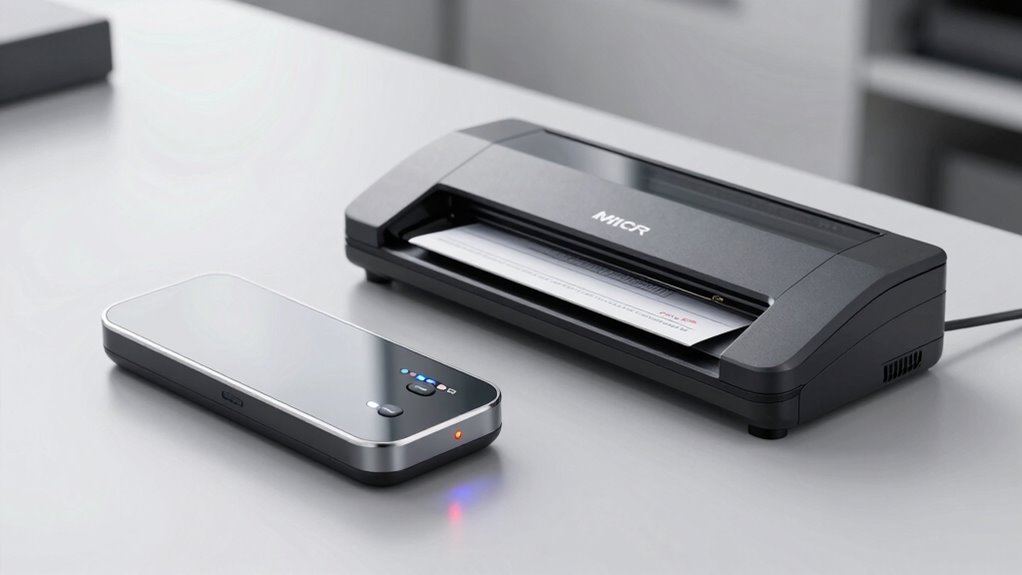
When choosing between MICR readers and full check scanners, understanding their differences can help you make the right decision for your banking or business needs. Both devices process checks but serve distinct purposes, especially in the scenario of mobile banking and fraud detection. MICR readers are designed to quickly and accurately read the Magnetic Ink Character Recognition codes at the bottom of checks, which contain essential account and routing information. They are often used in high-volume environments like bank tellers or check processing centers, where speed and accuracy are paramount. Full check scanners, on the other hand, capture detailed images of the entire check, including front and back, enabling more extensive processing and verification. They are ideal for remote deposit capture, where users scan checks from their offices or homes. If your focus is on mobile banking, full check scanners provide added flexibility. With the ability to capture high-resolution images of checks, they facilitate remote deposit functions, allowing users to deposit checks from anywhere using a smartphone or computer. This feature not only enhances convenience but also reduces the need for physical trips to the bank. MICR readers are less relevant in this scenario, as they do not produce images but only extract specific data needed for processing. However, for fraud detection, both devices play essential roles. MICR readers help verify the authenticity of checks by reading secure magnetic ink data, which is harder to forge. Yet, they don’t offer visual verification of check details, which can be significant for detecting altered or counterfeit checks. Full check scanners provide a more extensive approach to fraud detection. By capturing detailed images, they enable banks and businesses to perform better verification of signatures, check layouts, and printed details. This visual data can be cross-checked against databases or used to flag suspicious checks for manual review. Additionally, understanding the differences in technology between these devices can ensure you select the most suitable option for your specific operational needs. Incorporating advanced imaging capabilities into your choice can further enhance fraud detection and operational efficiency. A thorough understanding of check processing technology can help optimize your overall check management system.
As an affiliate, we earn on qualifying purchases.
Frequently Asked Questions
How Do MICR Readers Handle Damaged or Poorly Printed Checks?
MICR readers struggle with damaged or poorly printed checks because check quality and printing issues can hinder their ability to accurately read the magnetic ink characters. When checks are damaged or have low contrast, the reader may fail to capture the necessary data, leading to processing errors. To guarantee smooth transactions, it’s crucial to use checks with clear, crisp printing and avoid damaged or smudged checks.
Can Full Check Scanners Process International or Non-Standard Checks?
Sure, your full check scanner can process international or non-standard checks—if you enjoy playing a game of “Guess the Format.” These scanners often struggle with foreign checks or non-standard formats, leaving you to wonder if they’re more museum pieces than modern solutions. While they excel at standard U.S. checks, dealing with international or unusual formats often requires manual intervention or specialized equipment.
What Are the Maintenance Requirements for Each Device Type?
You need to regularly check calibration on both devices to guarantee accurate readings, especially if you notice errors. For MICR readers, clean the magnetic heads often and verify the magnetic stripe’s integrity. Full check scanners require user training to handle paper jams and maintenance procedures properly. Properly maintaining both devices minimizes downtime, prolongs lifespan, and guarantees consistent performance, so stay vigilant with calibration checks and training updates.
Which Device Offers Better Integration With Banking Software?
You’ll find that full check scanners offer better integration with banking software, acting like a bridge that connects seamlessly. They use advanced digital encryption and user authentication, ensuring secure, smooth transactions. This security feature enhances compatibility with banking systems, making data transfer reliable and efficient. So, if integration matters most, a full check scanner empowers your operations with robust security and effortless connectivity—delivering both peace of mind and performance.
Are There Security Concerns Unique to Either MICR Readers or Full Scanners?
You should know that both MICR readers and full check scanners have unique security concerns. MICR readers often focus on fraud prevention through magnetic ink recognition, but they may lack advanced data encryption. Full check scanners handle more sensitive data, making them prime targets for cyber threats; therefore, implementing robust data encryption is essential. Regular updates and secure access controls help mitigate risks, regardless of the device you choose.
Conclusion
Choosing between MICR readers and full check scanners depends on your needs. For instance, if you process a high volume of checks daily, a full scanner might streamline your workflow. Imagine a small bank that switched to full scanners, reducing errors and saving time. Ultimately, understanding your specific requirements helps you pick the right tool. By matching your check processing demands, you guarantee smoother operations and stronger security—making the right choice vital for your business’s success.
Columbus Day / Indigenous Peoples' Day Picks
long weekend sales
As an affiliate, we earn on qualifying purchases.