

Choosing the best small business network router for a tax firm involves balancing security, speed, and reliability. The top pick, the ASUS ExpertWiFi EBG19P, offers robust VPN and multiple gigabit ports ideal for sensitive client data. The TP-Link AX1800 WiFi 6 Router provides fast Wi-Fi 6 connectivity at a competitive price, making it a versatile option. Meanwhile, portable routers like the Roam 6 AX1500 excel for remote work but may lack comprehensive security features needed for a tax office. The main tradeoffs include choosing between high-end security, ease of management, and cost. Continue reading for a detailed breakdown of these options to find the best fit for your firm’s needs.

Get smart everyday buys delivered free with Prime
- Fast, free delivery on millions of items
- Prime Video, Amazon Music and more included
- Member-only deals all year
Key Takeaways
- Security features such as VPN support and network segmentation are critical for protecting sensitive client data.
- Speed and Wi-Fi standards (Wi-Fi 6 vs Wi-Fi 5) significantly impact daily operations, especially with multiple connected devices.
- Port selection and scalability matter—more gigabit ports and multi-WAN options support future growth and redundancy.
- Portability can be useful for remote or hybrid setups but often comes with tradeoffs in security and advanced management.
- Higher-priced models typically offer better security, management features, and reliability suited for professional environments.
| TP-Link AX1800 WiFi 6 Router (Archer AX21 V5) |  | Best Overall for Small Business with Reliable Wi-Fi | Wi-Fi Technology: Wi-Fi 6 (802.11ax) | Total Bandwidth: 1.8 Gbps | 5 GHz Speed: up to 1200 Mbps | VIEW LATEST PRICE | See Our Full Breakdown |
| Roam 6 AX1500 Portable Wi-Fi 6 Travel Router Dual-Band USB C 3.0 |  | Best for Remote or Mobile Tax Teams on the Go | Wi-Fi Speed: up to 1,201 Mbps (5 GHz) and 300 Mbps (2.4 GHz) | Ports: 1 Gbps WAN/LAN, 1 Gbps LAN | Supported Devices: up to 60 | VIEW LATEST PRICE | See Our Full Breakdown |
| Tenda AX3000 WiFi 6 Router, Dual-Band Gigabit Wireless Internet Router, Mesh & AP Mode, Built-in VPN, NFC Tap-to-Connect, OFDMA MU-MIMO |  | Best for Small to Medium Offices with Mesh Needs | WiFi Speed: 2402 Mbps (5GHz) + 574 Mbps (2.4GHz) | Antennas: 7 dBi high-gain antennas | Connectivity: 4× Gigabit ports, auto WAN/LAN | VIEW LATEST PRICE | See Our Full Breakdown |
| ASUS ExpertWiFi EBG19P Gigabit PoE+ VPN Wired Router with 8 PoE+ Ports | 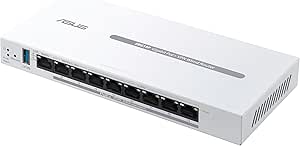 | Best for Business-Grade Wired Networks and Security | PoE Ports: 8 | PoE Power: 123W | WAN Ports: 3 | VIEW LATEST PRICE | See Our Full Breakdown |
| Cudy Gigabit Multi-WAN Router, OpenWRT, Load Balance, 5X GbE, R700 |  | Best for Advanced Users Needing Multi-ISP Redundancy | Number of Ports: 5 | Data Transfer Rate: 1 Gbps | OpenWRT Support: Yes | VIEW LATEST PRICE | See Our Full Breakdown |
| ASUS ExpertWiFi EBG15 Gigabit VPN Wired Router |  | Best for Secure, Business-Grade Wired Networks | Ethernet Ports: Up to 3 WAN ports | USB WAN Port: 1 | VLAN Support: Yes | VIEW LATEST PRICE | See Our Full Breakdown |
| InHand Networks 5G Router Indoor CPE WiFi 6 AX5400 with 2.5GbE Ports |  | Best for High-Speed, Remote Connectivity with Enterprise Reliability | Connectivity Technology: 5G, Ethernet, Wi-Fi | Wireless Compatibility: 802.11ax, Dual-Band | Frequency Band: 2.4 GHz | VIEW LATEST PRICE | See Our Full Breakdown |
| TP-Link ER605 Wired Gigabit VPN Router |  | Best for Multi-WAN Security and Load Balancing | Number of Ports: 5 (1 WAN, 2 WAN/LAN, 2 LAN) | USB WAN Port: Yes | Maximum Upstream Data Transfer Rate: 4000 Mbps | VIEW LATEST PRICE | See Our Full Breakdown |
| GL.iNet GL-MT300N-V2 (Mango) Portable Mini Travel Wireless VPN Router |  | Best for Travel and Remote Work Security | Weight: 39g | Frequency Band: 2.4 GHz | Wireless Compatibility: 802.11bgn | VIEW LATEST PRICE | See Our Full Breakdown |
| GL.iNet GL-SFT1200 Opal Travel Router, AC1200 Dual-Band Wi-Fi |  | Best for Versatile Travel with High-Speed Dual-Band Wi-Fi | Wireless Speed: 1200 Mbps | Frequency Bands: 2.4GHz and 5GHz | Ports: 2 Gigabit LAN, 1 Gigabit WAN | VIEW LATEST PRICE | See Our Full Breakdown |
| NETGEAR Nighthawk WiFi 6 Router R6700AX, Up to 1,500 sq ft, 1.8 Gbps |  | Best Overall for Small Business Security and Performance | WiFi Standard: WiFi 6 | Max Speed: 1.8 Gbps | Coverage: Up to 1,500 sq ft | VIEW LATEST PRICE | See Our Full Breakdown |
| Roam 7 BE3600 Wi-Fi 7 Portable Travel Router Dual-Band, 2.5G Port, USB 3.0 |  | Best for Remote and Mobile Tax Professionals | Wi-Fi Technology: Wi-Fi 7 | Bands: Dual-Band (2.4 GHz and 5 GHz) | Max Wireless Speed: 2882 Mbps on 5 GHz, 688 Mbps on 2.4 GHz | VIEW LATEST PRICE | See Our Full Breakdown |
More Details on Our Top Picks
TP-Link AX1800 WiFi 6 Router (Archer AX21 V5)
The TP-Link AX1800 WiFi 6 Router stands out for offering a robust mix of speed and security tailored for small business needs, especially for tax firms that require stable, secure connectivity. Compared with the ASUS ExpertWiFi EBG19P, it’s simpler to set up and more affordable, though it lacks the extensive wired management features. Its dual-band Wi-Fi 6 provides up to 1.8 Gbps, supporting multiple devices without lag—crucial when handling sensitive client data and multiple staff devices. The security features, including support for VPNs, make it a solid choice for protecting confidential information. However, it doesn’t support the 6 GHz band, which could be a limitation for future-proofing or very dense environments. It’s best suited for small to medium-sized offices that need fast, secure Wi-Fi without complex management systems.
Pros:- Fast Wi-Fi 6 speeds supporting multiple devices simultaneously
- Strong security features including VPN support
- Excellent coverage with beamforming and high-gain antennas
- Supports all major ISPs with easy setup
Cons:- Lacks support for the 6 GHz band, limiting future speed upgrades
- Performance can vary depending on environment and obstacles
Best for: Small tax firms that prioritize fast, reliable Wi-Fi with basic security features and easy setup
Not ideal for: Businesses requiring advanced network management, VLAN segmentation, or extensive wired connectivity
- Wi-Fi Technology:Wi-Fi 6 (802.11ax)
- Total Bandwidth:1.8 Gbps
- 5 GHz Speed:up to 1200 Mbps
- 2.4 GHz Speed:up to 574 Mbps
- Antennas:4 high-gain antennas
- Security:Advanced security, supports VPN server
Our verdict“This router is ideal for small tax firms that need reliable, secure Wi-Fi without complex management features.”
Roam 6 AX1500 Portable Wi-Fi 6 Travel Router Dual-Band USB C 3.0
The Roam 6 AX1500 makes a compelling case for mobile tax teams that need dependable Wi-Fi while traveling or working remotely. Its compact design and support for Wi-Fi 6 speeds up to 1,201 Mbps on 5 GHz, with capacity for up to 60 devices, outperform many portable routers like the GL.iNet GL-MT300N-V2. The multiple modes—router, AP, repeater—offer flexibility, and its VPN support enhances security on open networks. Setup is straightforward via a mobile app, but it’s limited to 60 device connections, which might be restrictive during busy tax season. Unlike the TP-Link AX1800, it’s not ideal for fixed office environments but excels in mobile, remote, or hybrid setups. This makes it perfect for tax professionals who often work outside the office or travel frequently.
Pros:- Supports Wi-Fi 6 with speeds up to 1,201 Mbps
- Compact, portable design ideal for travel
- Multiple modes including router, AP, and repeater
- VPN support enhances security on public networks
Cons:- Limited to 60 device connections, which may be restrictive
- Lacks support for OpenWrt firmware for advanced customization
Best for: Mobile tax consultants or remote teams needing secure, fast Wi-Fi on the go
Not ideal for: Large offices or firms that require extensive wired infrastructure or support for more than 60 devices
- Wi-Fi Speed:up to 1,201 Mbps (5 GHz) and 300 Mbps (2.4 GHz)
- Ports:1 Gbps WAN/LAN, 1 Gbps LAN
- Supported Devices:up to 60
- Security:VPN support, Secure-by-Design
- Connectivity:Wi-Fi 6, USB-C power
- Modes:Router, AP, Repeater, Client
Our verdict“This router is perfect for mobile tax teams needing secure, high-speed Wi-Fi during travel or remote work.”
Tenda AX3000 WiFi 6 Router, Dual-Band Gigabit Wireless Internet Router, Mesh & AP Mode, Built-in VPN, NFC Tap-to-Connect, OFDMA MU-MIMO
The Tenda AX3000 offers a balanced combination of speed, coverage, and security, making it suitable for busy small firms needing reliable Wi-Fi across multiple rooms. Its 2402 Mbps on the 5 GHz band rivals higher-end models like the ASUS ExpertWiFi, while its mesh capabilities make it easier to expand coverage without dead zones. Features like NFC tap-to-connect simplify setup, and built-in VPN and IoT controls support secure, segmented networks. Compared to the TP-Link AX1800, it provides more comprehensive coverage and mesh support, though its feature set might be overwhelming for users who prefer simplicity. This router makes sense for firms with growing needs that want fast Wi-Fi and security without complex enterprise features.
Pros:- Fast Wi-Fi 6 speeds suitable for streaming and video calls
- Whole-home coverage with mesh and beamforming
- Secure network options including VPN and IoT segmentation
- Easy setup via NFC or app
Cons:- Features may be complex for less tech-savvy users
- No specific mention of price or availability
Best for: Small to medium-sized tax firms seeking expandable Wi-Fi coverage with security features
Not ideal for: Single-office setups with minimal coverage needs or budget-constrained firms
- WiFi Speed:2402 Mbps (5GHz) + 574 Mbps (2.4GHz)
- Antennas:7 dBi high-gain antennas
- Connectivity:4× Gigabit ports, auto WAN/LAN
- Security:Built-in VPN, parental controls
- Features:Mesh & AP mode, NFC, OFDMA, MU-MIMO
- Coverage:Whole-home
Our verdict“This router suits small firms needing reliable, expandable Wi-Fi with strong security features.”
ASUS ExpertWiFi EBG19P Gigabit PoE+ VPN Wired Router with 8 PoE+ Ports
The ASUS ExpertWiFi EBG19P is designed for firms that depend on a wired infrastructure with advanced security. Its 8 PoE+ ports, capable of powering multiple devices, make it ideal for connecting IP phones, cameras, and access points in a small office setting. Compared with the Cudy R700, it offers more integrated management for larger setups, with VLAN support and multiple WAN ports for load balancing. Its VPN, IPS, and DPI features provide enterprise-grade security, but the setup process can be intimidating for users without technical backgrounds. It’s best suited for small businesses that prioritize wired reliability, security, and device management over wireless flexibility. This model is less suitable for firms that need primarily Wi-Fi coverage or have minimal wired infrastructure.
Pros:- Multiple PoE+ ports for powering and connecting devices
- Supports VLANs and load balancing for network segmentation
- Enhanced security with VPN, IPS, and DPI
- Multiple WAN ports for redundancy
Cons:- Complex setup may require technical expertise
- Lacks built-in Wi-Fi, limiting mobility and wireless flexibility
Best for: Small tax firms with a wired network infrastructure that require strong security and device management
Not ideal for: Firms relying primarily on wireless connectivity or without dedicated IT staff
- PoE Ports:8
- PoE Power:123W
- WAN Ports:3
- Security:VPN, IPS, DPI
- Management:ExpertWiFi app
- Supports VLAN:Yes
Our verdict“This wired router is suited for small firms needing secure, reliable, and manageable wired connections with enterprise features.”
Cudy Gigabit Multi-WAN Router, OpenWRT, Load Balance, 5X GbE, R700
The Cudy R700 offers a flexible setup for firms with multiple internet connections, such as those with several ISPs or requiring high availability. Its support for OpenWRT makes it highly customizable, appealing to those comfortable with advanced network management. Compared with the TP-Link AX1800, it sacrifices Wi-Fi capabilities for extensive Ethernet connectivity and load balancing. This router is ideal for businesses needing seamless failover and bandwidth aggregation across multiple WANs, especially if they already have a wired infrastructure. The setup can be complex for non-technical users, and it doesn’t include Wi-Fi, which means separate access points are necessary for wireless coverage. It’s best suited for firms with dedicated IT resources or those wanting a highly customizable, multi-ISP setup.
Pros:- Supports up to 5 WAN connections with automatic failover
- OpenWRT compatibility for extensive customization
- Built-in VPN for secure remote access
- Supports high-speed wired connections
Cons:- Setup complexity unsuitable for novices
- No integrated Wi-Fi, requiring additional hardware
Best for: Tech-savvy small businesses or firms with multiple ISPs requiring load balancing and failover
Not ideal for: Small firms that depend solely on Wi-Fi or lack technical expertise for custom setups
- Number of Ports:5
- Data Transfer Rate:1 Gbps
- OpenWRT Support:Yes
- VPN Support:Built-in
- Failover:Automatic
- Switch Type:Ethernet
Our verdict“This router is optimal for technically skilled firms needing multi-ISP load balancing and reliability with wired connections.”
ASUS ExpertWiFi EBG15 Gigabit VPN Wired Router
This model shines for small tax firms that prioritize security and reliable wired connections. Unlike the TP-Link ER605, which offers multiple WAN ports but lacks integrated security features, the ASUS ExpertWiFi EBG15 integrates advanced IPS and VPN protections, making it ideal for safeguarding sensitive client data. Its focus on wired infrastructure with load balancing ensures stable internet, but it’s less suited for firms needing integrated Wi-Fi or simple setups. The easy management via mobile app adds convenience for busy environments. However, its complexity and wired-only design might be overkill for firms that need wireless flexibility or straightforward setup.
Pros:- Easy setup via web or mobile app
- Advanced security features including IPS and VPN
- Multiple WAN ports with load balancing for reliability
Cons:- Designed primarily for business use, not casual or small office environments
- No integrated Wi-Fi capabilities, focusing solely on wired connections
Best for: Small tax firms with a focus on secure, wired network infrastructure and advanced security features
Not ideal for: Firms seeking simple Wi-Fi coverage or easy plug-and-play setups, as this router is geared toward business use with a steeper learning curve
- Ethernet Ports:Up to 3 WAN ports
- USB WAN Port:1
- VLAN Support:Yes
- Security Features:IPS, VPN, Intrusion Prevention, Layer 7 Firewall
- Management:Remote via mobile app
- Additional:Load balancing, backup WAN via USB
Our verdict“Best suited for security-conscious firms needing reliable wired connections over Wi-Fi.”
InHand Networks 5G Router Indoor CPE WiFi 6 AX5400 with 2.5GbE Ports
This router offers blazing-fast 5G and Wi-Fi 6, making it an excellent choice for tax firms needing quick, reliable internet in remote or hybrid settings. Compared to the GL.iNet GL-SFT1200, which provides solid travel Wi-Fi, the InHand router supports far more devices simultaneously—up to 200—thanks to Wi-Fi 6’s efficiency. Its enterprise-grade features like failover and centralized cloud management cater to firms that require high availability and remote control, but the setup can be complex, especially for non-technical staff. While it excels in speed and capacity, its focus on cellular and enterprise features makes it less suitable for offices seeking straightforward wired or Wi-Fi setups without technical expertise.
Pros:- High-speed 5G and Wi-Fi 6 connectivity for fast data transfer
- Supports up to 200 devices simultaneously
- Enterprise-grade reliability with failover and cloud management
Cons:- Requires manual setup for carrier-specific APNs
- Complex configuration for non-technical users
Best for: Tax firms operating remotely or in hybrid environments needing high-speed, multi-device connectivity with remote management
Not ideal for: Small, static offices that do not require 5G connectivity or advanced cloud management, as setup complexity may be unnecessary
- Connectivity Technology:5G, Ethernet, Wi-Fi
- Wireless Compatibility:802.11ax, Dual-Band
- Frequency Band:2.4 GHz
- Number of Ports:3
- Data Transfer Rate:5400 Mbps
- Security Protocol:IPsec, L2TP
- Wi-Fi Generation:Wi-Fi 6
- Special Features:Access Point Mode, Internet Security
Our verdict“Ideal for remote-focused tax firms needing fast, reliable connectivity with remote device management.”
TP-Link ER605 Wired Gigabit VPN Router
Compared with other wired options like the ASUS EBG15, the TP-Link ER605 provides a more straightforward setup with multiple WAN ports and VPN capabilities suitable for small to medium tax firms. Its five gigabit ports support load balancing and backup, ensuring stable, high-speed internet connectivity even if one connection fails. However, its lack of built-in Wi-Fi means firms will need additional access points, which could complicate deployment. This router is best for firms prioritizing multi-WAN redundancy and security over integrated wireless features. Its setup can be daunting for those unfamiliar with network configurations, but it offers robust security for sensitive client data.
Pros:- Supports multiple WAN connections for load balancing and backup
- Includes USB port for mobile broadband backup
- Comprehensive security features including VPN and firewall
Cons:- Complex setup requiring technical knowledge
- No built-in Wi-Fi, requiring additional equipment
Best for: Small to medium tax firms needing secure, multi-WAN wired connections with VPN support
Not ideal for: Firms looking for an all-in-one Wi-Fi solution, as it lacks built-in wireless capabilities
- Number of Ports:5 (1 WAN, 2 WAN/LAN, 2 LAN)
- USB WAN Port:Yes
- Maximum Upstream Data Transfer Rate:4000 Mbps
- Data Transfer Rate:1 Gbps
- Supported Protocols:Ethernet, VPN
- Wi-Fi Generation:Wi-Fi 6
Our verdict“Best for firms that need multi-WAN reliability and security, but with separate Wi-Fi deployment.”
GL.iNet GL-MT300N-V2 (Mango) Portable Mini Travel Wireless VPN Router
This tiny router is perfect for tax professionals on the go, offering VPN support and OpenWrt customization in a pocket-sized device. Unlike larger, more complex routers like the InHand 5G, the Mango is simple to carry and easy to set up, ideal for remote work in cafes or client sites. Its dual Ethernet ports and VPN capabilities facilitate secure internet connections, but limited to 2.4 GHz Wi-Fi and basic speeds, it’s not suited for high-bandwidth tasks or fixed office environments. This pick is about portability and security, sacrificing speed and range for convenience and flexibility.
Pros:- Compact and portable design
- Supports VPN via OpenWrt and OpenVPN
- Dual Ethernet ports and USB support
Cons:- Limited to 2.4 GHz Wi-Fi, no dual-band support
- Requires external power source like a power bank
Best for: Traveling tax professionals needing secure, portable internet with VPN support
Not ideal for: Firms requiring high-speed Wi-Fi for multiple employees or high-bandwidth tasks, as this device is limited in speed and range
- Weight:39g
- Frequency Band:2.4 GHz
- Wireless Compatibility:802.11bgn
- Number of Ports:2
- Data Transfer Rate:300 Mbps
- Operating System:OpenWrt
- Security Protocol:WPA2-PSK
Our verdict“Great for mobile professionals needing secure internet access on the road, but not for high-bandwidth office needs.”
GL.iNet GL-SFT1200 Opal Travel Router, AC1200 Dual-Band Wi-Fi
The GL.iNet Opal combines portability with solid performance, supporting dual-band Wi-Fi up to 1200 Mbps. Unlike the GL-MT300N-V2, which is more basic and limited to 2.4 GHz, the Opal’s dual-band support and higher speed make it suitable for small firms wanting reliable internet on the go. Its full gigabit ports support wired connections, and VPN options like OpenVPN and WireGuard add security for remote work. The retractable antennas improve reception, but its speed and range still fall short for demanding tasks or large offices. This router suits mobile professionals who want a balance of speed, security, and portability.
Pros:- Dual-band Wi-Fi up to 1200 Mbps
- Full gigabit ports for wired devices
- Supports VPNs with OpenWrt, OpenVPN, WireGuard
Cons:- Speed can vary based on network conditions
- No support for tethering or cellular connectivity
Best for: Traveling tax professionals needing fast, secure Wi-Fi with flexible wired and wireless options
Not ideal for: Fixed office setups where high-speed, high-capacity Wi-Fi is needed, as it’s optimized for portability and moderate speeds
- Wireless Speed:1200 Mbps
- Frequency Bands:2.4GHz and 5GHz
- Ports:2 Gigabit LAN, 1 Gigabit WAN
- Antenna Type:Retractable
- Security Protocols:OpenVPN, WireGuard, WPA2-PSK, WPA3
- Operating System:OpenWrt
Our verdict“A versatile travel router for professionals needing reliable dual-band Wi-Fi and VPN security on the go.”
NETGEAR Nighthawk WiFi 6 Router R6700AX, Up to 1,500 sq ft, 1.8 Gbps
This router stands out for combining WiFi 6 speeds with strong security features, making it an excellent choice for a tax firm prioritizing reliable, secure internet. Compared with the Roam 7 BE3600, which offers portability and Wi-Fi 7, the R6700AX provides more robust security and wired connectivity options suitable for a fixed office environment. Its support for WPA3 encryption and NETGEAR Armor trial helps protect sensitive client data, which is vital for tax firms. However, its range might fall short in larger or multi-story offices, and the need for a subscription after the Armor trial can add ongoing costs.
Pros:- Supports fast WiFi 6 speeds supporting multiple devices simultaneously
- Easy setup and management via mobile app
- Includes advanced security features like WPA3 encryption and NETGEAR Armor
Cons:- Limited coverage for larger or multi-story buildings
- Requires a subscription after the Armor trial for ongoing security
Best for: Small tax firms needing secure, stable WiFi with wired backup options in a fixed office setting.
Not ideal for: Remote workers or traveling professionals who require portable, high-speed connectivity on the go.
- WiFi Standard:WiFi 6
- Max Speed:1.8 Gbps
- Coverage:Up to 1,500 sq ft
- Number of Devices:Up to 20
- Ethernet Ports:4 LAN, 1 WAN
- Encryption:WPA3
Our verdict“This router is ideal for small tax offices seeking reliable, secure WiFi with wired options, but less so for highly mobile or large-space environments.”
Roam 7 BE3600 Wi-Fi 7 Portable Travel Router Dual-Band, 2.5G Port, USB 3.0
The Roam 7 BE3600 excels in portability and high-speed wireless connections, making it perfect for tax professionals who work outside a traditional office. Its support for Wi-Fi 7 delivers faster, higher-capacity wireless, outperforming the WiFi 6 based NETGEAR R6700AX in speed, especially in mobile scenarios. Multiple modes such as router, hotspot, and access point, combined with high-speed wired ports, give remote tax professionals the flexibility to connect securely from any location. The downside is that it doesn’t support custom firmware like OpenWrt, limiting advanced customization, and it needs an external power source, which can be inconvenient during travel.
Pros:- Supports Wi-Fi 7 for fastest wireless capacity
- Multiple operation modes for versatile connectivity
- Compact, travel-friendly design with high-speed wired ports
Cons:- No support for custom firmware like OpenWrt
- Requires external power, which can be less convenient on the move
- Limited device compatibility with older hardware due to Wi-Fi 7
Best for: Tax professionals who frequently work remotely, travel, or need a portable, high-speed internet solution.
Not ideal for: In-office setups where a fixed, wired, and more secure network is preferred over portability.
- Wi-Fi Technology:Wi-Fi 7
- Bands:Dual-Band (2.4 GHz and 5 GHz)
- Max Wireless Speed:2882 Mbps on 5 GHz, 688 Mbps on 2.4 GHz
- Ports:1x 2.5 Gbps WAN, 1x 1 Gbps LAN, USB 3.0, Type-C
- Supported Modes:Router, Hotspot, AP, RE, Client, USB Tethering
- Security:OpenVPN, WireGuard, PPTP, L2TP
Our verdict“This portable Wi-Fi 7 router is best suited for mobile tax professionals who need speed and flexibility in remote settings, but less so for fixed office environments.”

How We Picked
These routers were evaluated based on key factors that matter most to small tax firms: security, network performance, ease of management, and scalability. Devices with enterprise-grade features, such as VPN support and multiple gigabit ports, ranked higher because they better protect sensitive data and support multiple users. Cost-effectiveness was also considered, ensuring options are accessible without sacrificing critical features. The ranking reflects a balance between professional-grade capabilities and affordability, prioritizing solutions that provide reliable, secure, and scalable network performance for a tax practice.Factors to Consider When Choosing Best Small Business Network Router For Tax Firm
When selecting a network router for a tax firm, it’s essential to consider how the device impacts security, performance, and future growth. A router isn’t just about speed; it needs to safeguard sensitive client information and support multiple devices seamlessly. Understanding key factors will help you avoid common pitfalls—such as choosing a router with insufficient security features or one that cannot scale with your business needs. Here are the main considerations to guide your decision.Security Features
For a tax firm handling confidential information, security is paramount. Look for routers with built-in VPN support, WPA3 encryption, and advanced firewall options. Multi-layered security features help prevent breaches and unauthorized access. Avoid models that lack these protections, as they could expose your data to risks or require additional hardware to compensate.
Network Speed and Standards
Wi-Fi 6 (802.11ax) provides faster speeds and better performance in crowded environments, which can be beneficial if your office supports multiple devices or remote connections. While Wi-Fi 5 (802.11ac) remains common, upgrading ensures future-proofing. Be cautious about models that promise high speeds but lack real-world performance or sufficient bandwidth for your users.
Port Availability and Scalability
Multiple gigabit Ethernet ports support wired connections for desktops or printers, which can be more secure and reliable than Wi-Fi. Consider routers with multi-WAN capabilities if you want redundancy or load balancing—this minimizes downtime during internet outages. Avoid models with limited ports if you anticipate growth or need to connect several wired devices.
Ease of Management
For a busy tax office, a router with an intuitive management interface saves time and reduces errors. Features like remote management, user access controls, and firmware updates are valuable. More complex setups might require enterprise management tools, but simpler interfaces can still serve small practices effectively. Avoid overly complicated systems if your team isn’t tech-savvy.
Price and Total Cost of Ownership
Higher-priced routers typically include better security, faster performance, and more features, but they may not be necessary for all small firms. Balance your budget with your security and scalability needs. Remember that investing in a reliable, secure router can prevent costly data breaches or network downtime, which are far more expensive than the initial purchase.
Frequently Asked Questions
Is Wi-Fi 6 necessary for my tax firm?
Wi-Fi 6 offers faster speeds and better performance in environments with many connected devices, which can benefit busy tax offices. If your practice has multiple staff devices, remote workers, or smart office gadgets, Wi-Fi 6 can improve reliability and reduce lag. However, for smaller setups with fewer devices, Wi-Fi 5 might suffice, allowing you to save money without sacrificing essential performance.
Should I prioritize security features over speed?
Security features are generally more critical for a tax firm because of the sensitive client information involved. While fast connections are valuable, they should not come at the expense of protections like VPN support, encryption, and advanced firewalls. Ideally, choose a router that balances both, ensuring your data remains safe without compromising daily productivity.
Can I use a consumer-grade router for my tax office?
While some consumer-grade routers can handle small office tasks, they often lack the advanced security and management features needed for a professional environment. For a tax firm, investing in a business-grade router provides better protection, reliable connectivity, and scalability. Relying solely on consumer models may expose your practice to security vulnerabilities or network instability.
How many gigabit ports do I need?
The number depends on how many wired devices you plan to connect. For most small tax practices, 4 to 8 gigabit ports are sufficient, supporting desktops, printers, and IP phones. If you anticipate expansion or want better network segmentation, opt for a router with more ports or multi-WAN capabilities. Underestimating port needs can lead to cluttered setups or the need for additional switches later.
Is portability important for a tax firm router?
Portability is only relevant if your practice requires frequent relocation or remote work. Portable routers like the Roam models are convenient for remote work but typically lack enterprise-grade security and management features. For a stationary office, a dedicated, wired, or larger wireless router offers more stability, security, and scalability. Portable routers should be considered supplementary rather than primary solutions.
Conclusion
For most small tax firms, the ASUS ExpertWiFi EBG19P stands out as the best overall choice, blending security, manageability, and performance. Budget-conscious practices may prefer the TP-Link AX1800 WiFi 6 Router for reliable speed at a lower cost. Firms with remote or hybrid staff should consider portable options like the Roam 6 AX1500 for flexibility but should supplement them with more secure, wired options. Larger or security-sensitive practices should look at models with multi-WAN and VPN features, such as the ASUS ExpertWiFi EBG19P or TP-Link ER605. Ultimately, selecting the right router depends on your firm’s size, security needs, and future growth plans.