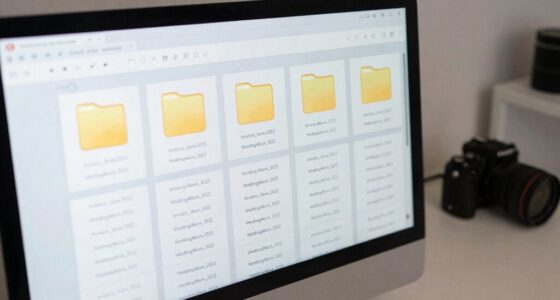
To prevent sync conflicts across devices, you should save and sync your files frequently, ensuring uploads are complete before switching devices. Use automatic sync features and understand how cloud storage manages version history to recover previous versions if needed. Coordinate with others on shared files and establish clear protocols for editing and saving. Lock files when editing and be aware of possible sync delays, so your data stays consistent. If you keep these strategies in mind, you’ll stay ahead of conflicts and work smoothly across devices.

Get smart everyday buys delivered free with Prime
- Fast, free delivery on millions of items
- Prime Video, Amazon Music and more included
- Member-only deals all year
Key Takeaways
- Save and sync files frequently, ensuring uploads complete before switching devices.
- Use version history features to track and restore previous file versions.
- Lock files during editing or implement check-in/check-out protocols for critical documents.
- Coordinate with team members to work on the latest versions and communicate changes clearly.
- Be aware of sync delays and verify successful uploads to prevent outdated or conflicting files.
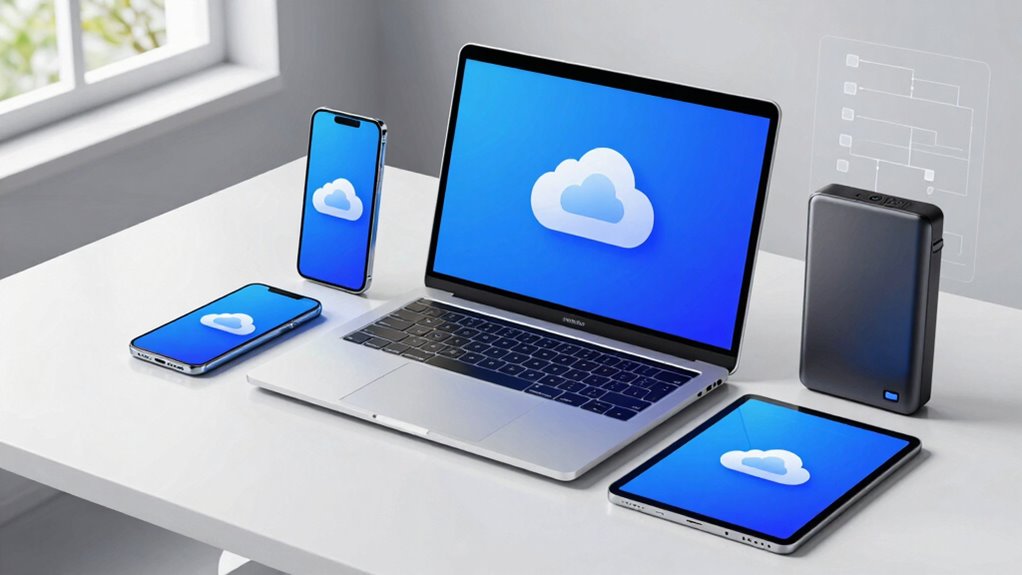
Sync conflicts can disrupt your workflow and cause data loss if not managed properly. When you’re working across multiple devices, cloud storage services help keep your files accessible and synchronized. However, if two devices edit the same file simultaneously or if there’s a delay in syncing, conflicts can occur. These conflicts often appear as duplicate copies or confusing versions, making it difficult to determine which is the most recent or correct. To prevent this, you need to adopt some effective strategies centered around cloud storage and version control.
Sync conflicts disrupt workflows and cause data loss without proper management.
First, establish a habit of saving and syncing your files regularly. When you finish editing, ensure the file syncs to the cloud before switching to another device. This minimizes the chances of two versions diverging unexpectedly. Many cloud storage services automatically sync in the background, but it’s good practice to double-check if your files have uploaded successfully before closing your session. Setting your devices to sync automatically can help maintain real-time updates, reducing the risk of conflicts. Additionally, understanding how cloud storage synchronization works can help you better manage your files and prevent conflicts from occurring. Being aware of potential sync delays can also help you avoid working on outdated files. Knowing the file update process can further assist in managing your workflow effectively, especially when combined with an understanding of how version control features operate to track changes over time.
Next, leverage version control features offered by your cloud storage provider. Many platforms, like Dropbox or Google Drive, create previous versions of your files automatically or allow you to manually save snapshots. When conflicts arise, these version histories enable you to compare and merge changes easily, rather than losing data or ending up with multiple confusing duplicates. Familiarize yourself with how your chosen service handles versioning and use it proactively to keep track of edits. This knowledge can be particularly useful in content management workflows where multiple revisions are common.
Another important step is to coordinate with others if you’re working on shared files. Clear communication about who’s editing what and when can prevent multiple people from editing the same document simultaneously. If you’re in a team setting, establish protocols for editing and saving files, ensuring everyone works on the latest version. Using collaboration tools that support real-time editing can also reduce the chances of conflicts, as everyone sees changes as they happen instead of working on outdated files.
Lastly, consider implementing dedicated workflows for critical files. For example, lock a file while editing or create a check-in/check-out system if your cloud storage or collaboration platform supports it. These measures add an extra layer of control, preventing multiple edits that lead to conflicts.
Products Worth Considering

Apple MacBook Neo 13-inch Laptop with A18 Pro Chip, 8GB Memory, 512GB SSD, Liquid Retina Display, and Touch ID (Blush)

Dell Pro 14 Plus P1425 14-Inch Portable Monitor

Apple MacBook Air 13.6-inch with M5 Chip, 16GB Memory, 512GB SSD, Sky Blue
As an affiliate, we earn on qualifying purchases.
Frequently Asked Questions
Can Sync Conflicts Cause Data Loss?
Sync conflicts can potentially cause data loss if not managed properly. When conflicts occur, they threaten data integrity, risking overwritten or lost information. However, with effective conflict resolution strategies, you can prevent this. Regularly backing up your data, updating your apps, and choosing reliable synchronization tools help minimize conflicts. These steps guarantee your data remains safe and consistent across devices, reducing the risk of losing important information.
How Do I Resolve Sync Conflicts Manually?
Oh, the thrill of manual resolution—like solving a mystery with a magnifying glass! When sync conflicts pop up, you’ll need to troubleshoot by reviewing conflicting versions, choosing which data to keep, or merging changes manually. Delve into conflict troubleshooting by opening the app’s conflict resolution tools, then carefully select the correct data, and save your choice. It’s tedious, but hey, you’re now the hero of your data universe!
Are Certain Devices More Prone to Sync Conflicts?
Some devices are more prone to sync conflicts due to device compatibility issues or user behavior. Older or less compatible devices may struggle with seamless syncing, increasing conflict chances. Additionally, inconsistent user behavior, like editing the same file offline or on multiple devices simultaneously, raises conflict risks. To minimize problems, stick to compatible devices and avoid making conflicting changes at the same time, ensuring smoother sync processes across your devices.
Does Internet Speed Affect Sync Consistency?
Internet speed acts like a busy highway—when latency is high and bandwidth is limited, your sync can get delayed or inconsistent. Slow internet causes delays in data updates, making your devices out of sync. To keep things smooth, make certain you have a stable connection with sufficient bandwidth. This way, your files sync seamlessly, avoiding conflicts or outdated info, and keeping all your devices up-to-date effortlessly.
Can Third-Party Apps Help Prevent Sync Conflicts?
Third-party apps can considerably help prevent sync conflicts by offering advanced conflict resolution features. These tools automatically detect syncing issues and merge changes intelligently, reducing your manual effort. By integrating such third-party tools, you gain better control over your data across devices, ensuring consistency. They streamline the synchronization process, minimize errors, and resolve conflicts swiftly, giving you a smoother experience and maintaining data integrity across all your devices.
Conclusion
So, next time you think about rushing to sync your files, remember—it’s almost amusing how a simple oversight can turn into a tech nightmare. Preventing conflicts isn’t rocket science; it’s about patience and a little organization. Ironically, in trying to stay connected across devices, we often cause the very conflicts we dread. So, take a breath and double-check before syncing—your files will thank you, and you might just save yourself some headaches.