
After comparing the leading personal finance books for beginners side by side, one pick stands out from the pack: Personal Finance QuickStart Guide, which earns the top spot for its rare combination of plain-English explanations, actionable steps, and full coverage of debt, saving, and wealth building in a single volume. Close behind are Personal Finance For Dummies, the most reassuring option for readers who feel intimidated by money talk, and The Infographic Guide to Personal Finance, the fastest read for visual learners who want the essentials without wading through long chapters. The main tradeoff in this category is depth versus accessibility — some books go deep on investing philosophy but assume knowledge a true beginner doesn’t have, while ultra-simple primers can leave you without a next step once you’ve mastered the basics. Age focus matters too: several strong titles are written specifically for teens and young adults, which is a strength if that’s you and a limitation if it isn’t. Keep reading for the full breakdown, including who each book is for and who should skip it.

Get smart everyday buys delivered free — and shop member deals
- Fast, free delivery on millions of items
- Access to Prime Big Deal Days deals on October 6–7
- Prime Video, Amazon Music and more included
Key Takeaways
- Personal Finance QuickStart Guide ranked first because it was the only title that scored well across every criterion — accessibility, actionability, breadth, and re-readability — without a major weakness for beginners.
- Books aimed at teens and young adults (Money Skills for Teens, Money Skills for Young Adults) are the easiest entry points but plateau quickly; readers with any financial foundation will outgrow them within months.
- The Simple Path to Wealth is the deepest and most motivating pick in the lineup, but its investing-heavy focus makes it a poor first book for someone still struggling with budgeting or debt.
- Visual formats earned their place: The Infographic Guide to Personal Finance and Finance for Beginners: 101 Concepts deliver concepts faster than prose-heavy rivals, at the cost of less hand-holding when applying them.
- The Dummies franchise appears twice for a reason — the brand’s structured, jargon-free approach consistently reduces intimidation, though both titles trade personality and freshness for safety.
| Money Skills for Teens: A Beginner’s Guide to Budgeting, Saving, and Investing |  | Best for Teen Readers | Target Audience: Teenagers | Topics Covered: Budgeting, saving, investing | Format: Print book | VIEW LATEST PRICE | See Our Full Breakdown |
| The Infographic Guide to Personal Finance: A Visual Reference for Everything You Need to Know | 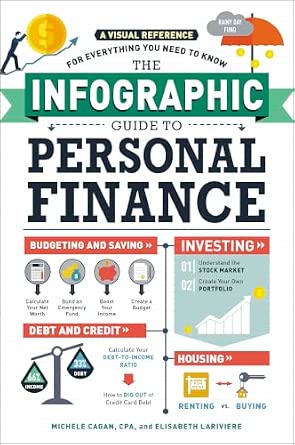 | Best Visual Learner Pick | Format: Infographic/visual reference book | Topics Covered: Budgeting, investing, financial planning, money management | Experience Level: Beginner | VIEW LATEST PRICE | See Our Full Breakdown |
| Personal Finance For Dummies |  | Best Overall Reference | Series: For Dummies | Topics Covered: Budgeting, saving, investing, debt management | Experience Level: Beginner | VIEW LATEST PRICE | See Our Full Breakdown |
| Money Skills for Young Adults: A Beginner’s Guide to Smart Financial Habits |  | Best for Early Independence | Target Audience: Young adults | Topics Covered: Budgeting, saving, investing, financial independence | Experience Level: Beginner | VIEW LATEST PRICE | See Our Full Breakdown |
| Personal Finance for Teens and Young Adults: Learn Money Skills Not Taught in School |  | Best Value Basics | Target Audience: Teens and young adults | Topics Covered: Budgeting, saving, investing, financial independence | Experience Level: Beginner | VIEW LATEST PRICE | See Our Full Breakdown |
| Personal Finance 101: From Saving and Investing to Taxes and Loans, an Essential Primer on Personal Finance |  | Best All-Around Reference | Format: Paperback | Audience Level: Beginner | Topics Covered: Saving, investing, taxes, loans | VIEW LATEST PRICE | See Our Full Breakdown |
| How to Adult: Personal Finance for the Real World |  | Best for Recent Grads | Format: Paperback / Digital | Audience Level: Beginner young adults | Topics Covered: Budgeting, saving, everyday money management, investing basics | VIEW LATEST PRICE | See Our Full Breakdown |
| Your Best Financial Life: Save Smart Now for the Future You Want |  | Best for Long-Term Wealth Building | Format: Paperback / Digital | Audience Level: Beginner to intermediate | Topics Covered: Saving, investing, long-term wealth building | VIEW LATEST PRICE | See Our Full Breakdown |
| Finance for Beginners: 101 Concepts |  | Best Quick-Start Glossary | Format: Paperback / Digital | Audience Level: Absolute beginner | Topics Covered: 101 personal finance and investing concepts | VIEW LATEST PRICE | See Our Full Breakdown |
| Financial Literacy Essentials For Dummies |  | Best Trusted-Brand Comfort Pick | Format: Paperback | Audience Level: Beginner | Topics Covered: Core financial literacy and money decision-making | VIEW LATEST PRICE | See Our Full Breakdown |
| Financial Literacy for Young Adults: Manage, Save, and Invest Money for a Secure Future |  | Best for Gen Z and New Grads | Format: Paperback / Kindle | Audience Level: Beginner (young adults) | Core Topics: Money management, saving, investing | VIEW LATEST PRICE | See Our Full Breakdown |
| The Simple Path to Wealth: Your Road Map to Financial Independence and a Rich, Free Life |  | Best Long-Term Wealth Mindset | Format: Paperback / Kindle / Audiobook | Audience Level: Beginner to intermediate | Core Topics: Financial independence, index investing, wealth mindset | VIEW LATEST PRICE | See Our Full Breakdown |
| The Ultimate Guide to Personal Finance: From Debt to Financial Freedom |  | Best for Debt Payoff Focus | Format: Paperback / Kindle | Audience Level: Beginner | Core Topics: Debt management, budgeting, financial independence | VIEW LATEST PRICE | See Our Full Breakdown |
| Personal Finance QuickStart Guide: The Simplified Beginner’s Guide to Eliminating Financial Stress, Building Wealth, and Achieving Financial Freedom |  | Best Structured Starter | Format: Paperback / Kindle / Audiobook | Audience Level: Absolute beginner | Core Topics: Stress reduction, budgeting, debt, wealth building | VIEW LATEST PRICE | See Our Full Breakdown |
| personal finance books for beginner | Format | Topics Covered | Audience Level | Approach |
|---|---|---|---|---|
| Money Skills for Teens: A Begi | Print book | Budgeting, saving, investing | — | Practical money management skills |
| The Infographic Guide to Perso | Infographic/visual reference book | Budgeting, investing, financial planning, money management | — | — |
| Personal Finance For Dummies | Print book | Budgeting, saving, investing, debt management | — | — |
| Money Skills for Young Adults: | Print/digital book | Budgeting, saving, investing, financial independence | — | Habit-building and practical strategies |
| Personal Finance for Teens and | Print/digital book | Budgeting, saving, investing, financial independence | — | Real-world practical instruction |
| Personal Finance 101: From Sav | Paperback | Saving, investing, taxes, loans | Beginner | Broad primer / reference |
| How to Adult: Personal Finance | Paperback / Digital | Budgeting, saving, everyday money management, investing basics | Beginner young adults | Practical, life-stage specific |
| Your Best Financial Life: Save | Paperback / Digital | Saving, investing, long-term wealth building | Beginner to intermediate | Goal-oriented, long-horizon planning |
| Finance for Beginners: 101 Con | Paperback / Digital | 101 personal finance and investing concepts | Absolute beginner | Concept-by-concept glossary style |
| Financial Literacy Essentials | Paperback | Core financial literacy and money decision-making | Beginner | Structured primer from established series |
| Financial Literacy for Young A | Paperback / Kindle | — | Beginner (young adults) | — |
| The Simple Path to Wealth: You | Paperback / Kindle / Audiobook | — | Beginner to intermediate | — |
| The Ultimate Guide to Personal | Paperback / Kindle | — | Beginner | — |
| Personal Finance QuickStart Gu | Paperback / Kindle / Audiobook | — | Absolute beginner | — |
More Details on Our Top Picks
Money Skills for Teens: A Beginner’s Guide to Budgeting, Saving, and Investing
Money Skills for Teens wins its slot by being deliberately narrow: it speaks to readers who are years away from a mortgage or a 401(k), and that focus pays off. Where Personal Finance For Dummies tries to cover an entire adult financial life, this book keeps everything anchored in allowances, first jobs, and first bank accounts, which keeps teens reading instead of zoning out. Compared with Personal Finance for Teens and Young Adults, it leans harder on habit-building than on independence logistics like renting or credit scores. The tradeoff is depth — a teen who already saves diligently will outgrow it fast, and there are no worksheets or digital tools to extend the experience.
Pros:- Age-appropriate framing that keeps teenage readers engaged
- Breaks budgeting, saving, and investing into digestible lessons
- Builds responsible habits before bad ones form
- Approachable writing for readers with zero finance background
Cons:- Content will be outgrown quickly by motivated readers
- No worksheets, tools, or interactive elements to reinforce lessons
Best for: Teens aged 13-17 getting their first income from jobs, chores, or gifts who need money basics framed around their actual life stage
Not ideal for: Readers in their twenties facing rent, student loans, or credit decisions — the teen framing will feel behind their curve
- Target Audience:Teenagers
- Topics Covered:Budgeting, saving, investing
- Format:Print book
- Experience Level:Beginner
- Approach:Practical money management skills
- Interactive Content:None
Our verdict“If a teenager in your life is earning money for the first time, this is the gentlest on-ramp to managing it well.”
The Infographic Guide to Personal Finance: A Visual Reference for Everything You Need to Know
Not every beginner absorbs finance best through dense paragraphs, and this is where The Infographic Guide to Personal Finance earns its place. Charts and diagrams do the heavy lifting, turning concepts like compound interest and debt payoff into pictures you can grasp in seconds. Compared with Personal Finance For Dummies, it sacrifices narrative depth for speed — it works as a desk reference you flip through, not a book you read cover to cover. Against Personal Finance 101, which covers similar ground in traditional prose, the visual format is the entire differentiator. The honest drawback: once a concept clicks, you’ll want more detail than the graphics provide, and readers comfortable with text-heavy books may find it thin.
Pros:- Infographics make abstract concepts instantly graspable
- Covers a wide range of topics in one slim volume
- Excellent quick-reference format for returning to later
- Low intimidation factor for finance-averse readers
Cons:- Shallow treatment that advanced beginners will quickly surpass
- No digital or interactive companion content
Best for: Visual learners and busy adults who want to absorb core concepts quickly through charts rather than chapters of text
Not ideal for: Readers who want explanations with nuance and context — the graphic format compresses topics to their simplest form
- Format:Infographic/visual reference book
- Topics Covered:Budgeting, investing, financial planning, money management
- Experience Level:Beginner
- Best Use:Quick reference
- Digital Content:None
- Audience:General adults
Our verdict“Buy this if diagrams teach you faster than paragraphs and you want the whole money landscape in one glance.”
Personal Finance For Dummies
Personal Finance For Dummies takes the top spot because it covers more financial territory than anything else in this lineup — budgeting, debt, insurance, investing, and retirement under one roof. Its plain-language explanations make it the safest first purchase for a beginner who wants one book instead of five. Compared with The Infographic Guide to Personal Finance, it trades visual speed for genuine depth; compared with The Ultimate Guide to Personal Finance, the tone is calmer and less wealth-building focused. The tradeoff is bulk and pace: at times it reads like a reference manual, and readers hunting for aggressive investment strategy will need a follow-up book like The Simple Path to Wealth afterward.
Pros:- Broadest topic coverage of any single book here
- Trusted, jargon-free teaching style refined over many editions
- Logical structure that works both for reading and referencing
- Suits complete beginners without feeling condescending
Cons:- Can feel like a textbook — long and reference-heavy
- No supplementary digital materials or tools
- Investment section is introductory at best
Best for: Adult beginners who want a single thorough reference covering all major money decisions from debt to retirement
Not ideal for: Readers seeking advanced or aggressive investment tactics — this stays firmly at the fundamentals level
- Series:For Dummies
- Topics Covered:Budgeting, saving, investing, debt management
- Experience Level:Beginner
- Format:Print book
- Best Use:Full-course reference
- Supplementary Materials:None
Our verdict“If you’re buying exactly one personal finance book as a true beginner, this is the one that covers the most ground with the least friction.”
Money Skills for Young Adults: A Beginner’s Guide to Smart Financial Habits
Where Money Skills for Teens stops at first bank accounts, Money Skills for Young Adults picks up the story at the moment money gets real: first apartments, paychecks, and building financial independence from scratch. Its strength is habit formation — the book structures advice around routines rather than one-time decisions, which distinguishes it from the more encyclopedic Personal Finance For Dummies. Compared with How to Adult: Personal Finance for the Real World, it skews more toward long-term security than day-to-day survival skills. The tradeoff is investing: coverage stays at the habit level, so a reader ready to pick index funds will need something deeper, and there’s no companion workbook to anchor the strategies.
Pros:- Frames advice around repeatable habits rather than abstract concepts
- Directly addresses the transition to financial independence
- Simple, actionable strategies without filler
- Goal-oriented structure for saving milestones
Cons:- Investment section lacks actionable depth
- No workbook, tools, or digital resources included
Best for: Young adults aged 18-25 newly managing their own rent, bills, and income who want systems over theory
Not ideal for: Readers ready to build an actual investment portfolio — the investing content stays at the basics
- Target Audience:Young adults
- Topics Covered:Budgeting, saving, investing, financial independence
- Experience Level:Beginner
- Approach:Habit-building and practical strategies
- Format:Print/digital book
- Interactive Content:None
Our verdict“This makes the most sense for someone freshly on their own who needs money routines, not a finance encyclopedia.”
Personal Finance for Teens and Young Adults: Learn Money Skills Not Taught in School
Personal Finance for Teens and Young Adults positions itself around a single compelling promise: the money skills schools skip. That framing works because it delivers a tight, real-world curriculum spanning budgeting through first investments without padding. Compared with Money Skills for Young Adults, it casts a wider age net, making it a better shared pick for a household with both a sixteen-year-old and a college freshman — though that breadth means neither group gets content tailored precisely to them. Against Financial Literacy for Young Adults, the tone is more classroom-adjacent and lesson-driven. The drawback is ceiling: like most budget entries here, its investing guidance is a doorway, not a destination.
Pros:- Dual teen/young-adult appeal stretches value across ages
- Emphasizes practical skills with immediate real-world use
- Beginner-friendly pacing with no assumed knowledge
- Affordable entry point into financial literacy
Cons:- Broad age targeting means less stage-specific relevance
- Investment strategies remain surface-level
- No digital resources or interactive tools
Best for: Budget-minded buyers — parents or educators — who want one affordable book that works across both teen and young-adult readers
Not ideal for: Readers a few years into their careers who need depth on investing, taxes, or debt payoff strategy
- Target Audience:Teens and young adults
- Topics Covered:Budgeting, saving, investing, financial independence
- Experience Level:Beginner
- Approach:Real-world practical instruction
- Format:Print/digital book
- Interactive Content:None
Our verdict“For one low-cost book that bridges the gap between teenager and twenty-something, this covers the school-skipped basics competently.”
Personal Finance 101: From Saving and Investing to Taxes and Loans, an Essential Primer on Personal Finance
Where Finance for Beginners: 101 Concepts skims the surface of many ideas, this primer gives each topic — saving, investing, taxes, and loans — enough room to actually stick. That breadth is what earns it a top spot in a beginner roundup: rather than pushing one money philosophy, it works like a first textbook you can return to when a new financial decision appears.
The tradeoff is depth. Once you finish it, you will outgrow it quickly — anyone hunting for detailed investing strategy is better served by The Simple Path to Wealth. There is also no workbook or interactive component, so it teaches by reading rather than doing.
Pros:- Covers an unusually wide range of topics, from taxes to loans, in one volume
- Written for true beginners with jargon-free explanations
- Works as a durable reference you can revisit over the years
- Affordable and widely available
Cons:- Advanced strategies are thin once you move past fundamentals
- No exercises, worksheets, or digital companion to reinforce learning
Best for: Complete beginners who want one affordable book covering every major money topic before specializing
Not ideal for: Readers who already know the basics and want actionable investment tactics or step-by-step wealth-building plans
- Format:Paperback
- Audience Level:Beginner
- Topics Covered:Saving, investing, taxes, loans
- Approach:Broad primer / reference
- Interactive Elements:None
- Best Use:First finance book / ongoing reference
Our verdict“If you want a single well-rounded starting point that touches every corner of personal finance, this is the safest first purchase on this list.”
How to Adult: Personal Finance for the Real World
Compared with Financial Literacy Essentials For Dummies, which explains concepts in a neutral, classroom-style tone, this book speaks directly to the messy realities of early adulthood — first apartments, first paychecks, and the financial decisions nobody teaches you in school. Its advice on budgeting and day-to-day money management is the most immediately usable of this batch.
The flip side: investing gets light treatment, so readers ready to build wealth will need a follow-up title like Your Best Financial Life. It also assumes a younger reader throughout, which can feel off-key for someone starting their finance journey at 40.
Pros:- Directly addresses real-world situations like renting and first paychecks
- Conversational tone that makes dry topics feel approachable
- Actionable budgeting and saving tips you can apply immediately
- Strong fit for readers fresh out of school
Cons:- Investment guidance is shallow compared to dedicated wealth-building titles
- Age-specific framing limits its usefulness for older beginners
Best for: Young adults in their first jobs or apartments who need practical guidance on rent, budgeting, and everyday money decisions
Not ideal for: Mid-career readers or anyone focused primarily on investing strategy — the scope and tone are built for twenty-somethings
- Format:Paperback / Digital
- Audience Level:Beginner young adults
- Topics Covered:Budgeting, saving, everyday money management, investing basics
- Approach:Practical, life-stage specific
- Tone:Conversational and relatable
- Best Use:First finance book for new adults
Our verdict“This is the book to gift a recent graduate who needs money advice that matches their actual life stage.”
Your Best Financial Life: Save Smart Now for the Future You Want
Most books in this roundup teach you what things are; this one leans into what to do over decades. Compared with How to Adult, which prioritizes immediate budgeting concerns, this title pushes a longer horizon — matching savings behavior to the future lifestyle you actually want. That goal-oriented framing makes the advice feel less like homework and more like planning.
The catch is that it is lighter on tools and structure than something like the Personal Finance QuickStart Guide, and its description stays vague on specifics, so readers wanting worksheets or a concrete week-by-week plan may feel underserved.
Pros:- Focuses on long-term wealth building rather than just basics
- Frames saving around personal life goals, which aids motivation
- Accessible language for readers new to investing concepts
- Good bridge title between beginner primers and advanced investing books
Cons:- No companion tools, worksheets, or structured exercises
- Content overview is thin, making it hard to gauge fit before buying
Best for: Beginners who already budget adequately and want to connect saving habits to long-term goals like retirement or financial independence
Not ideal for: Hands-on learners who want worksheets, checklists, or a structured step-by-step program
- Format:Paperback / Digital
- Audience Level:Beginner to intermediate
- Topics Covered:Saving, investing, long-term wealth building
- Approach:Goal-oriented, long-horizon planning
- Interactive Elements:None mentioned
- Best Use:Second-stage finance book after basics
Our verdict“Choose this when you are ready to move past budgeting basics and start thinking in decades rather than paychecks.”
Finance for Beginners: 101 Concepts
This is the fastest on-ramp in the batch. Its 101-concept structure means each idea gets a short, digestible entry — ideal for readers who find chapter-length explanations intimidating. Where Personal Finance 101 develops topics in depth, this book optimizes for breadth and speed, making it a solid warm-up before a heavier title.
That speed comes at a cost. Individual concepts get minimal development, specific investment options are barely touched, and there is nothing interactive to test comprehension. Treat it as a vocabulary-builder for finance, not a manual.
Pros:- Short, snackable concept-by-concept format
- Genuinely beginner-friendly with clear plain-language explanations
- Broad coverage across personal finance and money management
- Easy to read in spare moments
Cons:- Each concept receives only surface-level treatment
- Little guidance on specific investments or real-world execution
- No exercises or interactive elements to reinforce learning
Best for: Intimidated or time-pressed beginners who want to absorb financial vocabulary in short sessions
Not ideal for: Readers who want depth on any single topic, particularly investing specifics or actionable strategy
- Format:Paperback / Digital
- Audience Level:Absolute beginner
- Topics Covered:101 personal finance and investing concepts
- Approach:Concept-by-concept glossary style
- Interactive Elements:None
- Best Use:Quick primer or vocabulary builder
Our verdict“A low-commitment entry point for finance-curious readers who want breadth first and depth later.”
Financial Literacy Essentials For Dummies
The For Dummies brand brings a familiar, no-surprises structure: numbered sections, plain explanations, and predictable organization that anxious beginners find reassuring. Compared with Finance for Beginners: 101 Concepts, it spends more time explaining decision-making skills rather than just defining terms, which makes it a slightly better fit for someone who wants guided understanding rather than a glossary.
Its limitation is the ceiling. Like the fuller Personal Finance For Dummies elsewhere in this roundup, it stays deliberately basic — experienced readers or anyone past the fundamentals will find little to chew on.
Pros:- Dependable For Dummies format with clear, scannable organization
- Emphasizes decision-making skills, not just definitions
- Gentle pacing for readers intimidated by finance
- Practical everyday money-management tips included
Cons:- Limited depth — deliberately stays at the essentials level
- Experienced readers will find the content repetitive
Best for: Finance-anxious beginners who want a recognizable, well-organized guide from a trusted series
Not ideal for: Readers with existing financial knowledge — the essentials-only scope will feel redundant
- Format:Paperback
- Audience Level:Beginner
- Topics Covered:Core financial literacy and money decision-making
- Approach:Structured primer from established series
- Series:For Dummies
- Best Use:First finance book for hesitant beginners
Our verdict“A safe, low-friction starting point if brand familiarity and gentle pacing matter more to you than depth.”
Financial Literacy for Young Adults: Manage, Save, and Invest Money for a Secure Future
Among the several youth-oriented titles in this roundup, Financial Literacy for Young Adults carves out a distinct niche: it speaks directly to readers in their first years of financial independence rather than teens still living at home. Compared with Money Skills for Teens, which stays at an introductory allowance-and-budgeting level, this one pushes into early investing habits and the mechanics of standing on your own financially.
The tradeoff is depth. It introduces investing but stops short of actionable strategy, so a reader ready to pick index funds will outgrow it quickly. Still, for someone who just started a first job and wants a confidence-building primer, this pick makes more sense than denser options like The Ultimate Guide to Personal Finance.
Pros:- Advice is tailored to the specific challenges of young adulthood rather than generic finance theory
- Complex concepts like compound interest and credit are explained in plain, approachable language
- Strong emphasis on building financial independence early, which reframes saving as freedom rather than sacrifice
- Covers managing, saving, and investing in one short sequence a beginner can finish
Cons:- Investment coverage is surface-level with no specific strategies or portfolio guidance
- No companion worksheets, tools, or online resources to help readers act on the advice
Best for: Recent graduates and early-career adults setting up their first budget, savings account, and retirement contributions
Not ideal for: Readers who already know they want detailed investment strategy — the investing section is a starting point, not a playbook
- Format:Paperback / Kindle
- Audience Level:Beginner (young adults)
- Core Topics:Money management, saving, investing
- Primary Focus:Financial independence for young adults
- Investment Depth:Introductory overview
- Companion Resources:None included
- Reading Commitment:Light — designed for quick completion
Our verdict“A strong first finance book for a new grad who wants momentum, not a reference they’ll keep for years.”
The Simple Path to Wealth: Your Road Map to Financial Independence and a Rich, Free Life
The Simple Path to Wealth is the most philosophy-driven book in this lineup, and that’s exactly its value. Where Personal Finance QuickStart Guide teaches mechanics — budgeting, debt, accounts — this one teaches a way of thinking about money as freedom. The author’s core argument, that simplicity beats cleverness in wealth building, lands especially well for beginners who feel intimidated by finance.
The tradeoff is that it functions as a map, not a manual. Readers who want step-by-step budgeting instructions or detailed portfolio construction will find the specifics thin, and experienced investors may find the ideas too simplified to add anything new. Compared with the similarly independence-focused Financial Literacy for Young Adults, it offers a longer time horizon and stronger mindset framing.
Pros:- Exceptionally clear writing that makes long-term investing feel achievable rather than intimidating
- Frames wealth as freedom, which is more motivating than pure number-chasing
- Accessible enough for a true beginner yet cohesive enough to reframe how an intermediate reader thinks
- Long-term wealth-building perspective that outlasts trend-based finance books
Cons:- Lacks detailed investment strategy and specific allocation guidance
- No tools, worksheets, or companion resources to translate philosophy into action
- Too simplified for readers already well-versed in index investing
Best for: Beginners motivated by early retirement or financial independence who want a persuasive philosophy, not just tactics
Not ideal for: Readers seeking concrete day-one actions like budget templates — and advanced investors who already know F-you-money theory
- Format:Paperback / Kindle / Audiobook
- Audience Level:Beginner to intermediate
- Core Topics:Financial independence, index investing, wealth mindset
- Primary Focus:Long-term financial freedom
- Tone:Conversational, philosophy-driven
- Companion Resources:None included
- Best Use:Motivation and framework rather than step-by-step instruction
Our verdict“The pick for beginners who need the why of wealth building before they care about the how.”
The Ultimate Guide to Personal Finance: From Debt to Financial Freedom
What separates The Ultimate Guide to Personal Finance from the crowd here is its starting point: debt. Most beginner books open with budgeting, but this one is built around the reader who is already behind — credit cards, loans, and the stress that comes with them — and charts a path from there to financial freedom. That makes it the natural choice over The Simple Path to Wealth for anyone whose first real goal is getting to zero.
The drawback is breadth without visible structure. It aims to cover a wide range of personal finance topics, but the lack of a detailed content overview or companion tools means readers can’t easily jump to the chapter they need. It works best read cover to cover rather than consulted like Personal Finance For Dummies.
Pros:- Debt management is treated as the starting point, not an afterthought
- Covers the full arc from payoff to independence in one continuous narrative
- Practical strategies rather than abstract theory
- Encouraging tone suited to readers who feel financially stuck
Cons:- No specific tools, worksheets, or digital resources to support the strategies
- Content overview is vague, making it hard to find specific topics quickly
- Some sections repeat fundamentals covered better by more focused titles in this roundup
Best for: Beginners carrying consumer debt who want a start-to-finish recovery plan rather than a general primer
Not ideal for: Readers who want a reference-style book to dip into by topic — the structure doesn’t support skimming
- Format:Paperback / Kindle
- Audience Level:Beginner
- Core Topics:Debt management, budgeting, financial independence
- Primary Focus:Debt-to-freedom progression
- Structure:Continuous narrative, not modular
- Companion Resources:None mentioned
- Reading Style:Best read cover to cover
Our verdict“The right choice if debt is the obstacle between you and everything else — read it straight through.”
Personal Finance QuickStart Guide: The Simplified Beginner’s Guide to Eliminating Financial Stress, Building Wealth, and Achieving Financial Freedom
Of all the beginner titles in this roundup, Personal Finance QuickStart Guide does the best job of sequencing. Rather than assuming the reader knows what to learn first, it builds deliberately from stress elimination to wealth building to financial freedom, which mirrors how a beginner actually progresses. Compared with Finance for Beginners: 101 Concepts, which is reference-like and scattered, this book offers a genuine curriculum.
The tradeoff is the ceiling. Advanced concepts — tax strategy, real estate, portfolio nuance — are largely absent, so it functions as a one-time onboarding book rather than a lasting reference. And unlike some competitors, it ships without worksheets or tools, which is a missed opportunity given its action-oriented title. Still, for a true novice who wants one book instead of five, this is the strongest single starting point.
Pros:- Logical, structured progression that mirrors real beginner needs
- Explicitly addresses financial stress, an angle most competitors ignore
- Simple language without talking down to the reader
- Balances debt, saving, and wealth-building in one manageable volume
Cons:- Skips advanced financial concepts, limiting its usefulness after the first year
- No worksheets or interactive tools despite the action-oriented framing
- Slightly repetitive for readers who already know basic budgeting
Best for: Complete beginners who want one well-ordered book that takes them from stressed to confident without outside resources
Not ideal for: Readers past the fundamentals — the simplified approach skips advanced concepts entirely
- Format:Paperback / Kindle / Audiobook
- Audience Level:Absolute beginner
- Core Topics:Stress reduction, budgeting, debt, wealth building
- Structure:Sequenced curriculum-style progression
- Primary Focus:Eliminating financial stress, then building wealth
- Advanced Content:Minimal
- Companion Resources:No worksheets or tools included
Our verdict“The best single-book starting point for a stressed beginner, as long as they expect to graduate to something deeper later.”

How We Picked
I evaluated each book through one lens: how well it serves someone starting from zero financial knowledge. That meant scoring four factors. First, accessibility — whether a reader with no economics background could follow every chapter without googling terms. Second, actionability — whether the book ends with concrete next steps (build a budget, open an account, prioritize debt) rather than vague principles. Third, breadth and depth balance — a good beginner book covers budgeting, saving, credit, debt, and investing basics, but doesn’t bury the reader. Fourth, value and longevity — whether the book justifies its price and remains useful as a reference after the first read.
Ranking followed directly from those scores. Books that combined immediate usability with room to grow placed highest, which is why Personal Finance QuickStart Guide took the top spot over more famous titles. Niche strengths still earned placement — The Simple Path to Wealth ranks high for depth, and the teen-focused guides fill a real gap for younger readers — but every book was judged against the same beginner-first standard, and books that assumed prior knowledge or stopped short of application ranked lower despite their strengths.
| personal finance books for beginner | Audience Level |
|---|---|
| Money Skills for Teens: A Begi | — |
| The Infographic Guide to Perso | — |
| Personal Finance For Dummies | — |
| Money Skills for Young Adults: | — |
| Personal Finance for Teens and | — |
| Personal Finance 101: From Sav | Beginner |
| How to Adult: Personal Finance | Beginner young adults |
| Your Best Financial Life: Save | Beginner to intermediate |
| Finance for Beginners: 101 Con | Absolute beginner |
| Financial Literacy Essentials | Beginner |
| Financial Literacy for Young A | Beginner (young adults) |
| The Simple Path to Wealth: You | Beginner to intermediate |
| The Ultimate Guide to Personal | Beginner |
| Personal Finance QuickStart Gu | Absolute beginner |
Factors to Consider When Choosing Personal Finance Books For Beginners
Choosing a beginner finance book is less about finding the “best” book overall and more about matching a book’s style and scope to where you are right now. These are the factors that actually changed the rankings — and the mistakes I saw repeated across weaker titles.
Match the Book’s Age Focus to Your Situation
The single most common mistake buyers make is grabbing a title written for a demographic they don’t belong to. Several books in this category are explicitly aimed at teens or young adults, which shapes everything from tone to examples — allowances, first jobs, student loans. That framing is genuinely helpful if you’re 16 to 22, because the scenarios mirror your life. But if you’re 35 with a mortgage and retirement accounts, those same books will feel patronizing and thin. A related trap: assuming “young adult” books are simpler and therefore better for all beginners. They’re simpler because they skip topics like insurance, taxes on investments, and estate basics — material an older beginner genuinely needs. Check the subtitle and a sample chapter before buying; publishers are usually upfront about the intended audience, and it’s the fastest way to avoid a mismatch.
Depth Versus Accessibility: The Core Tradeoff
Every book in this genre sits somewhere on a spectrum between a breezy overview and a semi-serious education. The breezy end — visual guides, 101-concepts formats — gets you familiar with vocabulary in a weekend, which builds confidence fast. The tradeoff is retention and application: skimmable formats rarely walk you through actually doing anything. The deeper end, like wealth-building and financial-independence titles, changes how you think about money permanently, but demands sustained attention and assumes comfort with percentages, compounding, and market basics. A practical rule: if you’ve never built a budget, start accessible and graduate up. If you already track your spending and want direction, skip the primers entirely — reading one after the basics feels like redoing a grade. Some readers buy one of each and use the simple book as a warm-up, which works but costs more.
Topic Coverage: Check What’s Actually Inside
Beginners often assume all personal finance books cover the same ground. They don’t. Some are budget-and-debt books with a thin investing chapter bolted on; others are investing manifestos that treat budgeting as a solved problem; a few are tax-and-loans primers that barely touch investing at all. Before buying, look at the table of contents — nearly every retailer shows it — and map it against your actual gaps. If credit card debt is your emergency, a book that spends 200 pages on index funds won’t help this month. If you’re debt-free and cash-parked, a budgeting-first book wastes your time. The most versatile picks in this roundup earned their rankings precisely because they refuse to skip stages: they cover the full sequence from emergency fund to investing in rough order of when you’ll need each topic.
Format and Learning Style
Format affects whether you finish the book at all, and an unfinished finance book has zero value. Visual learners consistently do better with infographic-style guides, where charts carry concepts that paragraphs struggle to convey — compounding and budget allocation in particular. Readers who learn by narrative and motivation tend to finish story-driven or conversational books, even when they’re longer. Reference-style primers suit people who want to look things up as questions arise rather than read cover to cover. One honest caution: don’t over-credit format. Some buyers treat an infographic guide as a shortcut, finish it in two hours, and mistake familiarity for competence. Whatever format you choose, the book should end with actions you can take the same week — otherwise it informed you without changing anything.
Price Versus Longevity
Most beginner finance books sit in a narrow price band, so price alone rarely decides the purchase — longevity does. A $10 primer you outgrow in a month is a worse buy than a $18 book you’ll consult for years. Ask whether the book is a one-time read or a reference: books with clear structure, glossaries, and revisit-worthy chapters deliver value long after the first pass. Library access is worth mentioning for the shortest, simplest titles — if a book can be fully absorbed in a weekend, borrowing it may beat owning it. One pattern from this comparison: the books that justified their price were the ones readers returned to, not the ones with the most pages. Also be wary of dated editions; tax rules and account limits change, so check the publication date on any book covering taxes, retirement accounts, or loans.
Frequently Asked Questions
Should I start with a general primer or a book focused on one goal like investing or getting out of debt?
Start with a general primer unless a specific problem is actively costing you money — high-interest credit card debt being the main exception, since that deserves targeted, immediate attention. General primers matter for beginners because financial decisions connect: your budget determines your savings rate, your savings rate determines what you can invest, and taxes touch all of it. A single-goal book optimizes one branch of that tree while ignoring the roots. Once you’ve got a working budget and an emergency fund started, a focused book on investing or financial independence becomes far more useful, because you’ll actually have money to apply the advice to. The best sequence I found across this lineup was a broad foundation book first, then something like a wealth-building title as your second read a few months later.
Are the teen and young adult money books useful if I’m not a teenager?
Only in specific circumstances. If you’re an adult who is completely new to money management and easily intimidated by financial jargon, a young-adult title can work as a gentle on-ramp — the explanations assume zero background, which some adult beginners genuinely appreciate. The honest tradeoff is scope: these books skip insurance, mortgage decisions, retirement account details, and tax nuance because their audience doesn’t need them yet. An adult reader will finish one in a few days and immediately need a second book to fill the gaps, which makes it a starter rather than a solution. If you’d rather buy one book that lasts, an adult-oriented beginner guide covers the same fundamentals plus the life stages you’re actually in. The teen titles are best bought for the teens in your life, or as a confidence builder before moving to something meatier.
Is one book enough, or do I need several?
One good book is enough to get your financial life organized — budget built, emergency fund started, debt prioritized, basic investing underway. That’s genuinely achievable from a single well-chosen beginner title, and buying five books to start usually means reading none of them. The case for a second book emerges after a few months, when you’ve implemented the basics and want to go deeper on whatever matters most to your situation: investing strategy, career and income growth, or financial independence planning. The mistake to avoid is treating book-buying as progress; implementation is the only metric that counts. If you already own nothing, buy one book from the top of this list, act on it, and only then decide whether you need more. Your library card can cover the exploration phase for free.
Do visual and infographic finance books actually teach as well as traditional books?
They teach different things differently, and knowing the split will save you disappointment. Visual formats excel at concepts with structure and proportion — how a budget divides, how compound growth curves, how debt payoff orders work — because a chart communicates those faster and more memorably than a page of prose. Where they fall short is process and nuance: walking through a multi-step decision, addressing emotional spending habits, or explaining why a rule has exceptions. A traditional prose book holds your hand through reasoning in ways a graphic can’t. For a true beginner who feels overwhelmed, a visual guide makes an excellent first book precisely because finishing it builds momentum. Just plan to follow it with something more substantial once the vocabulary feels comfortable, or the knowledge stays at the trivia level instead of becoming behavior.
How current do personal finance books need to be? Does an older book still work?
It depends on the topic mix. Core principles — spend less than you earn, build an emergency fund, avoid high-interest debt, invest broadly and cheaply — haven’t changed in decades, so a book built on those foundations remains useful regardless of publication date. What ages poorly is anything with numbers attached: specific tax brackets, contribution limits, interest rate assumptions, and references to apps or financial products that may no longer exist. Before buying, check the copyright page and be more skeptical of older books heavy on taxes, loans, or retirement account specifics. Some long-running franchises reissue updated editions, and paying a little more for the current edition is usually worth it for those chapters. If a book you like is older, read the principles confidently but verify any dollar figure against an official source before acting on it.
Conclusion
Across all fourteen titles, the decision comes down to matching the book to your starting point. Best overall goes to Personal Finance QuickStart Guide — it covers the full beginner journey from debt stress to wealth building, stays readable throughout, and remains useful as a reference, which no other single title managed as cleanly. Best value is Financial Literacy Essentials For Dummies, a compact, inexpensive primer that delivers the fundamentals without asking for much money or time. Best premium pick is The Simple Path to Wealth — less a beginner manual than a life-changing education in financial independence, and worth every cent for readers who already have the basics handled. Best for true beginners splits by reader: The Infographic Guide to Personal Finance for visual learners who want confidence in a weekend, and Money Skills for Teens or Financial Literacy for Young Adults for younger readers whose first job or first paycheck is the trigger for learning. For specific needs: choose Personal Finance 101 if taxes and loans are your knowledge gaps, How to Adult if you want money skills framed around real-world life setup, and Your Best Financial Life if long-horizon planning is your priority. Whatever you choose, the best book is the one you finish and act on within the week — pick accordingly.
Fall Picks
fall essentials
As an affiliate, we earn on qualifying purchases.