
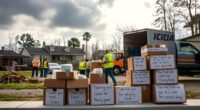
To qualify for disaster relief and tax relief programs, your situation must involve damages directly caused by a recognized disaster, such as flooding, fires, or severe weather, and you must show proof of hardship like property damage or displacement. Emergency grants, insurance claims, and tax relief typically require documentation to prove your case. Eligibility can vary based on location and specific program rules. To discover more about how to access these benefits, keep exploring your options.
Key Takeaways
- Emergency grants require demonstrating hardship from disaster-related damage or displacement.
- Insurance claims depend on having an active policy and providing proof of damages with documentation.
- Tax relief programs typically qualify residents in disaster areas facing financial hardship.
- Eligibility for assistance hinges on direct disaster impact, proper documentation, and adherence to program criteria.
- Organized records and prompt application increase chances of qualifying for both disaster and tax relief programs.

When disaster strikes, it can cause widespread destruction and hardship, but relief programs are designed to help you recover more quickly. One of the most immediate forms of assistance you might encounter are emergency grants. These grants are typically provided by government agencies, non-profits, or charitable organizations to help cover urgent needs like temporary shelter, food, and basic supplies. Emergency grants don’t have to be repaid, which makes them a vital resource during the chaos following a disaster. To qualify, you usually need to demonstrate that you’ve experienced significant hardship, such as property damage, displacement, or loss of income. Applying for an emergency grant often involves demonstrating your situation through documentation and filling out specific forms. These grants are designed to provide quick relief, so the process tends to be straightforward, ensuring you get help when you need it most. Additionally, understanding vetted information about the eligibility criteria can improve your chances of qualifying for assistance.
Alongside emergency grants, insurance claims play a crucial role in your recovery. If you have homeowners, renters, or business insurance, you should file a claim to help cover damages caused by the disaster. Insurance claims are essential because they help offset the financial burden of repairs, replacements, or temporary accommodations. To qualify for a claim, you need to have an active policy and prove the damage or loss through photos, receipts, or other documentation. It’s important to report the damage promptly and follow your insurer’s procedures carefully. Filing a claim quickly can help speed up your recovery process, especially since insurance payouts can significantly reduce out-of-pocket expenses. Keep detailed records of every communication, estimate, and repair invoice related to your claim, as this documentation can be vital if disputes arise.
Understanding what qualifies for disaster-related relief is key to steering these programs effectively. Typically, damages resulting directly from the disaster—such as flooding, fire, or wind damage—are covered. However, eligibility can vary based on your location, the type of disaster, and the specific program. Besides emergency grants and insurance claims, other forms of help might include tax relief programs, which can provide deductions or extensions on tax deadlines to ease your financial strain. To access these benefits, you’ll need to meet certain criteria, such as proving your residence in a designated disaster area or demonstrating financial hardship. Staying informed about program requirements and maintaining organized records will help you take full advantage of the relief options available. Remember, these programs are designed to support your recovery, so don’t hesitate to reach out, ask questions, and seek guidance to make the process as smooth as possible.
Frequently Asked Questions
How Do I Apply for Disaster Relief Funds?
You can apply for disaster relief funds by visiting your local government or FEMA’s website. Start by documenting the damage and gathering necessary evidence, like photos and reports, to support your claim. Stay updated on emergency preparedness tips related to climate change, as they can help you qualify for assistance. Fill out the application accurately and promptly, ensuring all required information is provided to speed up the process.
Are Volunteer Donations Eligible for Tax Deductions?
Yes, volunteer donations can be eligible for tax deductions if you keep proper records. Your charitable contributions, including supplies or monetary donations to recognized organizations, qualify for volunteer deductions. Keep receipts and document your contributions carefully. When you file your taxes, these deductions can reduce your taxable income, potentially saving you money. Don’t forget, only donations to qualified charities count, so verify their status before claiming your volunteer deductions.
What Types of Disasters Qualify for Tax Relief?
You qualify for tax relief if the disaster involves events like hurricanes, floods, or wildfires that cause significant property damage. Insurance claims related to these events can help determine your eligibility, especially if your losses exceed your insurance reimbursements. Keep records of property damage and insurance claims, as they support your tax deduction claims. Not all disasters qualify, so check IRS guidelines for specific qualifying events.
Is There a Deadline for Claiming Disaster-Related Tax Deductions?
Sure, you’ve got until the tax deduction deadlines roll around—typically April 15, unless you’re in a snowstorm or hurricane’s path—to claim your disaster-related deductions. Claim submission timelines are strict, so don’t delay or risk losing out. Mark your calendar now, because missing the deadline means saying goodbye to those valuable deductions, and no, the government doesn’t accept “my pet ate my calendar” as a valid excuse.
Can Businesses Receive Disaster Relief and Tax Benefits?
Yes, your business can receive disaster relief and tax benefits if you file insurance claims and demonstrate emergency preparedness. These programs often provide tax deductions or credits for disaster-related expenses. Make sure to document your losses thoroughly and submit timely claims. Staying proactive with emergency planning can also help you qualify for additional relief. Consult a tax professional to ensure you optimize all available benefits and meet program requirements.
Conclusion
So, after all this, you might find it amusing that while disaster and tax relief programs are designed to help, they often feel like a maze you’re stuck maneuvering. You work hard, pay your taxes, and still have to jump through hoops just to get a little aid. Ironically, the system that’s meant to protect you can sometimes make recovery feel even more complicated. But don’t lose hope—help is there, even if finding it feels like a full-time job.