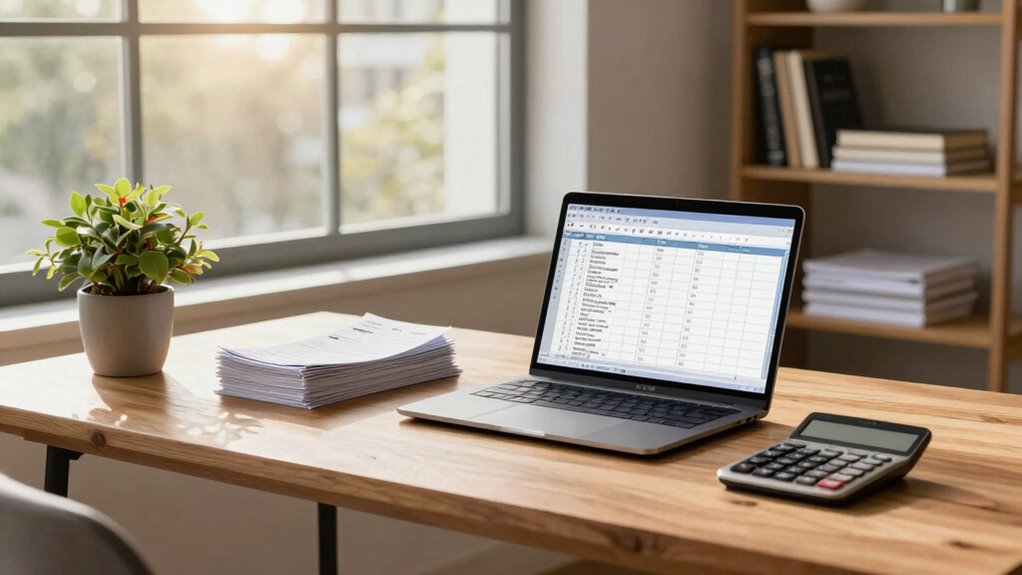

To allocate home office expenses as a self-employed filer, make sure your workspace is used exclusively for work. Measure the space you dedicate to your office and calculate what percentage it is of your total home square footage. Apply that percentage to your rent, utilities, and other costs. Keep detailed records, including receipts and floor plans, to support your deductions. Want to master the details? Continuing will reveal more helpful tips.
Open a free Amazon Business account
Business pricing, bulk buying and tax-exempt orders.
As an affiliate, we earn on qualifying purchases.
Key Takeaways
- Deduct expenses based on the percentage of home space exclusively used for work.
- Maintain accurate records, including floor plans and expense receipts, to substantiate deductions.
- Choose between simplified ($5 per sq ft) or regular expense methods depending on costs.
- Ensure the workspace is used regularly and solely for business activities to qualify.
- Proper documentation and compliance with IRS rules prevent audit issues and maximize deductions.
Have you ever wondered how to accurately allocate home office expenses for tax purposes? If you’re self-employed and working remotely, understanding deduction eligibility is vital to guarantee you’re maximizing your tax benefits without crossing the line into non-compliance. The rise of remote work has made it more common to conduct business from home, but the IRS has specific rules about what qualifies as a deductible expense. Your home office must be used exclusively and regularly for work, meaning it isn’t a space used for personal activities. This exclusivity requirement is essential; if you use the same area for leisure, you might not meet the deduction eligibility criteria.
When it comes to remote work, you need to carefully determine which expenses directly relate to your business. These can include a portion of your rent or mortgage, utilities, internet service, and even some home maintenance costs. The IRS allows you to allocate these expenses based on the percentage of your home dedicated to your office. For example, if your home office takes up 10% of your total living space, then you can generally deduct 10% of your eligible expenses. Keep in mind that the calculation must accurately reflect the space used solely for work to avoid issues during an audit. Additionally, understanding gadget reviews and choosing the right tools can help improve your productivity while working from home. Being aware of tax regulations related to home office deductions can also help ensure compliance with IRS rules. Proper documentation, such as floor plans and expense records, is crucial for substantiating your deduction claims.
To establish deduction eligibility, you should maintain thorough records. This includes floor plans showing the dedicated workspace, receipts for expenses, and a log of your work hours in that space. The IRS is strict about the exclusivity requirement, so be diligent in documenting how and when you use your home office for business purposes. If you’re an independent contractor or sole proprietor, you can choose between the simplified method—using a standard deduction of $5 per square foot up to 300 square feet—and the regular method, which involves actual expense calculations. The simplified method tends to be easier, but the regular method may offer larger deductions if your actual expenses are high. Also, ensuring that your calculations align with IRS guidelines can help you avoid potential audit issues. Understanding the home office deduction rules and requirements can make a significant difference in maximizing your claim.
As an affiliate, we earn on qualifying purchases.
Frequently Asked Questions
Can I Deduct Expenses for a Shared Home Office?
Yes, you can deduct expenses for a shared home office if you use a virtual workspace exclusively for your business. Be sure to allocate costs fairly based on your actual use. You can also include equipment depreciation for items like computers or furniture used in the shared space. Keep detailed records of your expenses and usage to support your deduction claims, ensuring your calculations are accurate and compliant.
How Do I Handle Expenses When My Home Office Is Used for Multiple Purposes?
You need to keep things straightforward to avoid biting off more than you can chew. When your home office has multiple purposes, allocate expenses based on the shared space’s primary use, but remember deduction limits apply. Track each purpose separately and divide expenses proportionally. This way, you guarantee you’re accurately claiming deductions without overstating your expenses, keeping everything above board and within IRS guidelines.
Are There Specific Record-Keeping Requirements for Home Office Deductions?
You need to keep detailed records of your home office expenses, including receipts and mileage logs. Track your home office safety measures and furniture depreciation accurately, as these can impact your deductions. Maintain a dedicated space, and document how you use it for work. Regularly update your records to guarantee compliance, making it easier to substantiate your deductions during tax time and avoid issues with the IRS.
How Does Moving or Relocating Affect My Home Office Expense Deductions?
Moving or relocating can impact your home office expense deductions because it may change your primary work location. You might need to adjust your allocated expenses based on the new home or workspace. Keep in mind, moving expenses could be deductible if they qualify, but relocation tax implications vary. You should track your moving costs and update your records to accurately reflect your current workspace, ensuring compliance and maximizing your deductions.
Can I Claim a Home Office Deduction if I Rent My Space?
Yes, you can claim a home office deduction if you rent your space, provided your remote work setup meets certain criteria. To qualify for deduction eligibility, your space must be used regularly and exclusively for your business. Keep detailed records of your rent payments and the portion of your home dedicated to work. This way, you can accurately calculate and justify your deduction on your tax return.
Conclusion
Understanding how to allocate your home office expenses guarantees you’re not leaving money on the table. By carefully tracking your space and expenses, you’ll navigate the tax landscape like a seasoned sailor charting familiar waters. Remember, the right allocation isn’t just about compliance; it’s about maximizing your deductions and giving your business the support it deserves. Stay diligent, keep records, and let your home office work as hard as you do.
Fall Picks
fall essentials
As an affiliate, we earn on qualifying purchases.