

To maximize your charitable mileage deductions, keep detailed records of each trip, including dates, start and end points, and purpose. Use either the IRS’s standard mileage rate or actual expenses, but be consistent. Track your miles promptly with a logbook or app, and save supporting documents like receipts or donation letters. Proper organization guarantees you’re prepared if the IRS audits and helps you claim the full benefit. Exploring further will reveal how to make your records even more effective.
Key Takeaways
- Use the IRS standard mileage rate or actual expenses to calculate charitable mileage deductions annually.
- Keep detailed records of each trip, including date, purpose, start and end locations, and miles driven.
- Maintain supporting documentation such as receipts, charity letters, or bank statements for donation proof.
- Log trips promptly using physical logs or GPS apps to ensure accurate and complete records.
- Store all documentation securely for at least three years to substantiate deductions during IRS audits.
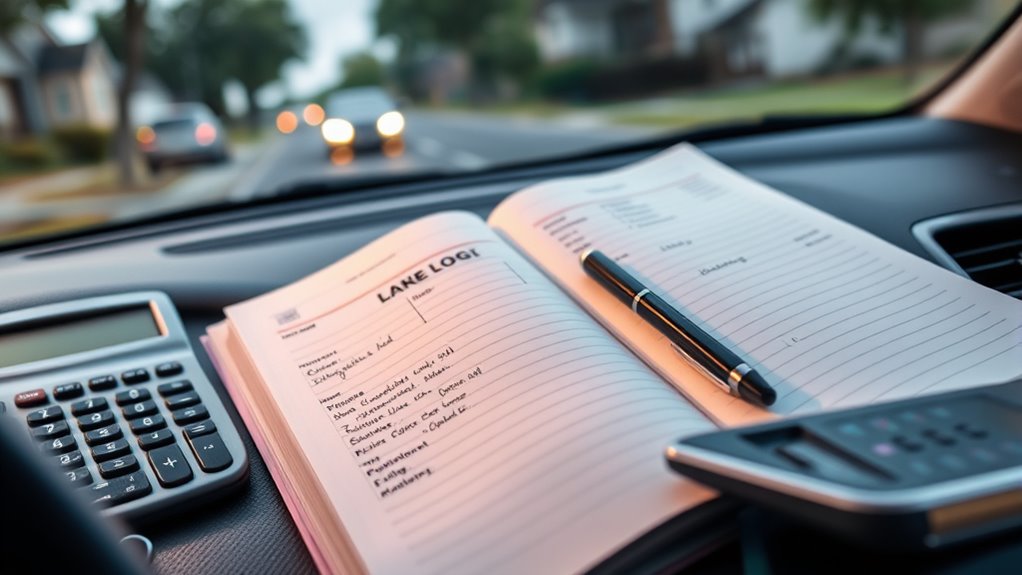
If you frequently use your vehicle for charitable activities, you may be eligible to deduct mileage expenses on your taxes. To do this accurately, you need good donation documentation that verifies your charitable trips and reliable mileage tracking methods to keep your records precise. Keeping detailed records ensures you can substantiate your deduction if the IRS questions it later. Without proper documentation, your deduction might be disallowed or reduced, so it’s essential to stay organized. Additionally, understanding the types of cookies that websites use can help you manage your online privacy and data security while researching tax deductions. When tracking your mileage, you have several options. Many taxpayers prefer using a mileage logbook—either a physical notebook or a digital app—that records the date, starting point, destination, purpose of the trip, and miles driven. Some apps automatically track your mileage with GPS, making it easier to log trips without manual entry. Whichever method you choose, consistency is key. Always log trips as soon as they happen to prevent forgetting details later. Also, differentiate between personal and charitable miles; only miles driven specifically for charitable purposes qualify for deduction. The IRS typically allows you to choose between two methods to calculate your deduction: the standard mileage rate or actual expenses. The standard mileage rate is straightforward—you multiply the miles driven for charitable purposes by the IRS rate, which is updated annually. For example, if the rate is 14 cents per mile and you drove 1,000 miles for charity, your deduction would be $140. If you prefer to calculate actual expenses, you need detailed records of costs related to your vehicle, such as gas, maintenance, insurance, and depreciation. However, most people find the standard mileage rate easier and less time-consuming, especially if they keep accurate mileage logs. Regardless of the method you choose, maintaining thorough donation documentation is critical. Keep copies of receipts, bank statements, or letters from charities confirming your donations or volunteer activities. Combining these with your mileage logs provides a detailed record of your charitable activities, strengthening your claim during tax time. Remember, the IRS requires you to keep these records for at least three years, so store them safely and organized.
Frequently Asked Questions
Can I Deduct Mileage for Volunteer Work Outside My State?
Yes, you can deduct mileage for volunteer work outside your state if it qualifies as a charitable deduction. Your volunteer tax benefits include mileage deductions as long as you keep detailed records of your trips. Be aware of charitable deduction limits, which cap your total deductions. Make sure your mileage logs include dates, destinations, and purposes to substantiate your claims during tax time.
How Do I Calculate Mileage if I Use Multiple Vehicles?
Think of vehicle allocation as balancing scales—you need to fairly assign mileage between multiple cars. To do this, use accurate mileage tracking methods like logs or apps for each vehicle, then allocate your charitable mileage proportionally. Calculate the deductible amount by multiplying the miles driven in each vehicle by the IRS rate, then sum these totals. This way, you guarantee precise, legitimate deductions while keeping your records organized and transparent.
Are Parking and Tolls Deductible Along With Mileage?
Yes, parking fees and toll expenses are deductible along with your charitable mileage. When you drive for charity, keep detailed records of all parking fees and toll expenses incurred during your trips. Include these costs in your total deduction, but make certain you maintain accurate documentation, such as receipts or a mileage log. This way, you can maximize your deduction while staying compliant with IRS requirements.
What Documentation Is Required if I Lose My Records?
If you lose your records, you should try to reconstruct your supporting documentation by gathering any available evidence, like bank statements, credit card records, or receipts. You may also provide a detailed written account of your charitable mileage, including dates, times, and locations. This record recovery helps substantiate your deduction claims. Keep in mind, the IRS prefers detailed documentation, but these alternatives can help if your original records are unavailable.
Can I Claim Mileage Deductions if I Use a Personal Vehicle for Charity?
Claiming charitable deductions for mileage is like tracking footprints in the snow—you need clear records. If you use your personal vehicle for charity, you can absolutely claim mileage deductions, but only if you keep detailed records of your mileage tracking. Keep a log of dates, destinations, and miles driven for each charitable activity. Without proper documentation, the IRS may disallow your charitable mileage deductions, so stay diligent in record-keeping.
Conclusion
Just like Robin Hood’s legendary generosity, your charitable mileage deductions let you give back while saving. By keeping accurate records and knowing the current rates, you guarantee your contributions are both meaningful and maximized. Remember, the IRS watches over these transactions like a vigilant guardian—so stay diligent. With proper documentation, your good deeds won’t just benefit others—they’ll also reward you at tax time, turning your kindness into a powerful, tax-savvy act.