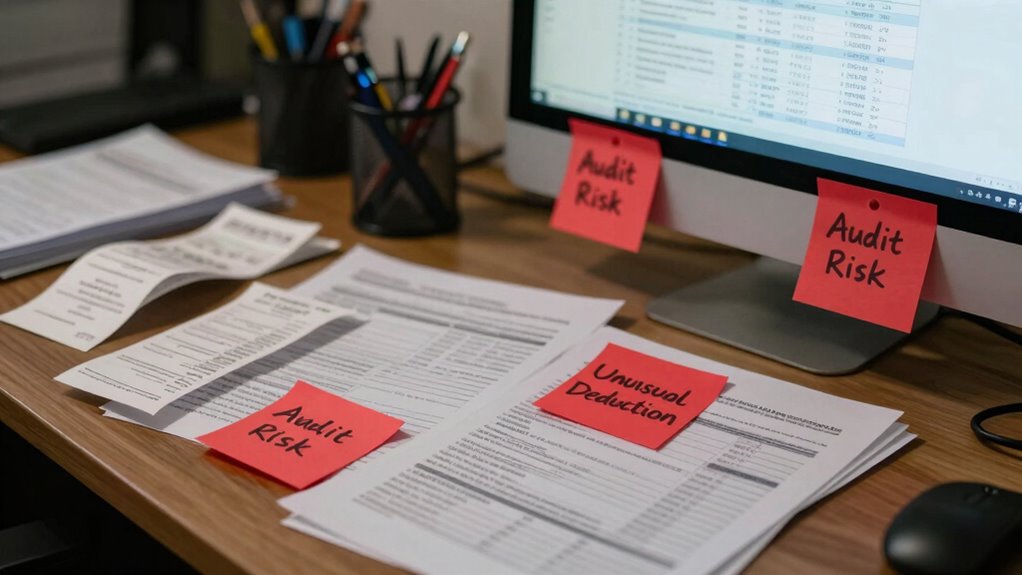

If you claim unusually high or inconsistent deductions, lack proper documentation, or have big fluctuations in income and expenses, the IRS may scrutinize your Schedule C. Handling cash transactions without records or showing ongoing losses without a clear path to profitability can also raise red flags. Repeated aggressive deductions or missing documentation make your return more vulnerable. To avoid an audit, it’s essential to keep accurate records and explain your financial changes—more tips await if you keep exploring.

Get smart everyday buys delivered free with Prime
- Fast, free delivery on millions of items
- Prime Video, Amazon Music and more included
- Member-only deals all year
Key Takeaways
- Unusual or inconsistent deductions relative to income or industry standards raise suspicion.
- Lack of proper documentation for expenses or receipts can trigger audits.
- Significant year-to-year fluctuations in income or deductions suggest potential issues.
- Handling large cash transactions without proper records increases audit risk.
- Persistent business losses without clear profitability or growth may prompt scrutiny.
When it comes to filing your taxes, certain red flags can attract the IRS’s attention and trigger scrutiny of your Schedule C. The IRS reviews these forms carefully because they want to ensure that business income and expenses are reported accurately. If you’re not cautious, you could unintentionally set off tax audit triggers that lead to a more detailed review of your return. Being aware of these triggers helps you file confidently while minimizing the risk of an audit.
One common tax audit trigger is claiming unusually high or inconsistent deductions compared to your income level or industry standards. For instance, if your business expenses suddenly spike or don’t align with your income, the IRS might flag your return for review. Deduction pitfalls often stem from overestimating or improperly categorizing expenses — like deducting personal costs as business expenses or claiming excessive mileage. These errors can be seen as attempts to artificially lower taxable income, which the IRS scrutinizes closely. To avoid this, you need to substantiate your deductions with proper documentation, such as receipts, invoices, and mileage logs. Additionally, understanding tax audit triggers and how they relate to your filings can help you stay compliant. Maintaining consistent records and being transparent about your expenses can also help reduce suspicion. Proper recordkeeping is crucial because it provides a clear paper trail that supports your claims and demonstrates your compliance with IRS rules.
Another red flag involves inconsistent reporting from year to year. If your reported income or expenses fluctuate significantly without a clear explanation, it raises suspicion. The IRS looks for patterns that suggest you might be underreporting income or inflating deductions. Also, failing to report all income or claiming overly aggressive deductions can set off alarm bells. Remember, the IRS has data-matching systems that compare your Schedule C against third-party reports like 1099s and W-2s. Any discrepancies can trigger an audit, so accuracy is critical. Being diligent about reporting all sources of income and maintaining detailed records can help you avoid these issues. Ensuring your recordkeeping practices are thorough and consistent can further reduce audit risks. When you keep meticulous records, it becomes easier to justify your filings and defend against potential audits.
Cash-heavy businesses or those that handle large sums of cash are often under more intense scrutiny because cash transactions are harder to verify. If you frequently deal in cash and don’t maintain detailed records, the IRS may see this as a red flag. Similarly, claiming business losses over multiple years without showing a clear path to profitability can attract attention, especially if it seems like you’re trying to offset other income unfairly. It’s also important to understand the role of documentation in substantiating your claims and reducing audit risks. Proper documentation can be your best defense against unfair scrutiny, especially in complex or cash-intensive transactions. Being aware of the types of audit triggers can further help you proactively address potential issues before they become concerns for the IRS. Staying proactive with your recordkeeping and understanding common audit triggers can significantly improve your chances of avoiding unnecessary audits.
business expense receipt organizer
As an affiliate, we earn on qualifying purchases.
As an affiliate, we earn on qualifying purchases.
Frequently Asked Questions
How Often Do IRS Audits Target Schedule C Filers?
The IRS audits Schedule C filers fairly regularly, especially if your tax deductions seem unusually high or if income verification raises questions. They target these filers to make certain of accurate reporting and prevent fraud. If you claim excessive deductions or have inconsistent income, your chances increase. Staying transparent and maintaining proper documentation helps you avoid audit triggers, guaranteeing your Schedule C filing remains compliant and less likely to attract scrutiny.
What Are the Penalties for Schedule C Discrepancies?
If the IRS finds discrepancies in your Schedule C, you could face penalties like fines or interest on unpaid taxes. They may disallow improper tax deductions, especially if your record keeping isn’t thorough or accurate. Poor record keeping can lead to audits and penalties, so it’s essential to maintain detailed records of all income and expenses. Ensuring your tax deductions are legitimate and well-documented helps you avoid costly penalties.
Can I Appeal an IRS Schedule C Audit Decision?
Yes, you can appeal an IRS Schedule C audit decision. To strengthen your case, focus on solid tax deduction strategies and maintain meticulous recordkeeping best practices. Gather all relevant documents, receipts, and records that support your claims. Submit a formal appeal through the IRS, clearly explaining your position and providing evidence. Staying organized and informed about your deductions can help you navigate the appeals process effectively.
How Long Does a Typical Schedule C Audit Take?
A typical Schedule C audit can take anywhere from a few months to over a year, depending on the complexity of your tax deduction claims and your record keeping. If you have organized records, the process tends to be quicker. You’ll want to respond promptly to IRS requests and provide detailed documentation, which helps speed things up. Good record keeping is essential to smoothly navigate the audit process and minimize delays.
Are There Specific Industries More Prone to Scrutiny?
Sure, certain industries seem to wear neon signs saying “Inspect me!” sector risks and industry patterns make some more prone to scrutiny. Self-employed artists, consultants, and cash-heavy businesses like restaurants often catch the IRS eye. If your industry handles lots of cash or reports fluctuating incomes, expect a closer look. So, if you’re in a high-risk sector, keep your records tight—otherwise, you might just be the next red flag on their radar.
Conclusion
Being aware of these red flags is like spotting storm clouds before a thunderstorm—you can take steps to clear the skies and avoid trouble. By keeping detailed records, maintaining consistency, and staying honest about your income and expenses, you’ll steer clear of unnecessary scrutiny. Remember, your Schedule C is the vessel carrying your business story—keep it steady, transparent, and well-maintained, so it sails smoothly through any financial weather that comes your way.
Halloween Picks
halloween
As an affiliate, we earn on qualifying purchases.