

As a freelancer or contractor, staying on top of your quarterly tax deadlines is essential to avoid penalties and keep your finances in check. You should schedule payments for April 15, June 15, September 15, and January 15, and set reminders ahead of these dates. Regularly track your income and expenses to make accurate estimates. To learn more about managing your quarterly tax calendar effectively, keep going—you’ll find useful tips and strategies to stay organized.

Get smart everyday buys delivered free — and shop member deals
- Fast, free delivery on millions of items
- Access to Prime Big Deal Days deals on October 6–7
- Prime Video, Amazon Music and more included
Key Takeaways
- Mark quarterly tax deadlines on your calendar: April 15, June 15, September 15, and January 15.
- Prepare and review income and expenses regularly to ensure accurate estimated tax payments.
- Use accounting tools to track all income sources, including digital payments like PayPal and Venmo.
- Implement tax deduction strategies and keep detailed records to maximize eligible expenses.
- Adjust estimated payments promptly if income fluctuates to avoid penalties and ensure compliance.
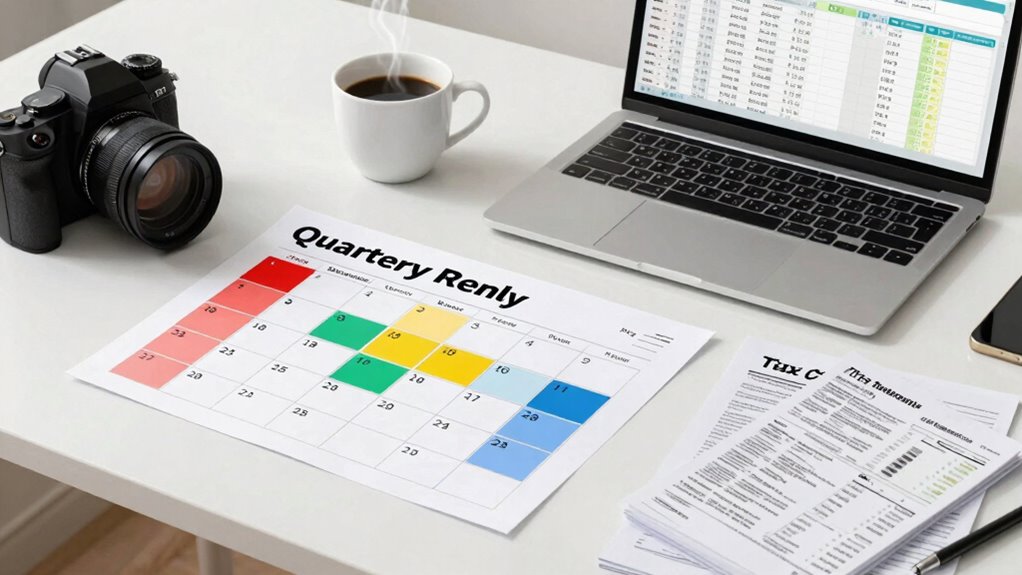
Staying on top of your taxes is essential when you’re a freelancer or contractor, especially since your income and expenses can vary month to month. To stay compliant and avoid penalties, you need to understand your quarterly tax calendar and plan accordingly. One of the most effective ways to manage this is by implementing tax deduction strategies that maximize your eligible expenses. Keep detailed records of all business-related costs, such as supplies, equipment, travel, and home office expenses. This will help ensure you’re accurately capturing your deductible expenses and optimize your deductions. This way, you can reduce your taxable income and keep more of your earnings. Additionally, consider how you report your income—using income reporting methods that best fit your cash flow and record-keeping style can make tax season much smoother.
Every quarter, you are responsible for estimating and paying your taxes. The IRS typically sets deadlines on April 15, June 15, September 15, and January 15 of the following year. Mark these dates in your calendar and set reminders to prepare your payments well in advance. To avoid underpayment penalties, estimate your income as accurately as possible, taking into account your earnings from the previous quarter and any expected changes. Using reliable accounting software can help you track your income and expenses in real-time, making it easier to determine how much you owe each quarter. Proper tax planning can significantly improve your financial stability and reduce stress during tax season.
Your income reporting methods play a pivotal role in quarterly tax planning. If you’re paid via invoices, make sure that you’re recording all payments promptly and categorizing them correctly. If you’re receiving payments through platforms like PayPal or Venmo, keep detailed transaction records to track your income accurately. These records will be essential when calculating your quarterly payments and preparing your annual tax return. Remember, the IRS expects you to pay taxes on all income, whether paid via cash, check, or digital transfer. Being aware of tax reporting requirements can help you stay compliant and avoid potential issues. Staying proactive with your tax payments helps prevent surprises at year-end. It also allows you to adjust your tax deduction strategies as your income fluctuates. Regularly reviewing your income and expenses, especially before each deadline, ensures you’re making accurate estimates. If your income unexpectedly increases, consider setting aside extra funds for the next quarterly payment. Conversely, if earnings dip, you might reduce your estimated taxes for the upcoming quarter. Keeping organized records and following your quarterly tax calendar will make tax season less stressful and help you maintain financial stability as a freelancer or contractor. Incorporating organized record-keeping practices can further streamline this process and improve your overall financial management.
small business accounting software
As an affiliate, we earn on qualifying purchases.
As an affiliate, we earn on qualifying purchases.
Frequently Asked Questions
How Do I Estimate Quarterly Tax Payments Accurately?
To estimate quarterly tax payments accurately, start by calculating your expected annual income and subtracting your tax deduction strategies to determine taxable income. Use this figure to apply the correct tax rates. Then, divide the total by four to find your quarterly payment amount. Consider quarterly payment methods like direct deposit or electronic transfer, and review your estimates regularly to adjust for any income changes.
What Penalties Exist for Missing Quarterly Tax Deadlines?
Missing quarterly tax deadlines is like ignoring a red traffic light—you risk a tax penalty and late filing fees. The IRS imposes penalties for late payments, which can quickly add up, sometimes costing 0.5% of the unpaid amount monthly. If you don’t pay on time, you might face fines and interest. To avoid this, set reminders and stay on top of your tax schedule, ensuring you steer clear of costly penalties.
Can I Adjust My Quarterly Payments if My Income Fluctuates?
Yes, you can adjust your quarterly payments if your income fluctuates. To do this, you should update your income projection with the IRS and make payment adjustments accordingly. This helps you avoid overpaying or underpaying taxes. Keep track of your income changes throughout the year, and if needed, submit estimated payments based on your latest income projection to stay on top of your tax obligations.
What Records Should I Keep for Quarterly Tax Reporting?
You should keep detailed records of all your income and expenses, including receipts, invoices, and bank statements. Focus on expense tracking to guarantee you don’t miss deductible items. Use deduction strategies like categorizing expenses to maximize your deductions. This way, you’ll have accurate documentation for quarterly tax reporting, making it easier to calculate your payments and avoid potential audits or penalties. Staying organized saves you time and money.
How Do State Taxes Impact My Quarterly Filing Requirements?
Imagine you’re a freelance graphic designer in Ohio. Your state taxes impact your quarterly filing because you need to account for local tax regulations and potential state tax credits. These requirements vary by state, so you must stay updated on deadlines and calculations. Failing to do so can result in penalties. Always check your state’s rules to guarantee your quarterly tax filings are accurate and complete, avoiding unnecessary fines.
Conclusion
Staying on top of your quarterly tax deadlines is like tending a delicate garden—you must regularly tend to each task to keep everything flourishing. By marking your calendar and planning ahead, you guarantee your financial garden remains healthy and vibrant, free from weeds of penalties or missed payments. Embrace this rhythm, and you’ll cultivate not only compliance but also peace of mind, letting your freelance journey grow strong and resilient all year round.
Halloween Picks
halloween
As an affiliate, we earn on qualifying purchases.