
As a self-employed professional, you can deduct travel expenses like transportation, lodging, and related costs that are necessary for business trips. You can also claim 50% of meal costs if they’re directly related to your work and properly documented with receipts, dates, and purposes. Confirm your expenses are reasonable and directly tied to your business activities. Continue exploring to discover how to maximize your deductions and stay compliant with IRS rules.
Key Takeaways
- Self-employed professionals can deduct travel expenses that are directly related to their business activities.
- Meals are deductible at 50% if they are necessary, directly related to business, and properly documented.
- Keep detailed records including dates, locations, attendees, and purposes to substantiate travel and meal deductions.
- Only expenses that are reasonable, necessary, and primarily for business purposes qualify for deductions.
- Expenses like entertainment or personal sightseeing during travel are not deductible; focus on costs that support business activities.
If you’re looking to reduce your taxable income, understanding the rules around deductions for travel and meals is essential. As a self-employed professional, you can claim deductions for business trip expenses and meals, but only if you follow IRS guidelines closely. Business trip expenses include costs directly related to travel away from your tax home for business purposes. These can cover transportation, lodging, and other necessary expenses incurred solely for work. To qualify, your trip must be primarily for business, and personal activities should be minimal or separate from your business activities.
Claim travel and meal deductions by following IRS rules to reduce taxable income effectively.
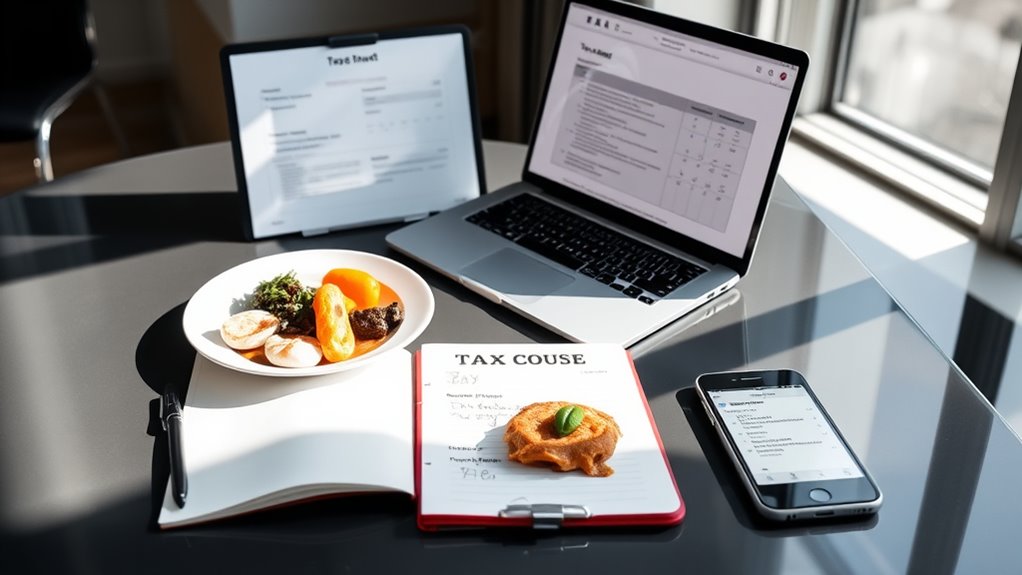
When it comes to meal deductions, the IRS allows you to deduct 50% of meal costs directly related to your business. However, there are strict meal deduction limits to keep in mind. You can’t claim full meals without proper documentation, so always keep detailed records of the date, location, attendees, and purpose of each meal. This proof is essential if you’re ever audited. Meals consumed while traveling for business are generally deductible, provided they meet IRS requirements that the expenses are necessary and directly related to your trade or business.
Travel expenses are often the largest deductible costs during business trips. These include airfare, train tickets, rental cars, and even ride-share services used solely for business. Lodging costs are also deductible but must be reasonable and necessary. Personal expenses during travel, like sightseeing or entertainment, aren’t deductible, so stay focused on costs that support your business activities. Remember, the IRS scrutinizes excessive or lavish expenses, so keep your claims reasonable and well-documented.
For meals, the key is ensuring they are directly connected to your business activities. If you’re having a business meal with clients, colleagues, or prospects, you can deduct half of the meal cost. The meal should be directly related to the active conduct of your business or associated with the business meeting. You can’t claim deductions for meals that are primarily social or personal in nature, even if they occur during travel. Always keep receipts and note the purpose of each meal to substantiate your deduction. Additionally, understanding projector technology can help you create a professional environment for client meetings, which can support your business deductions.
Frequently Asked Questions
Can I Deduct Travel Expenses for International Trips?
Yes, you can deduct international travel expenses if they’re primarily for business purposes. You need to distinguish between business and personal days; only the time spent on business activities qualifies. Keep detailed records of your travel, including receipts and itineraries. Personal days aren’t deductible, so make sure your trip is mainly for work. This way, your international travel expenses can be legitimately deducted from your income.
Are Meal Expenses Deductible if I Travel for Personal Reasons?
Sure, you can deduct meal expenses if your travel is for business, not personal reasons—unless you’re sneaking in some entertainment expenses disguised as a snack break. However, if you’re just sightseeing or commuting costs to the mall, forget it. Keep in mind, personal trips aren’t deductible, and mixing entertainment expenses with meals can raise eyebrows. So, save your receipts, and remember: the IRS prefers your meals to be for business, not binge-watching.
How Do I Differentiate Between Business and Personal Travel Costs?
You differentiate between business travel and personal travel costs by tracking your expenses carefully. Business travel includes trips primarily for work purposes, like meetings or client visits, and expenses related to these activities are deductible. Personal travel, on the other hand, involves leisure or vacation activities. When your trip combines both, only the costs directly related to your business activities qualify for deductions, so keep detailed records to separate them accurately.
What Documentation Is Required to Claim Travel Deductions?
Think of your documentation as a treasure map guiding the tax authorities through your expenses. To claim travel deductions, you need solid proof—keep detailed records like receipts, itineraries, and logs. Proper tax recordkeeping guarantees expense substantiation; this way, you can confidently navigate audits and deductions. Always save your travel-related documents, including dates, destinations, and purpose, to substantiate your claims and keep your financial ship sailing smoothly.
Are There Limits on Meal Deductions for Self-Employed Professionals?
Yes, there are limits on meal deductions for self-employed professionals. You can generally deduct 50% of qualifying meal expenses as a business expense, which reduces your taxable income. Keep in mind, only meals directly related to your work or business travel qualify for this tax deduction. To maximize your deduction, make certain you keep detailed records, including receipts and the purpose of each meal, to substantiate your claim.
Conclusion
Remember, keeping detailed records of your travel and meal expenses isn’t just smart — it’s your golden ticket to maximizing deductions and saving money. Think of your receipts as the treasure map guiding you through the financial jungle. When you stay organized and claim what’s rightfully yours, you turn the often-overlooked expenses into powerful allies. So, embrace your inner detective, and let those deductions be the reward for your diligence!