

To track and deduct mileage as a gig worker in 2025, use a digital app or logbook to record each trip, noting the date, start and end locations, purpose, and miles driven. Keep all related receipts for maintenance and insurance, and separate personal from business miles. Accurate records help maximize your deductions and stay compliant with tax rules. Maintain organized documentation—there’s more to learn about optimizing your mileage claims ahead.
Key Takeaways
- Use a mileage tracking app or logbook to record trip details like date, purpose, start/end locations, and miles driven.
- Keep all receipts for vehicle expenses, maintenance, and insurance to support deduction claims.
- Separate business miles from personal use to ensure accurate deduction calculations.
- Regularly update and organize mileage logs and receipts for easy reference during tax season.
- Ensure detailed records align with IRS requirements to maximize deductions and facilitate audits.
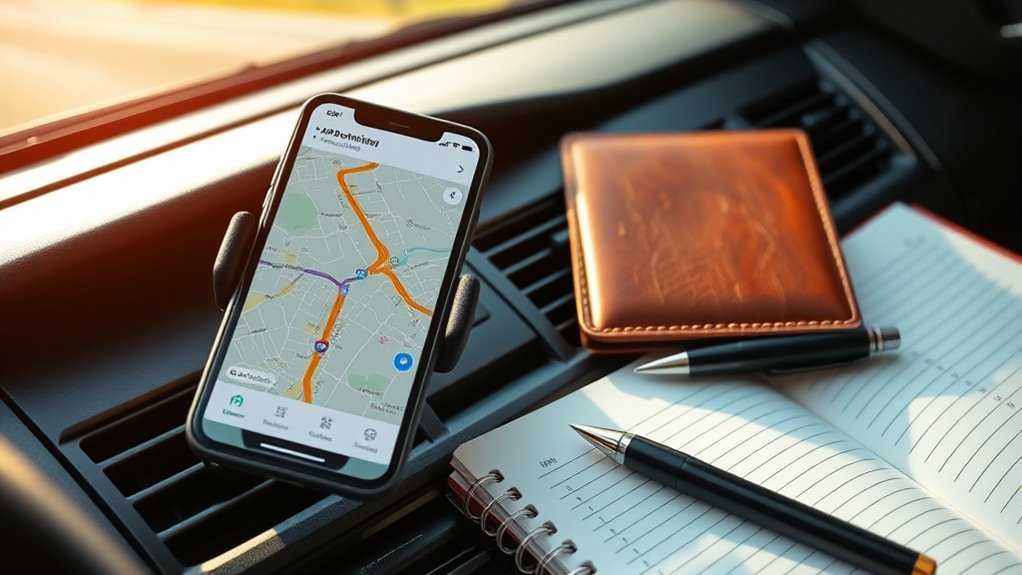
If you’re a gig worker, keeping accurate track of your mileage is essential for maximizing your deductions and minimizing your tax bill. Your ability to document your miles directly impacts your eligibility for deductions related to vehicle expenses, including vehicle maintenance and insurance costs. When you maintain precise records, you can confidently claim the mileage deduction, which can notably reduce your taxable income. This makes understanding how to track your mileage effectively crucial for your financial health.
To start, you need a reliable method of recording your mileage. You can use traditional tools like a mileage logbook or opt for digital methods such as smartphone apps designed specifically for tracking miles. Many apps automatically record your trips, saving you time and reducing errors. Whichever method you choose, ensure you record details like the date, starting and ending locations, purpose of the trip, and miles driven. Keeping detailed logs not only supports your deduction claims but also provides clarity if you’re ever audited.
Use a mileage logbook or smartphone app to accurately track trip details for tax deductions.
Tracking your mileage isn’t just about deducting the miles you drive for work; it also helps you identify the broader costs of vehicle ownership. For example, understanding your total miles driven for business purposes allows you to allocate expenses accurately. This includes vehicle maintenance, which is essential for keeping your car in good shape and ensuring safety and reliability. Regular maintenance costs, such as oil changes, tire replacements, and repairs, are deductible when you use your vehicle for gig work, and accurate mileage logs help substantiate these expenses.
Additionally, your insurance deductions are tied to the miles you drive for work. If you use your personal vehicle for gig activities, part of your insurance premiums may be deductible proportionally based on your business miles. Accurate mileage tracking ensures you claim the correct percentage of your insurance costs, avoiding over- or under-claiming. Remember, separating personal and business miles is necessary because only the miles driven for work are deductible.
Finally, staying organized is key. Keep all related receipts, including those for vehicle repairs, maintenance, and insurance payments, alongside your mileage logs. When tax season arrives, you’ll have a comprehensive record to support your deductions. By maintaining meticulous records of your vehicle use, you not only maximize your deductions but also gain a clearer picture of your vehicle expenses, empowering you to make smarter financial decisions as a gig worker.
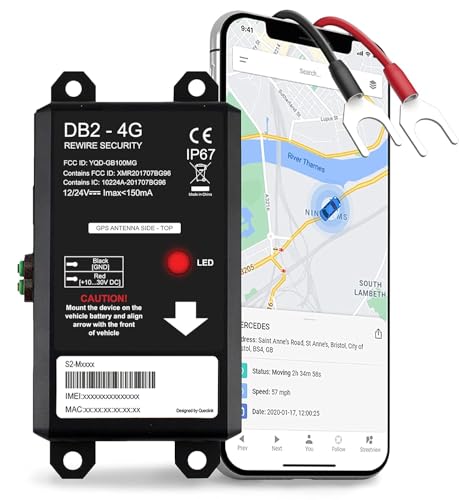
REWIRE SECURITY DB2-4G GPS Tracker for Vehicles – Real-Time Vehicle Tracking Device for Car, Van, Motorhome | Easy Battery Install | Live App Tracking | 4G Fleet Tracking | Low Cost Plan | Free Trial
- Real-Time Vehicle Location: Instant updates and route history
- Easy Installation Options: Hardwired or magnetic mounting
- Smart Alerts & Geofencing: Custom zones and notifications
As an affiliate, we earn on qualifying purchases.
As an affiliate, we earn on qualifying purchases.
Frequently Asked Questions
Can Gig Workers Use Third-Party Apps to Track Mileage Automatically?
Yes, gig workers can use third-party apps for automatic tracking of mileage. These apps run in the background, recording your trips accurately without manual input. When choosing an app, compare features like automatic tracking, ease of use, and cost. Some popular options include MileIQ, Everlance, and Stride. Using these apps simplifies record-keeping, guarantees you maximize deductions, and saves you time during tax season.
Are There Specific IRS Forms for Mileage Deduction Claims?
Yes, you do need specific IRS forms for mileage deductions, like Schedule C and the Mileage Log, but don’t worry—Mileage tracking software makes this a breeze! It automatically records your trips, creating detailed IRS mileage logs that stand up to scrutiny. Forget manual logs—your app handles all the heavy lifting, ensuring you maximize deductions while staying compliant. So, get your forms ready and let your software do the work!
How Do I Differentiate Between Personal and Business Miles?
To differentiate between personal vs. business miles, you should keep detailed mileage log categories. Record each trip’s purpose, date, starting point, and destination. When you drive for work, categorize those miles as business; personal trips are non-deductible. Using a dedicated app or notebook helps guarantee accurate tracking. Regularly review your logs to separate personal from business miles, making your deductions straightforward during tax time.
What Records Should I Keep in Case of an Audit?
To prepare for an audit, you should keep detailed records of your mileage, including dates, starting and ending locations, and purpose of each trip. Guarantee record accuracy by regularly updating logs and receipts. Follow documentation requirements by maintaining a mileage log, which can be digital or paper-based, and keep supporting documents like fuel receipts. Accurate, organized records help verify your deductions and simplify the audit process.
Are There Mileage Limits for Tax Deductions in 2025?
In 2025, there are no specific mileage limits for tax deductions or mileage reimbursement. You can deduct the actual miles you drive for work, but keep in mind that the IRS sets standard mileage rates annually, which affect your deductions. To maximize your tax benefits, track your mileage accurately and compare the standard mileage rate with actual expenses. Staying within these guidelines guarantees you’re claiming all eligible deductions without exceeding limits.
Conclusion
Mastering mileage tracking isn’t just a good idea—it’s your secret weapon to saving thousands in taxes and avoiding audits. If you ignore this, you risk losing money faster than you can say “expenses,” and the IRS will come knocking with a magnifying glass. Stay diligent, document every mile like it’s gold, and watch your deductions grow. In the world of gig work, your mileage records are the keys to financial victory—don’t leave them to chance!