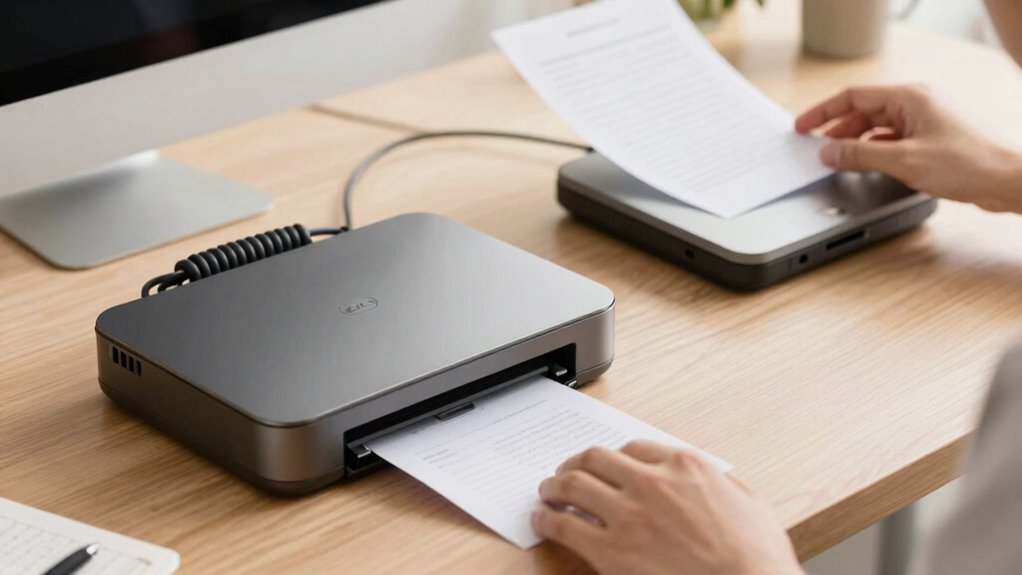

If you need reliable, high-accuracy scans in a fixed setup, wired scanners are your best choice—they’re less affected by interference and offer stable connections. But if mobility and flexibility matter more, wireless scanners let you move freely around large spaces or in dynamic workflows. Your environment’s connectivity plays a big role. Continue exploring to discover which option fits your specific needs best, and how to optimize your scanner choice.
Key Takeaways
- Choose wired scanners for high accuracy and reliable performance in fixed, high-volume environments.
- Opt for wireless scanners when mobility and flexible scanning across large or dynamic areas are priorities.
- Wired scanners have lower initial costs and minimal maintenance, suitable for stable setups.
- Wireless scanners offer increased flexibility but may face interference and signal stability issues.
- The best choice depends on operational needs for movement versus environment stability and budget considerations.
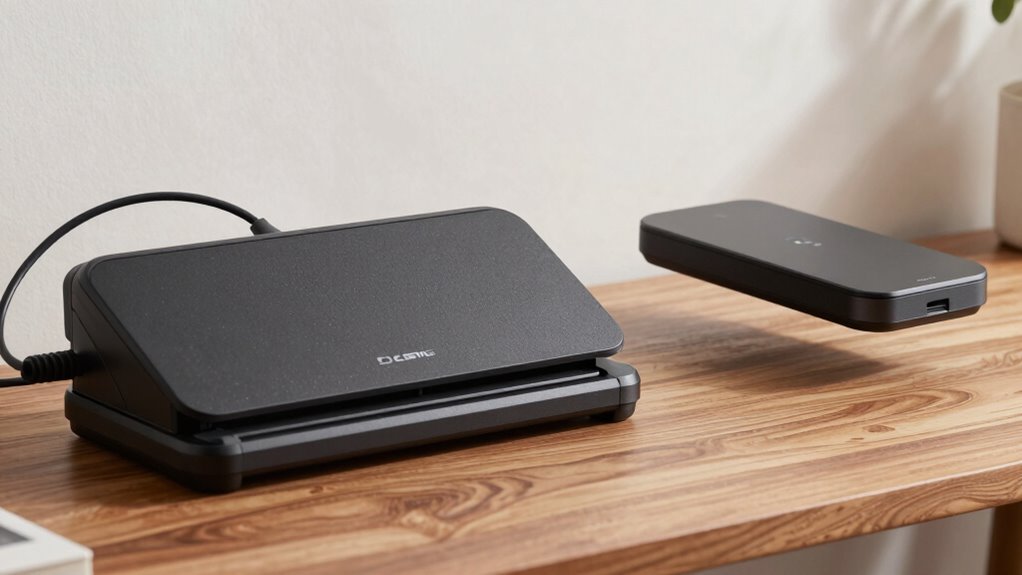
When choosing between wired and wireless scanners, understanding their key differences can help you make an informed decision. Both options serve the same fundamental purpose—scanning barcodes efficiently—but they vary markedly in how they connect and perform in different environments. One of the main considerations is barcode accuracy. Wired scanners tend to deliver consistent, high accuracy because they’re directly connected to your system, minimizing interference and signal loss. Wireless scanners, on the other hand, rely on wireless signals, which can sometimes introduce errors or lag if the connection isn’t stable. If your operation demands pinpoint accuracy and minimal errors, a wired scanner might be the better choice.
Connectivity reliability is another vital factor. Wired scanners offer excellent reliability because once connected via a cable, there’s little chance of signal disruption. This stability is especially important in fast-paced retail or warehouse environments, where interruptions can slow down work and cause frustration. Wireless scanners, while offering greater freedom of movement, depend heavily on network strength and signal stability. If your workspace has a lot of electronic interference or weak Wi-Fi coverage, you might experience lag, dropped scans, or incomplete data transmission, which affects overall productivity. Consequently, your environment’s connectivity infrastructure plays a key role in determining whether a wireless scanner will meet your needs.
Mobility and flexibility are where wireless scanners excel. If you need to scan items across a large warehouse, in different rooms, or even outside, wireless devices give you the freedom to move around without being tethered to a station. This mobility can streamline workflows and reduce the clutter caused by cables, making your workspace safer and more organized. Conversely, if your workspace is confined or requires scanning at a fixed point, wired scanners can be more practical and simpler to set up. They also require less maintenance since there are no batteries to worry about, and they don’t need software updates for connectivity issues. Additionally, the environmental factors such as physical layout and potential interference can significantly influence the performance of wireless devices.
Cost is another factor. Wired scanners typically have a lower initial cost and fewer ongoing expenses related to batteries or wireless network upgrades. Wireless scanners might be pricier initially but can offer savings in terms of increased flexibility and reduced setup time in environments where mobility is essential. Ultimately, your choice depends on your specific needs—if you prioritize seamless, reliable connectivity and barcode accuracy in a stable environment, wired is often the way to go. But if flexibility, ease of movement, and adapting to changing layouts are more important, wireless scanners provide the versatility you need to keep your operations running smoothly.
wired barcode scanner for retail
As an affiliate, we earn on qualifying purchases.
As an affiliate, we earn on qualifying purchases.
Frequently Asked Questions
How Do Wired and Wireless Scanners Compare in Security Features?
Wired scanners generally offer stronger security because they use encryption protocols during data transfer and limit unauthorized access via physical connections. Wireless scanners, however, rely on wireless networks, making data synchronization more vulnerable unless robust encryption protocols are in place. You need to confirm your wireless scanner supports strong encryption to protect sensitive data. Overall, wired scanners provide a more secure environment, especially if you prioritize data security over mobility.
What Is the Typical Lifespan of Wired Versus Wireless Scanners?
Ironically, your wireless scanner’s lifespan hinges on its battery life and physical durability, usually lasting 3-5 years. Wired scanners, however, typically endure longer—around 5-7 years—thanks to fewer battery issues. While wireless models need regular battery replacements, wired scanners rely on sturdy cables and robust build quality. So, if longevity’s your goal, wired might outlast wireless, but don’t forget, wireless offers more flexibility.
Are There Compatibility Issues Between Wired and Wireless Scanner Models?
Compatibility concerns can arise between wired and wireless scanner models, mainly due to peripheral integration issues. You might find that some scanners don’t easily connect with your existing systems or peripherals, leading to setup challenges. Wireless models often require specific drivers or network configurations, while wired scanners usually integrate smoothly with standard ports. To avoid frustration, check compatibility specifications before purchasing, ensuring your devices work seamlessly together.
How Do Power Consumption Levels Differ Between Wired and Wireless Scanners?
Wireless scanners generally consume more power than wired ones because of their reliance on batteries, affecting battery efficiency. They require effective power management to extend usage between charges. Wired scanners, on the other hand, draw power directly from the connected device, so they don’t need to worry about battery life. If you prioritize longer operation without charging, wired models tend to be more power-efficient.
Can Wired Scanners Be Easily Upgraded or Expanded?
Wired scanners generally offer limited upgrade flexibility and expansion potential compared to wireless options. If you need to add features or connect multiple devices, it’s more challenging with wired scanners because you’re confined by cable connections and hardware design. However, some models allow firmware updates or hardware modifications, so check the manufacturer’s specifications. Overall, if expansion is a priority, wireless scanners usually provide more adaptable options.
Conclusion
Choosing between wired and wireless scanners isn’t about following the latest trend; it’s about understanding your movement needs. While wireless scanners offer freedom and flexibility, wired ones provide stability and reliability. Think about your workflow—do you need mobility or a steady connection? The better pick depends on your specific use case, not the hype. Ultimately, making an informed decision guarantees your scanner works seamlessly with your tasks, whether you prefer the wired stability or wireless freedom.