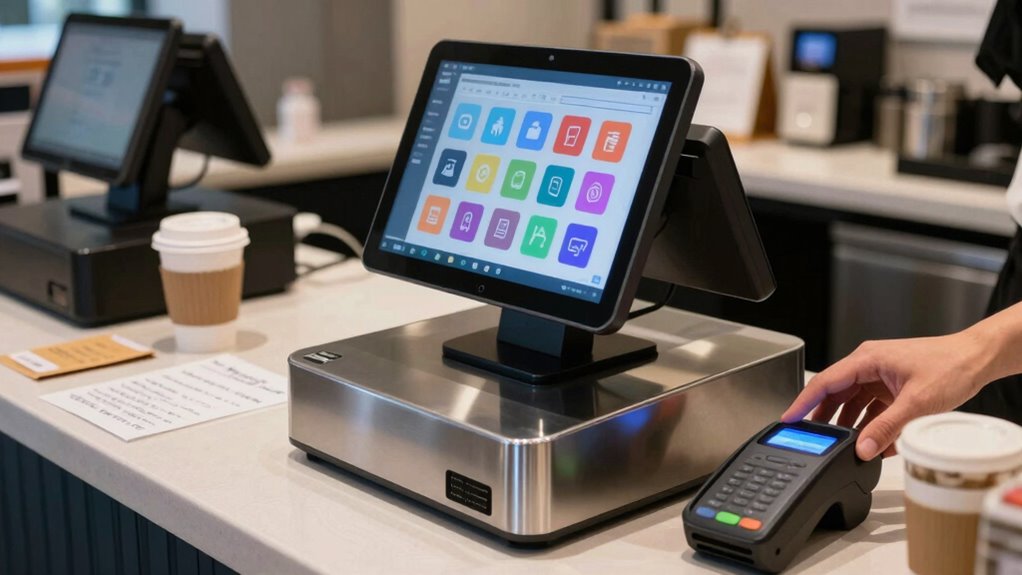

While choosing the right hardware is important for your POS system, it’s only part of the story. The real value comes from management features like inventory control, customer engagement tools, and seamless software integration. These aspects help you streamline operations, boost customer loyalty, and support growth. Focusing on both hardware and these critical features guarantees your business runs smoothly and stays competitive. Keep exploring to discover how the full package can transform your retail experience.

Get smart everyday buys delivered free with Prime
- Fast, free delivery on millions of items
- Prime Video, Amazon Music and more included
- Member-only deals all year
Key Takeaways
- Effective management features like inventory and CRM are crucial for maximizing POS value beyond hardware.
- Software integration and customization enhance operational efficiency and support business growth.
- Inventory management ensures stock accuracy, reduces waste, and prevents stockouts.
- Customer engagement tools foster loyalty through personalized marketing and targeted communication.
- A comprehensive POS system combines hardware and management features to improve overall business performance.
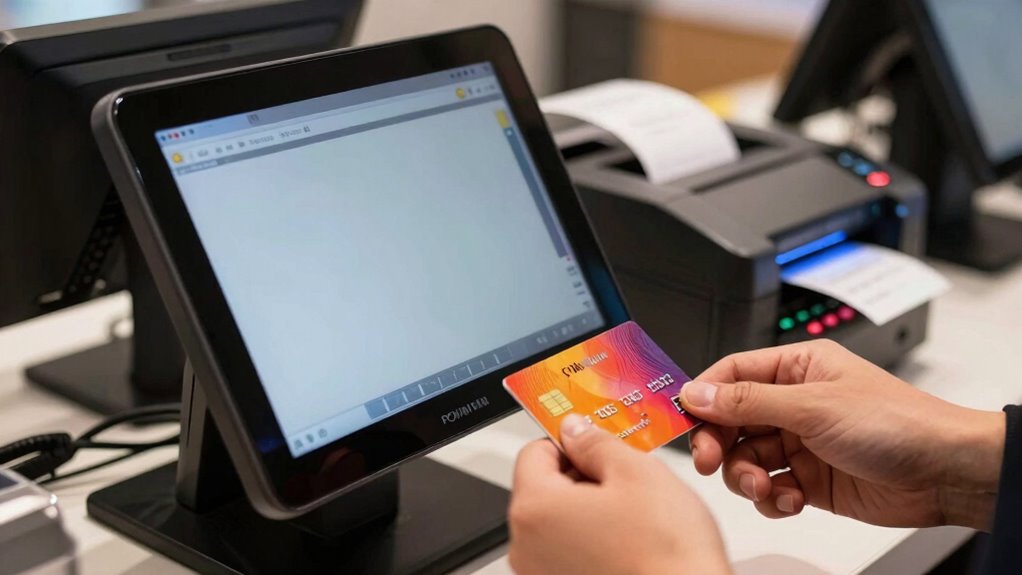
When choosing a point-of-sale (POS) system, many focus solely on the hardware—cash registers, terminals, or tablets—assuming that it’s the core of the decision. But hardware is just one piece of the puzzle. The real power of a POS lies in how it manages your inventory and engages your customers. These features can make or break your business, so it’s essential to see beyond the physical devices.
Effective inventory management is crucial for smooth operations. A good POS system tracks stock levels in real time, alerting you when items are running low or need reordering. This helps prevent stockouts and overstocking, reducing waste and increasing profitability. When your POS integrates seamlessly with your inventory, you gain better control over what’s in your shelves and what’s on backorder. It also simplifies the process of updating prices, handling returns, and managing multiple locations if you have them. Without strong inventory management, your business risks losing sales or facing unnecessary delays, which can frustrate customers and damage your reputation.
Real-time inventory tracking prevents stockouts, reduces waste, and boosts profitability through seamless updates and multi-location management.
Customer engagement is equally vital. A POS system that offers robust customer relationship management (CRM) tools allows you to personalize interactions and build loyalty. You can track customer purchase history, preferences, and contact details, enabling tailored marketing campaigns and special offers. When your POS encourages engagement, it turns casual shoppers into repeat clients. You can send targeted discounts, birthday wishes, or notifications about new products, creating a stronger connection with your audience. This personalized approach boosts customer satisfaction and increases the likelihood they’ll choose you over competitors. Additionally, understanding how your POS system handles software features like inventory management and CRM can give you a competitive edge. Recognizing the importance of software integration can help streamline your entire retail operation. Incorporating software customization options can further tailor the system to your unique business needs.
A comprehensive POS system also benefits from software scalability, which allows it to grow alongside your business and adapt to changing demands. When you prioritize these capabilities, you’re not just investing in a device; you’re investing in a tool that drives growth and enhances the overall customer experience.
In the end, focusing solely on the hardware is shortsighted. The right POS system seamlessly combines hardware with powerful management features that keep your business running smoothly and your customers coming back. It’s this blend that delivers true value and sets you apart in a competitive marketplace.
POS inventory management software
As an affiliate, we earn on qualifying purchases.
As an affiliate, we earn on qualifying purchases.
Frequently Asked Questions
How Do Software Features Impact Customer Experience?
Software features greatly impact your customer experience by providing a seamless user interface that’s easy to navigate, making transactions quicker and less frustrating. Additionally, data analytics enable you to personalize service, suggest relevant products, and manage inventory efficiently. When your POS software combines an intuitive interface with insightful data analytics, it boosts customer satisfaction, encourages repeat business, and creates a smoother overall shopping experience.
What Training Is Required for Staff on New POS Systems?
You need to implement thorough training programs to guarantee staff proficiency with new POS systems. Focus on hands-on practice, clear instructions, and ongoing support to help your team become comfortable and efficient. Proper training reduces errors, speeds up transactions, and improves customer experience. Regular refreshers and troubleshooting sessions are essential to keep staff confident and up-to-date, ultimately maximizing the system’s benefits and ensuring smooth daily operations.
How Does POS Scalability Affect Future Business Growth?
POS scalability directly impacts your future expansion plans by handling increased transaction volumes and integrating new features seamlessly. If your system faces scalability challenges, growth becomes limited, possibly delaying or complicating expansion efforts. By choosing a scalable POS, you guarantee smooth upgrades, faster adaptation to market changes, and better support for multiple locations. This flexibility helps you confidently grow your business without worrying about system constraints hindering your success.
What Security Measures Should Be Considered Beyond Hardware?
You should prioritize data encryption and access control to enhance your POS security beyond hardware. Implement strong data encryption to protect sensitive customer information during transactions and storage. Additionally, enforce rigorous access control by restricting system permissions and regularly reviewing user access. These measures guarantee only authorized personnel can handle critical data, reducing risks of breaches. Combining encryption and access control creates a robust security foundation, safeguarding your business and customer trust.
How Do Integration Options Influence Overall POS Performance?
Integration options directly impact your POS performance by ensuring seamless communication between systems, which boosts speed and accuracy. You should consider vendor reputation, as trusted providers deliver reliable integrations, and hardware durability, which prevents downtime. When integration options are flexible and robust, your POS system operates efficiently, reduces errors, and enhances customer experience. Always choose integrations that align with your business needs and are supported by reputable vendors for long-term success.
Conclusion
Remember, choosing hardware is just the start. The real challenge lies in what happens after—how you integrate, adapt, and innovate with your POS system. There’s more at stake than just equipment; it’s about revealing the full potential of your business. So, as you make your decision, ask yourself: are you ready to go beyond the hardware and embrace what truly drives success? The next step could change everything—are you prepared to take it?
Columbus Day / Indigenous Peoples' Day Picks
long weekend sales
As an affiliate, we earn on qualifying purchases.