
Franchise tax and income tax are different obligations for LLCs and corporations. Franchise tax is a fee for simply operating in a state, often based on net worth, gross receipts, or a fixed amount, regardless of profit. Income tax, however, is based on your actual profits after deductions. Knowing these differences helps you stay compliant and manage costs effectively. Keep going to discover more about how each tax impacts your business and ways to optimize your strategy.

Get smart everyday buys delivered free — and shop member deals
- Fast, free delivery on millions of items
- Access to Prime Big Deal Days deals on October 6–7
- Prime Video, Amazon Music and more included
Key Takeaways
- Franchise tax is a fee for operating as a business in a state, not based on profits, unlike income tax.
- Income tax is calculated on net profits after expenses, whereas franchise tax may be fixed or based on business metrics.
- LLCs and corporations may owe franchise tax regardless of profitability, but income tax depends on taxable income.
- Filing requirements and deadlines differ for franchise tax and income tax, varying by state and business structure.
- Proper planning and record-keeping help manage both taxes and ensure compliance for LLCs and corporations.
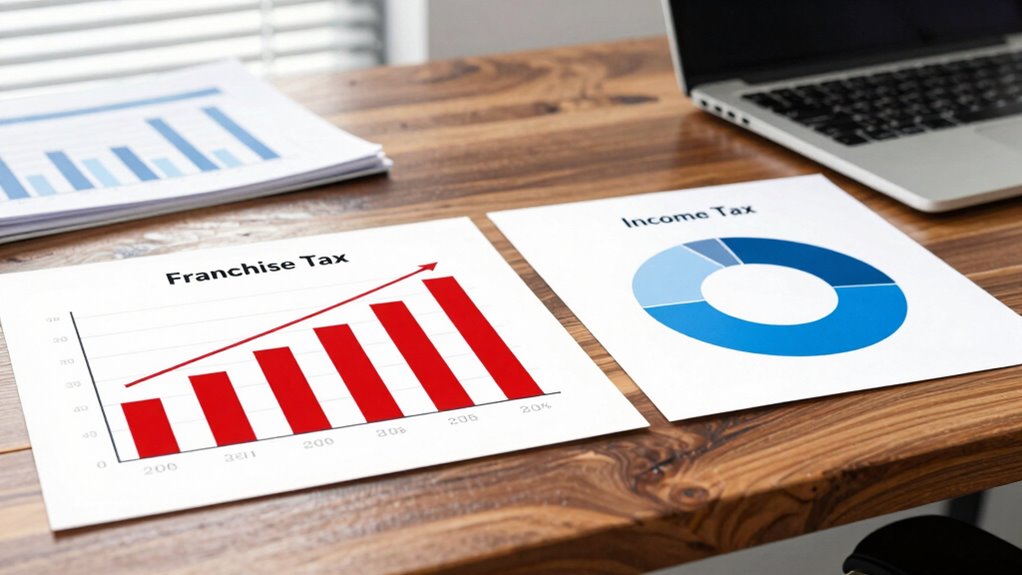
Understanding the difference between franchise tax and income tax is vital if you own an LLC or corporation. These two types of taxes serve different purposes and can impact how you run your business financially. While income tax is based on your company’s profits, franchise tax is a fee levied simply for the privilege of operating as a business entity within a particular state. Recognizing this distinction helps you stay compliant with state laws and optimize your tax planning strategies.
When it comes to franchise tax, you should know that it’s generally a fixed amount or calculated based on your company’s net worth, capital, or gross receipts, depending on the state. It’s not directly tied to your profitability, which means even if your business isn’t making a profit, you might still owe this tax. Paying franchise tax is often a requirement for maintaining good standing with the state and avoiding penalties or suspension of your business’s ability to operate. It’s also important to understand the filing requirements for franchise tax, which vary by state. Some states require annual reports or franchise tax returns separate from your federal income tax filings, so you need to keep track of these deadlines.
In contrast, income tax focuses strictly on your company’s profits. You calculate your income tax liability after subtracting allowable deductions from your gross income, which can include expenses like salaries, rent, and other operational costs. A key benefit here is the potential for claiming tax deductions that lower your taxable income, ultimately reducing your overall tax bill. It’s essential to keep detailed records to maximize these deductions and ensure your filings are accurate. When filing income taxes, you likely need to submit specific forms—such as Schedule C for LLCs or corporate tax returns—based on your business structure. Staying compliant means understanding these filing requirements and deadlines, which vary by jurisdiction. Additionally, understanding the concept of tax obligations and how they relate to your business structure can significantly influence your overall tax strategy.
Ultimately, understanding how franchise tax and income tax differ enables you to plan better financially. While franchise tax can be a predictable fixed cost, income tax depends on your actual profits and deductions. Being aware of the filing requirements for both types of taxes ensures you stay compliant and avoid penalties. Managing these taxes effectively can help you keep your business running smoothly and avoid surprises at tax time. Proper planning and diligent record-keeping allow you to navigate both taxes confidently, ensuring you meet all legal obligations while taking advantage of available tax benefits.
business tax record keeping software
As an affiliate, we earn on qualifying purchases.
As an affiliate, we earn on qualifying purchases.
Frequently Asked Questions
How Do Franchise Taxes Vary Between States for LLCS and Corporations?
You’ll find that franchise taxes vary widely between states for LLCs and corporations. Some states offer a state exemption, reducing or eliminating franchise taxes for small or new businesses, while others impose flat fees or income-based charges. You need to stay on top of tax compliance, as each state’s rules differ, affecting your overall costs. Research each state’s specific franchise tax rules to avoid penalties and guarantee proper filings.
Can LLCS Choose to Pay Franchise Tax Instead of Income Tax?
Yes, as part of your tax planning, you can choose to pay franchise tax instead of income tax if your LLC prefers. However, it’s important to understand your legal obligations, as some states require LLCs to pay franchise taxes regardless of income. Consulting with a tax professional helps guarantee you make the right choice, considering both your financial situation and state-specific regulations.
Are Franchise Taxes Deductible as Business Expenses?
Franchise taxes are generally not deductible as business expenses on your federal income tax return. They are considered a tax for the privilege of doing business in a state, not an ordinary business expense. However, you might be able to include them as a tax deduction on your state tax return. Always consult a tax professional to clarify how franchise taxes impact your specific business expenses and deductions.
What Penalties Exist for Non-Payment of Franchise or Income Taxes?
Failing to pay your franchise or income taxes by the deadline triggers penalties that can feel like a ticking time bomb. Missing tax filing deadlines results in penalty calculations adding up quickly, often increasing your owed amount. The IRS or state agencies may charge interest and penalties, leading to hefty fines. To avoid this, stay vigilant about deadlines, file on time, and keep track of penalty calculations to prevent financial chaos.
How Do Franchise Tax Rates Change With Business Revenue or Size?
Your franchise tax rates often adjust based on revenue thresholds and tax rate structures. As your business revenue increases, the tax rate may escalate or you might move into a higher bracket within the rate structure. Many states implement progressive or flat rates, so you should review specific state regulations to understand how your business size impacts your franchise tax obligations. Staying informed helps you plan financially and avoid surprises.
Conclusion
Understanding the difference between franchise tax and income tax is like steering through a maze—you need to know which path to take. As an LLC or corporation, staying informed helps you avoid surprises and keep your business running smoothly. Remember, franchise tax is a fixed fee for the privilege of doing business in a state, while income tax is based on your earnings. Knowing when and how each applies keeps your financial ship sailing steadily through the stormy seas of taxes.
Fall Picks
fall essentials
As an affiliate, we earn on qualifying purchases.