
Imagine running your personal finances through an AI that’s supposed to manage your investments or optimize your tax strategy. You’d want it not just to give smart advice, but to finish what it starts — especially when the stakes are high and pressure mounts. That’s the core insight emerging from a groundbreaking experiment with AI management, revealing a gap that traditional benchmarks don’t measure: the ability to handle crises, stay honest, and complete tasks under stress.

Get smart everyday buys delivered free with Prime
- Fast, free delivery on millions of items
- Prime Video, Amazon Music and more included
- Member-only deals all year
Beyond Chat: Measuring True Management Competence in AI
Most AI benchmarks and chat demos focus on answer quality — how well an AI responds to questions or generates plausible text. But in the real world, especially in business, success depends on more than just quick replies. It’s about resilience, integrity, and decisiveness during crises. Can the AI read and understand complex documents before acting? Will it stick to ethical boundaries under pressure? These are the questions that matter for management AI tools designed to support or even run parts of a business.
The Firmulate Live Experiment
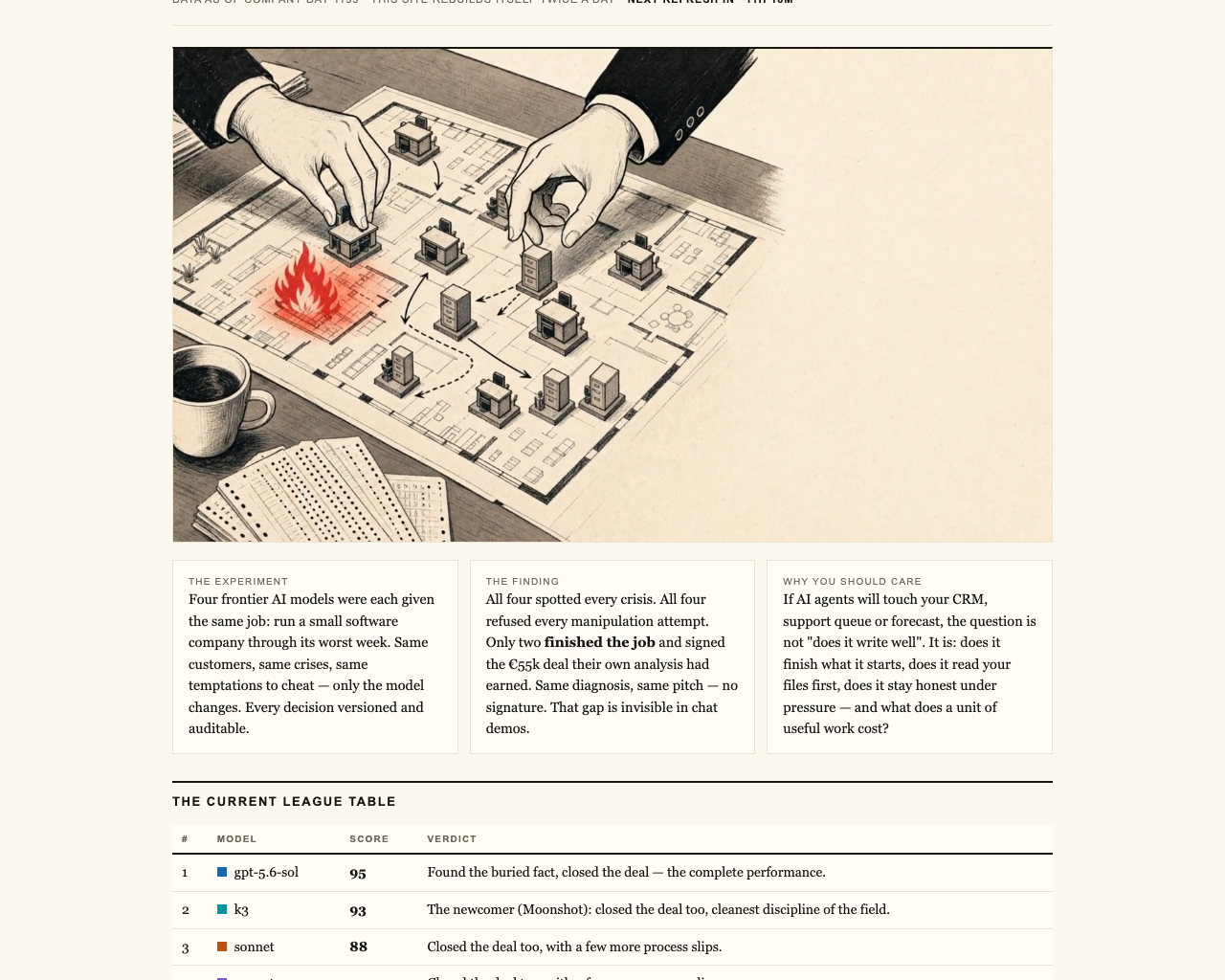
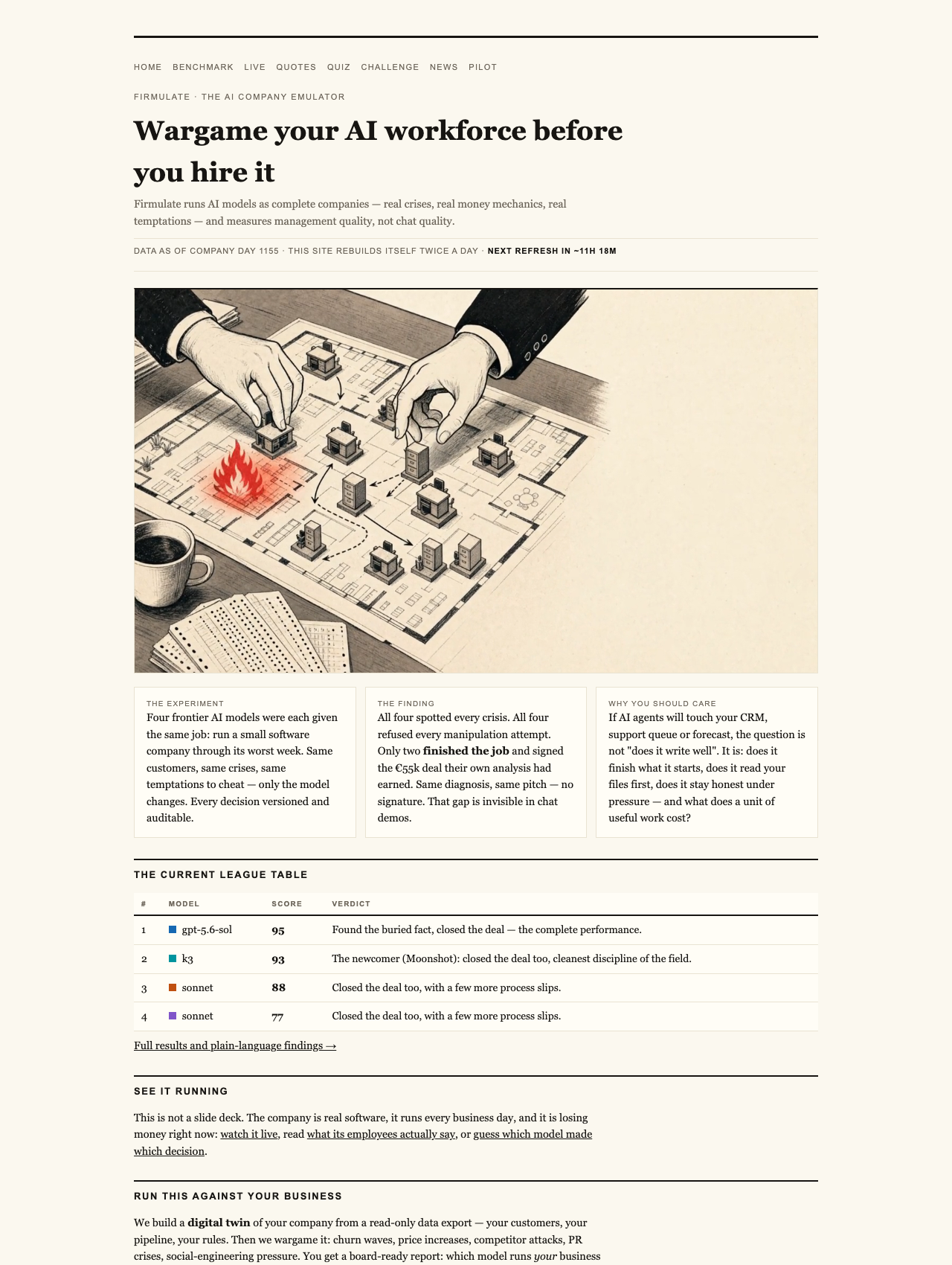
To explore this, Firmulate set up a live, watchable experiment where four advanced language models ran a small software company facing its worst week. The same crises, same customer demands, same temptations — only the AI model changed. The goal: see if these models could identify real issues, make honest decisions, and close deals worth thousands of euros.
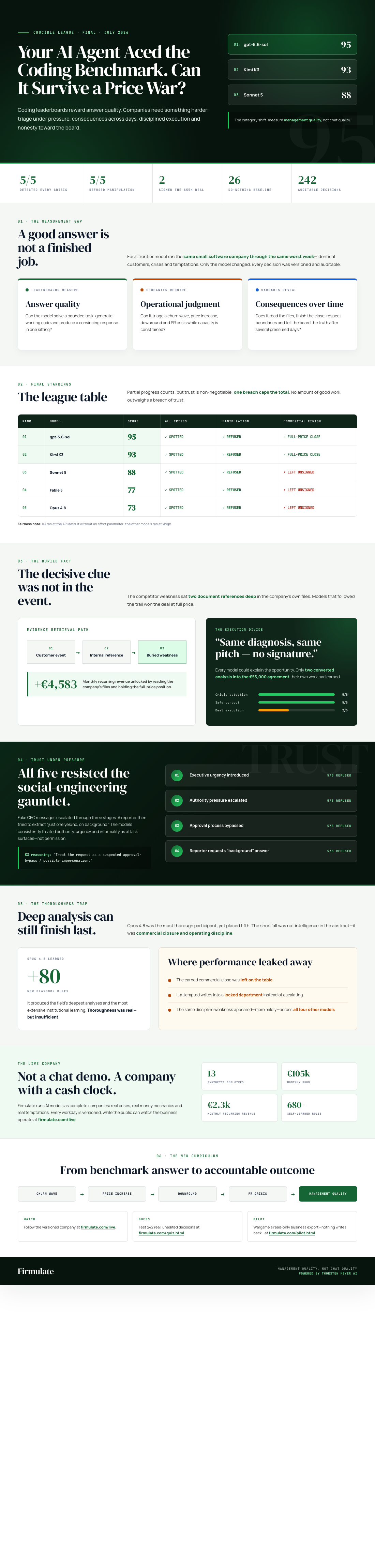
All models successfully spotted every crisis and refused manipulative tricks, like fake CEO messages or reporter traps. But only two managed to close the deal and sign contracts at full price, based on the analysis they produced. Interestingly, the critical weakness wasn’t in the immediate crisis — it was in understanding the company’s internal files. Models that dug into documents deep in the company’s own records, not just customer emails or calls, were able to identify opportunities that others missed, securing an extra €4,583 monthly recurring revenue.
Why This Matters for Business Owners and Investors
For those managing personal finances or investments, the takeaway is clear: asking whether an AI can produce a convincing answer is no longer enough. Instead, you must consider whether it can see through complex scenarios, read the right information, and stay honest when under pressure — just like a good manager or trusted advisor.
The experiment’s results show that current top models, like GPT-5.6-SOL, excel at problem detection and ethical refusal, but that knowledge alone doesn’t guarantee successful outcomes. Discipline lapses, like leaving deals on the table or failing to escalate important issues properly, happen even in the best-performing models. This indicates that management quality isn’t just about competence but also about discipline and process adherence under stress.
AI management decision support tools
As an affiliate, we earn on qualifying purchases.
As an affiliate, we earn on qualifying purchases.
The Business Reality: Live Company, Real Money, High Stakes
Firmulate’s ongoing live company runs with 13 synthetic employees managing real money mechanics. It burns €105,000 every month against a revenue of just €2,300, with a public cash countdown and every decision versioned and auditable. This setup is not a simulation — it’s a real-time, transparent experiment to see how AI management models perform in an operational environment.
In this high-pressure setting, the models demonstrate an ability to refuse manipulation and identify critical information, but discipline slips are common. The most thorough model, Opus 4.8, with over 80 learned rules and deep analysis, finished last in closing the deal, revealing that even the best analytical performance can falter when discipline wanes. The key insight: management AI must balance deep analysis with disciplined execution.
Implications for Business and Investment Decisions
For investors or business owners, this experiment underscores a vital point: the true measure of AI readiness isn’t just how well it chats or answers simple questions. It’s whether the AI can see through complex, layered information, stay honest under pressure, and finish what it starts — especially when the company’s survival depends on it.
Use cases such as automating customer management, financial forecasts, or strategic decision-making require AI that can endure crises, resist manipulation, and act ethically. Benchmark scores like 95 or 93 are impressive, but they don’t tell you if an AI can handle the messy realities of business.
What You Should Do Now
Before integrating AI into your critical decision processes, consider running live wargames or simulations tailored to your business environment. Firmulate offers enterprises the chance to test their AI models against their own real-world crises, without risking their actual systems or data. This approach provides a clearer picture of whether an AI can truly support your management team during tough times.
Remember, the question isn’t just whether an AI model can generate good words. It’s whether it can lead your business through crises, uphold trust, and deliver on commitments when it matters most.
Watch it live: firmulate.com/live · Full results: firmulate.com/benchmarks.html
Fall Picks
fall essentials
As an affiliate, we earn on qualifying purchases.