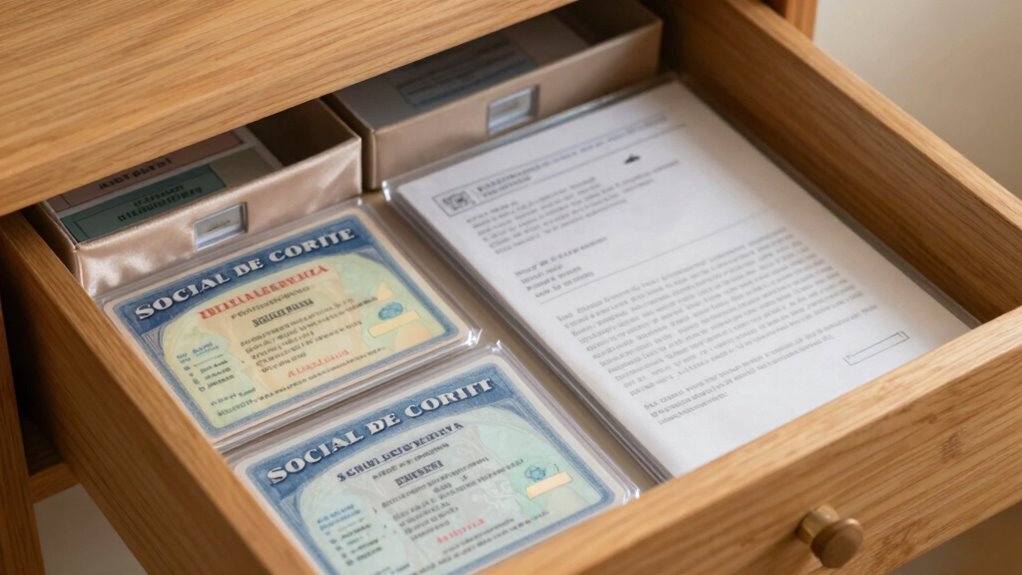
To store your social security cards and birth certificates securely, keep them in a fireproof and waterproof safe in a discreet, accessible location. Consider dividing copies between your home and a safe deposit box or trusted family member’s place. Organize and label them clearly for quick retrieval. Use strong passwords and encryption if you store digital copies, and regularly review your security measures. If you want to learn more about keeping your important documents safe, keep exploring these options.

Get smart everyday buys delivered free with Prime
- Fast, free delivery on millions of items
- Prime Video, Amazon Music and more included
- Member-only deals all year
Key Takeaways
- Store Social Security cards and birth certificates in a fireproof, waterproof safe in a discreet, secure location.
- Keep digital copies encrypted and backed up on secure cloud platforms for easy access during emergencies.
- Distribute physical copies across multiple secure sites, like a safe deposit box and trusted family members.
- Label storage containers clearly and ensure safes are sturdy and resistant to natural disasters.
- Regularly review and update storage methods to maintain security and accessibility.
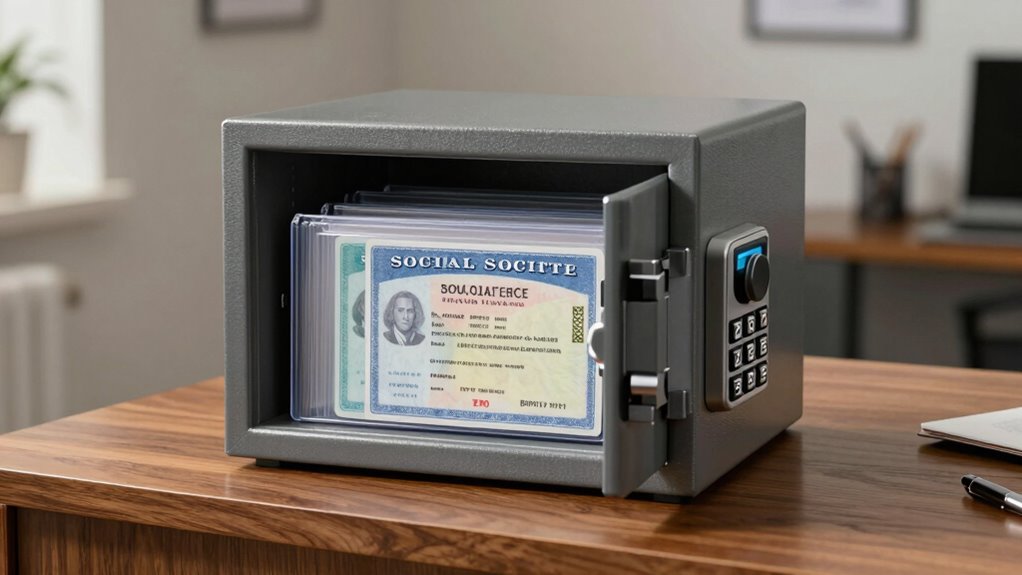
Storing your Social Security cards and birth certificates securely is essential to protect them from theft, loss, or damage. While traditional safes and lockboxes are reliable options, you should also consider digital storage solutions to further safeguard your important documents. Digital storage involves scanning your physical documents and saving them securely on encrypted drives or cloud services. This way, even if your physical copies are lost or damaged, you’ll still have access to vital information. Just make sure to use strong passwords and enable two-factor authentication to prevent unauthorized access.
In addition to digital storage, it’s wise to create a backup plan for emergency preparedness. Keep physical copies in a fireproof, waterproof safe, ideally somewhere discreet and accessible only to you. Consider dividing your documents into multiple locations—one at home and another in a safe deposit box or with a trusted family member. This way, if a disaster occurs, you’ll have access to essential documents no matter what. Label your safes clearly and ensure they’re sturdy enough to withstand natural calamities, so your documents stay protected over time. Proper storage conditions are crucial to prevent deterioration and ensure long-term preservation.
You should also think about the convenience of digital storage in emergencies. Having scanned copies readily available on a secure cloud platform allows you to access your information from anywhere, whether you’re at home, at work, or traveling. This can be especially helpful during urgent situations, like replacing lost identification or filing insurance claims. Always keep your digital files organized with clear labels and regularly update them, especially after major life events such as marriage, divorce, or changing your name. Additionally, understanding fire-resistant storage options can help you choose the most effective safes for your needs.
To further enhance security, consider researching encryption methods for your digital files to add an extra layer of protection against cyber threats. Regularly testing your storage methods and updating security measures can further enhance your protection. Ultimately, combining digital storage with physical safeguards enhances your emergency preparedness. You get quick access to your vital records in case of theft or natural disasters, and you minimize the risk of losing irreplaceable documents. Regularly reviewing your storage methods and updating your files helps you stay prepared for any unexpected situation. By taking these steps, you ensure your Social Security cards and birth certificates are both secure and accessible whenever you need them most.
fireproof waterproof safe for documents
As an affiliate, we earn on qualifying purchases.
As an affiliate, we earn on qualifying purchases.
Frequently Asked Questions
What Is the Best Temperature for Storing Sensitive Documents?
You should store sensitive documents in a climate-controlled environment where temperature stays between 65-70°F. Maintaining consistent humidity levels around 30-40% helps prevent deterioration, mold, and warping. Avoid areas with extreme temperature fluctuations or high humidity, like basements or attics. Use a dehumidifier if needed, and keep documents in acid-free folders or safes to guarantee they stay in good condition over time.
Should I Laminate My Social Security Card or Birth Certificate?
Lamination risks damaging your social security card or birth certificate, so it’s better to avoid it. While lamination might seem to enhance document durability, it can cause irreversible harm and complicate future updates or verification. Instead, store your documents in protective sleeves or acid-free folders. This approach preserves their integrity without risking tearing or fading, ensuring your important documents stay in good condition for years to come.
How Often Should I Check the Condition of Stored Documents?
You should check the condition of your stored documents at least once a year to guarantee proper document preservation. Regular inspections help you spot signs of damage, such as fading or moisture, so you can address issues early. Keep your storage organized by using acid-free folders or safes, and periodically review your system to maintain ideal storage organization. This proactive approach helps protect your essential documents over time.
Can I Store These Documents in a Safe Deposit Box?
Yes, you can store your Social Security cards and birth certificates in a safe deposit box. It offers excellent document security and protection against theft, fire, or water damage. Just make certain you keep a record of what’s stored there and access it only when necessary. Consider keeping digital copies elsewhere for quick access, but rely on a safe deposit for long-term, secure storage of these important documents.
Are Digital Backups of These Documents Secure?
Digital backups of your Social Security cards and birth certificates can be protected if you use strong digital encryption and trusted cloud security services. Notably, over 90% of data breaches happen due to weak passwords or poor security, so safeguarding your backups is essential. Always choose reputable cloud providers, enable two-factor authentication, and keep your encryption keys private to guarantee your digital copies remain safe from unauthorized access.
Conclusion
Storing your Social Security cards and birth certificates securely is essential, but don’t let the process overwhelm you. Using a fireproof safe or a locked drawer keeps these important documents safe from theft and damage. If you worry about losing access, consider making digital copies stored securely online. Remember, a little effort now saves you headaches later—so take the time to protect your critical records today. You’ll thank yourself when you need them most!
Halloween Picks
halloween
As an affiliate, we earn on qualifying purchases.