

This guide helps you find and choose the right financial planning books suited to your needs. Whether you’re new to personal finance or want to deepen your understanding, selecting the right books is key to improving your money management skills. This process is straightforward but requires careful consideration to avoid common pitfalls and ensure you get the most value from your reading.

Get smart everyday buys delivered free with Prime
- Fast, free delivery on millions of items
- Prime Video, Amazon Music and more included
- Member-only deals all year
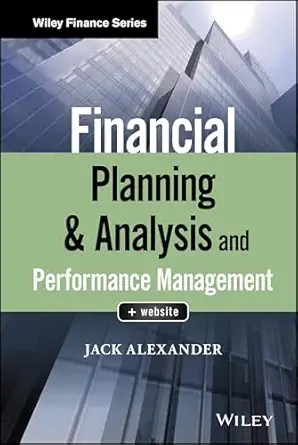
Financial Planning & Analysis and Performance Management
- ✔ Author: Multiple contributors
- ✔ Publication Year: 2022
- ✔ Pages: 480

The Simple Path to Wealth: Your Road Map to Financial Independence and a Rich, Free Life
- ✔ Author: JL Collins
- ✔ Publication Year: 2019
- ✔ Pages: 210

Fundamentals of Financial Planning – 7th Edition
- ✔ Author: James Rea and others
- ✔ Edition: 7th
- ✔ Publication Year: 2023
Difficulty: Beginner | Time: 1-2 hours
What You’ll Need
Tools & Materials:
- Internet access
- Notebook or device for note-taking
Knowledge:
- Basic understanding of personal finance terms
Financial Planning & Analysis and Performance Management
This book stands out for its comprehensive coverage of financial analysis techniques and its focus on performance management, making it an essential resource for finance professionals and advanced students. Compared to the other options, it offers a more technical perspective, though it lacks detailed examples that might help less experienced readers. Its in-depth approach helps users develop strategic decision-making skills, but it may feel dense for those new to finance concepts.
Pros:
- In-depth coverage of financial analysis techniques
- Practical guidance for performance management
- Ideal for finance students and professionals
- Supports strategic decision-making
Cons:
- No specific edition or publication date provided
- Lacks detailed technical examples in the description
- May be too dense for beginners
Best for: Finance professionals and students looking to deepen their strategic and analytical skills
Not ideal for: Beginners or casual readers seeking straightforward advice or personal finance tips
Bottom line: A top-tier choice for finance pros seeking detailed insights into analysis and performance management.
“A top-tier choice for finance pros seeking detailed insights into analysis and performance management.”
The Simple Path to Wealth: Your Road Map to Financial Independence and a Rich, Free Life
This book offers clear, practical advice for those new to personal finance, emphasizing simple strategies to achieve financial independence. Compared with the more technical professional guide, it is accessible and easy to understand, making it ideal for beginners. However, its focus on personal wealth and independence means it lacks the detailed technicalities that finance professionals might need for complex planning or analysis. It’s a straightforward roadmap, but it doesn’t delve into advanced topics or specific financial products.
Pros:
- Accessible and easy to understand
- Focuses on practical steps toward wealth
- Great for beginners
- Encourages a mindset of financial independence
Cons:
- No detailed specifications or features
- Limited to general financial guidance
- Lacks technical depth for advanced planning
Best for: Beginners, young professionals, and anyone aiming for financial independence without technical jargon
Not ideal for: Experienced finance professionals or those seeking comprehensive technical strategies
Bottom line: An excellent starting point for newcomers wanting straightforward, actionable financial advice.
“An excellent starting point for newcomers wanting straightforward, actionable financial advice.”
Fundamentals of Financial Planning – 7th Edition
This textbook provides an exhaustive overview of financial planning principles, covering investment, retirement, estate, and tax planning. It is designed for those who want a comprehensive academic or professional resource, comparing favorably with the more specialized books by offering wide-ranging topics in one volume. The main tradeoff is that it’s less accessible for casual readers or beginners, given its dense content and lack of customer reviews, which makes it harder to gauge practical applicability for typical personal finance goals. Still, for those seeking a thorough grounding in financial strategies, this is a solid choice.
Pros:
- Comprehensive coverage of financial planning topics
- Suitable for students and professionals
- Up-to-date with current strategies
- Provides a solid theoretical foundation
Cons:
- No detailed specifications provided
- No customer reviews available
- Potentially overwhelming for casual readers
Best for: Students, financial professionals, and serious learners seeking a broad, detailed understanding
Not ideal for: Casual readers or those looking for quick, actionable advice
Bottom line: A comprehensive textbook best suited for those seeking an in-depth, academic understanding of financial planning.
“A comprehensive textbook best suited for those seeking an in-depth, academic understanding of financial planning.”
As an Amazon Associate we earn from qualifying purchases.
Before You Start
Have a clear idea of what financial topics you want to improve — budgeting, investing, retirement planning, or debt management. Be aware that many books vary in difficulty and focus. Setting a realistic budget for purchasing books or accessing online resources can help streamline your choices.
Step-by-Step Instructions
Step 1: Define your learning goals
Write down specific financial areas you want to improve, such as saving, investing, or debt reduction. Clarify whether you seek beginner guides, advanced strategies, or comprehensive overviews.
Tip: Being specific helps narrow down book options and saves time in the selection process.
Check: You have a clear list of goals or topics that will guide your search for books.
Search for well-known authors and publishers in personal finance, such as Dave Ramsey, Robert Kiyosaki, or the Harvard Business Review. Check for books with high ratings, positive reviews, and credible sources.
Tip: Visit trusted websites like Goodreads, Amazon, or financial blogs for reviews and recommendations.
Check: You have a list of at least 5 reputable books or authors aligned with your goals.
Step 3: Evaluate the book’s content and difficulty level
Read the book summaries, table of contents, and sample chapters if available. Confirm the content matches your skill level and learning goals—look for clear explanations, practical advice, and recent publication dates.
Tip: Avoid books that are overly technical or too simplistic for your current knowledge.
Check: You have selected 2-3 books that match your needs and are appropriate for your skill level.
Step 4: Compare prices and formats
Check prices across different platforms—print, eBook, or audiobook. Consider your preferred learning style and budget. Look for editions that include updates or supplementary materials like worksheets or online resources.
Tip: Opt for editions with recent publication dates to ensure current financial information.
Check: You have chosen at least one or two books that fit your budget and preferred format.
Step 5: Read reviews and gather opinions
Read customer reviews and expert opinions to identify common praises or criticisms. Focus on comments about clarity, practicality, and applicability.
Tip: Prioritize reviews from readers with similar financial goals or experience levels.
Check: You have confirmed your selections are well-received and relevant.
Step 6: Make your purchase and set a reading schedule
Buy or borrow the selected books, then set aside dedicated time for reading each day or week. Mark chapters or sections to focus on based on your goals.
Tip: Create a reading plan that fits your schedule to maintain consistency.
Check: You have your books ready and a clear plan for reading.
Common Mistakes to Avoid
- Choosing books based only on popularity or price. — Prioritize relevance and credibility over popularity or cost to ensure the content matches your needs.
- Ignoring the book’s difficulty level. — Match the book’s complexity with your current knowledge to avoid frustration or boredom.
- Not setting specific learning goals. — Define clear objectives to select books that directly support your personal finance aims.
- Failing to verify the publication date. — Choose recent editions to access the latest financial strategies and data.
Troubleshooting
Problem: The selected book is too advanced or too basic.
Solution: Read sample chapters or reviews to gauge difficulty before purchasing. Switch to a more suitable book if needed.
Problem: The book content is outdated or irrelevant.
Solution: Check publication date and reviews for recent updates. Consider newer editions or alternative titles.
Problem: You struggle to stay motivated to read.
Solution: Set specific reading times, break content into manageable sections, and apply concepts immediately to reinforce learning.
What Success Looks Like
Successfully selecting one or more books that align with your goals, are appropriate for your skill level, and are confirmed by positive reviews. You feel motivated to read and learn from these resources, and can identify key takeaways from the content.
Next Steps
Begin reading according to your schedule, taking notes and applying lessons. Revisit your goals periodically to adjust your reading list. Consider joining online forums or book clubs for discussion and accountability. Update your reading list as your knowledge grows or new editions are released.
Frequently Asked Questions
How many books should I start with?
Begin with one to three books that directly address your most immediate financial goals. Expand your collection as you progress and clarify additional areas for learning.
Should I buy print or digital copies?
Choose based on your learning style and convenience. Print books are better for focused reading, while digital copies are portable and often cheaper.
How do I know if a financial book is credible?
Check the author’s credentials, publication date, reviews from reputable sources, and whether the book is recommended by trusted financial experts.
What if I find the content too technical?
Switch to beginner-friendly books or look for resources that include explanations, summaries, or glossaries. Building foundational knowledge first can make advanced content easier to understand.
Halloween Picks
halloween
As an affiliate, we earn on qualifying purchases.