
To find your prior-year AGI for e-filing, start by checking your last year’s tax return, typically on Line 11 of Form 1040. If you’ve misplaced it, you can use the IRS “Get Transcript” tool online, by phone, or mail after verifying your identity. This helps verify your info and prevents e-filing errors. Keep going to discover additional tips for smooth tax submission and ensuring your AGI matches IRS records.

Get smart everyday buys delivered free with Prime
- Fast, free delivery on millions of items
- Prime Video, Amazon Music and more included
- Member-only deals all year
Key Takeaways
- Check Line 11 on your previous year’s Form 1040 for your AGI.
- Retrieve your prior-year tax return from your records or online storage.
- Use the IRS “Get Transcript” tool online, by phone, or mail to obtain your AGI.
- Ensure your AGI matches IRS records to prevent e-filing rejections.
- Keep digital or paper copies of past returns for quick access during e-filing.
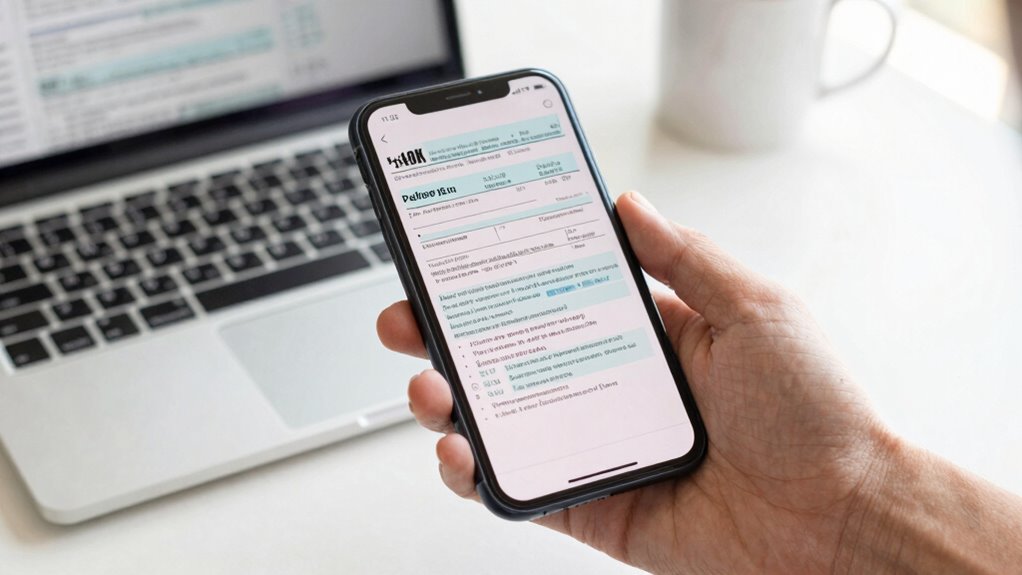
If you’re e-filing your taxes, knowing your prior-year Adjusted Gross Income (AGI) is essential, as the IRS uses it to verify your identity and process your return. Your AGI acts as a key piece of information during tax preparation, helping confirm that the person submitting the return is the rightful taxpayer. Without it, your e-filing could be delayed or rejected, so it’s crucial to locate this figure accurately.
First, check your previous year’s tax return. If you filed Form 1040, your AGI is listed on Line 11 of that form. It’s straightforward to find because the IRS provides this information on your tax documents, and reviewing your last return is often the quickest way to retrieve your AGI. If you’ve kept a copy or have it stored electronically, simply open the file, look for Form 1040, and locate the AGI. Additionally, tax documentation can help you organize and verify this information efficiently. Knowing how to access prior-year tax information can also aid in resolving any discrepancies if your AGI doesn’t match IRS records.
Check your 1040 Form 11 for your prior-year AGI—it’s the quickest way to find this essential info.
If you don’t have your prior-year tax return handy, you can also retrieve your AGI directly from the IRS. The IRS provides free options to get your prior-year tax information through the “Get Transcript” tool on their website. You can request a tax return transcript, which shows most line items from your return, including your AGI. You can do this online, by phone, or by mailing a form. When you request the transcript online, you’ll need to verify your identity using personal information, such as your Social Security number, date of birth, and filing status. Additionally, understanding tax filing requirements can help ensure you gather all necessary information for a smooth e-filing process. Being familiar with tax-related resources can also streamline your preparation and help prevent errors during submission.
IRS tax transcript request online
As an affiliate, we earn on qualifying purchases.
As an affiliate, we earn on qualifying purchases.
Frequently Asked Questions
Can I Use My Spouse’s AGI Instead of Mine?
You can’t use your spouse’s AGI instead of yours unless you’re filing jointly. Spouse eligibility means that both of you file together, sharing financial info. When e-filing, each person’s prior-year AGI is needed to verify your identity. If you file separately, you must use your own AGI. Always guarantee you’re entering the correct AGI for the specific filing status, especially if opting for joint filing.
What if I Can’t Locate My Prior-Year AGI?
Think of your AGI as a treasure chest, but if you can’t find it, don’t panic. For AGI verification, you can try accessing your prior-year tax records through the IRS Get Transcript tool or your tax software. Remember, retaining tax records for at least three years helps in future verification. If all else fails, you may need to file using the “alternative method” or contact the IRS for guidance.
Is There a Different Method for Estimated Tax Payments?
Yes, for estimated tax payments, you can use different payment methods such as electronic funds withdrawal, IRS Direct Pay, or the Electronic Federal Tax Payment System (EFTPS). These options allow you to make payments directly from your bank account securely and conveniently. When making estimated tax payments, guarantee you select the correct payment method and clearly specify it to avoid processing delays. Always keep records for future reference.
How Long Should I Keep My Prior-Year Tax Records?
You should keep your prior-year tax records for at least three years, but it’s wise to retain them for up to seven years if you have complex finances or suspect potential audits. Proper record retention and document storage are essential to verify your income, deductions, and credits. Keeping organized records guarantees you can easily access your prior-year AGI when needed for e-filing or resolving any discrepancies, providing peace of mind and compliance.
Can I Use an Alternate Income Figure if AGI Is Unavailable?
Imagine standing at a crossroads, uncertain of the path ahead. If your AGI is unavailable, you can use alternative documentation for income verification, like your year-end pay stub or bank statements. These records serve as proof of income, helping you proceed with e-filing. While not ideal, they provide a valid alternative to meet IRS requirements, ensuring you stay on track without unnecessary delays.
Conclusion
Don’t worry if you can’t locate your prior-year AGI right away—it’s a common issue, and there are simple solutions like checking your last year’s tax return or IRS transcripts. Remember, even if you’re unsure, the IRS allows alternative methods for e-filing. Just take your time to find it; ensuring your AGI matches is key to a smooth filing process. With patience, you’ll get it done without stress.
Columbus Day / Indigenous Peoples' Day Picks
long weekend sales
As an affiliate, we earn on qualifying purchases.