
TL;DR

Get smart everyday buys delivered free with Prime
- Fast, free delivery on millions of items
- Prime Video, Amazon Music and more included
- Member-only deals all year
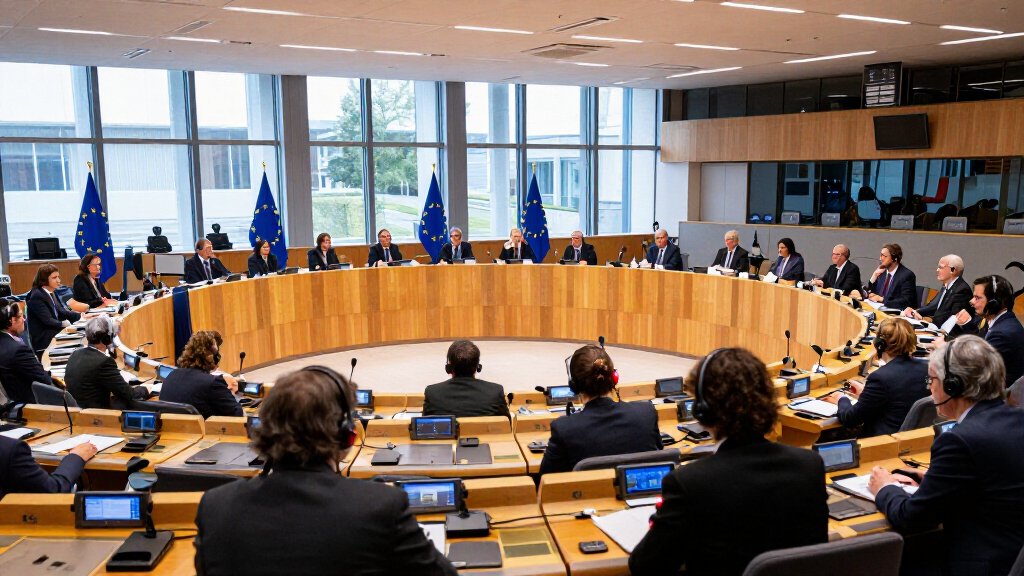
ECB President Christine Lagarde addressed the European Parliament’s Economic and Monetary Affairs Committee on 28 September 2026, discussing the euro area outlook, monetary policy and artificial intelligence. She said the ECB had raised its three key rates by 25 basis points earlier in September as energy inflation rose, while noting that it had not yet seen evidence of the shock feeding into wages. The speech described AI’s potential economic effects as significant but uncertain.
European Central Bank President Christine Lagarde told the European Parliament’s Economic and Monetary Affairs Committee on 28 September that the euro area faced higher inflation risks from energy costs while the ECB had not yet seen evidence of those costs spreading to wages. She also said artificial intelligence could reshape investment, work and productivity, but its overall economic effects remain uncertain.
Lagarde said the ECB had raised its three key interest rates by 25 basis points earlier in September, citing the need to keep inflation on a path toward its 2% medium-term target. She described the move as a measured response to an energy shock: the central bank, she said, does not react to energy prices alone, but assesses whether their effects are becoming embedded in broader inflation. The ECB’s assessment considers the inflation outlook, underlying price and wage dynamics, and how monetary policy is transmitted through borrowing costs and growth.
Euro area headline inflation rose to 3.2% in August, from 2.9% in July, according to the figures cited in the speech. Energy inflation increased to 14.3% from 10.3%, while inflation excluding energy and food eased to 2.4%. Compensation per employee grew 3.3% in the second quarter, down from 3.6% in the first. Lagarde said wages had not shown a material response to the energy shock so far.
The euro area economy recorded solid, broad-based growth in the second quarter of 2026, and Lagarde said available information suggested that pattern continued into the third. The September ECB staff baseline projected GDP growth of 0.9% in 2026, 1.4% in 2027 and 1.5% in 2028. The speech also cited firms’ planned AI investment at around 10% of total investment in 2026 and AI-related borrowing at roughly a quarter of credit growth to firms; those figures were presented as estimates, not as a measure of AI’s eventual economic impact.
Energy Costs Test the ECB’s Inflation Strategy
The rate increase reflects the ECB’s effort to prevent a temporary rise in energy costs from influencing prices and wages more broadly. If those second-round effects emerge, inflation could remain higher after the initial energy shock. Lagarde said the ECB saw higher inflation ahead but no signs yet that it was becoming embedded; that assessment leaves the response dependent on incoming evidence.
For households and businesses, the combination of higher energy inflation and tighter monetary policy can affect purchasing power, borrowing costs and investment decisions. The speech noted that long-term interest rates had risen since the ECB’s previous meeting, a development Lagarde said could slow growth and reduce the pass-through of monetary policy more than projected. The figures and outlook she presented are forecasts and observations at the time of the hearing, not guarantees of future outcomes.
AI adds a longer-term question for policymakers. If it raises productivity, it could support output and living standards; changes in investment, jobs, demand or business costs could also affect inflation. Lagarde’s remarks framed these as possible channels, while stressing that the net macroeconomic effect is uncertain.
Top picks for "hear committee economic"
As an affiliate, we earn on qualifying purchases.
September Projections and Policy Decision
The hearing formed part of the ECB president’s regular dialogue with the European Parliament committee responsible for economic and monetary affairs. Lagarde’s address covered both the ECB’s current policy stance and possible effects of AI on the economy. The supplied report identifies the speech as delivered in Brussels on 28 September 2026.
The September staff projections put average headline inflation at 3.0% in 2026, 2.5% in 2027 and 2.1% in 2028. For inflation excluding energy and food, the baseline was 2.5%, 2.6% and 2.3% over those years. Lagarde said short-term inflation expectations remained elevated, while most longer-term measures were around 2%. She also described the outlook as highly uncertain, with risks of higher inflation and weaker growth.
The speech pointed to resilient employment and activity alongside slowing growth in employment and the labour force. Unemployment stood at 6.4% in July. Higher government spending on defence and infrastructure was supporting manufacturing, while consumer confidence had rebounded from spring lows, according to Lagarde.
“We do not react to energy prices, we react if we see risks of higher energy prices becoming embedded in inflation.”
— Christine Lagarde, ECB president
AI’s Net Economic Effect Remains Unknown
The speech did not quantify how much AI will add to euro area productivity, output or inflation, or specify when those effects might become visible. Lagarde described AI as a force that could reshape production and business models, but the report’s excerpt does not provide a settled estimate of its overall macroeconomic impact.
It also remains unclear whether the energy shock will feed through to wages and other prices. Lagarde said the ECB had not yet seen evidence of higher energy prices passing into higher wages, while warning that risks around inflation and growth remained high. The figures on investment and credit relate to 2026 estimates; the cited material does not give the underlying methodology or a comparison baseline.
ECB to Track Prices, Wages and Growth
The ECB’s next policy decisions will depend on incoming data and its assessment of the three criteria Lagarde outlined: the inflation outlook, underlying price and wage dynamics, and monetary-policy transmission. The speech did not announce a date or outcome for a future rate decision.
For the near-term outlook, the indicators highlighted by Lagarde include energy prices, wages, services inflation, longer-term interest rates and activity. The September staff projections provide the ECB’s baseline for growth and inflation through 2028, but the president stressed that uncertainty remains high.
Key Questions
What did Lagarde tell the European Parliament committee?
She discussed the euro area outlook, explained the ECB’s recent interest-rate increase and described possible economic effects of artificial intelligence. She said those AI effects remain uncertain.
Why did the ECB raise interest rates?
Lagarde said the ECB raised its three key rates by 25 basis points earlier in September to support inflation stabilising at its 2% medium-term target. She cited higher energy-driven inflation risks and described the response as measured.
Did the energy shock already raise wages?
Lagarde said the ECB had not seen a material wage response so far. Compensation per employee grew 3.3% in the second quarter, compared with 3.6% in the first quarter.
What did the ECB project for euro area growth?
The September staff baseline projected growth of 0.9% in 2026, 1.4% in 2027 and 1.5% in 2028. These are projections cited in Lagarde’s speech, not confirmed future outcomes.
What is still unknown about AI’s effect on the economy?
The speech did not establish AI’s net effect on productivity, output, jobs or inflation, or when those effects might occur. Lagarde said AI could reshape the economy but that its overall macroeconomic impact is uncertain.
Source: primary
Halloween Picks
halloween
As an affiliate, we earn on qualifying purchases.